







- Hours
- Open year-round, 24/7
- Where
- Dades Gorge, Draa-Tafilalet
- Directions
- Directions
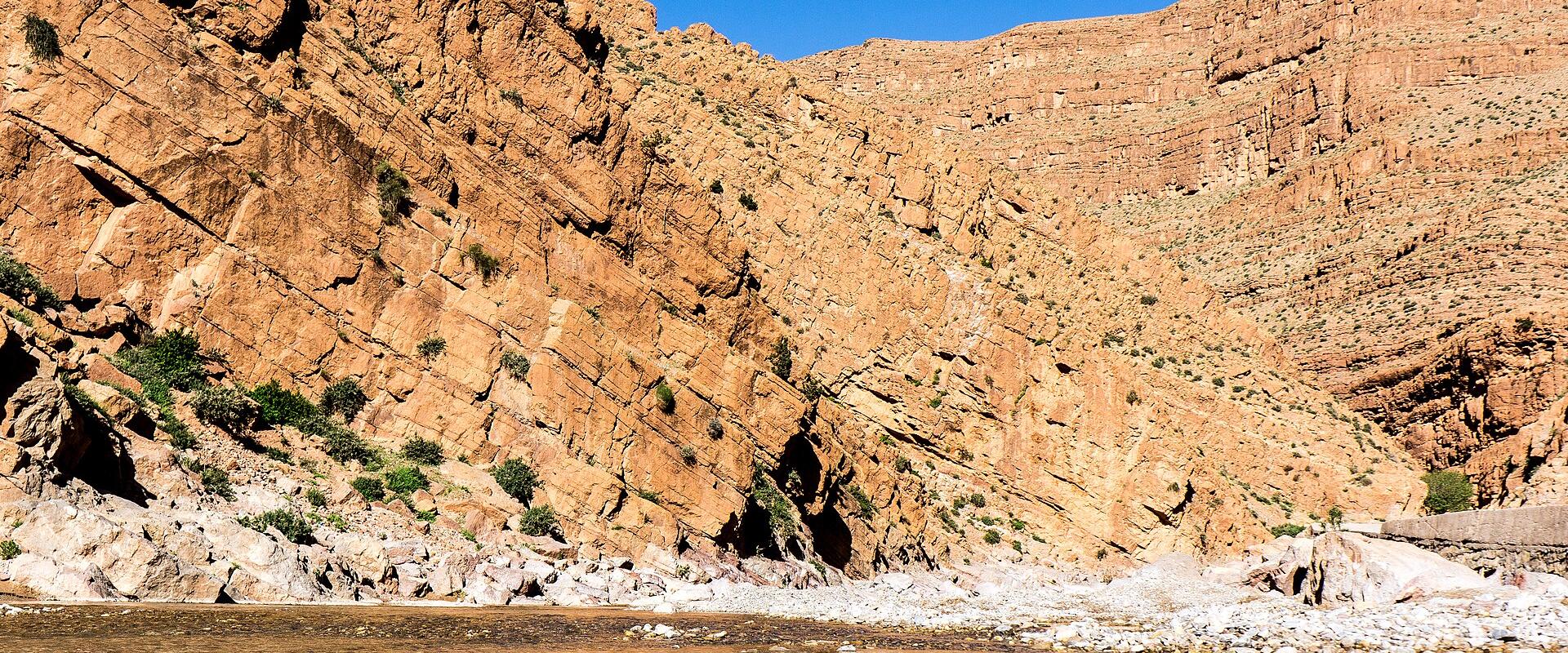
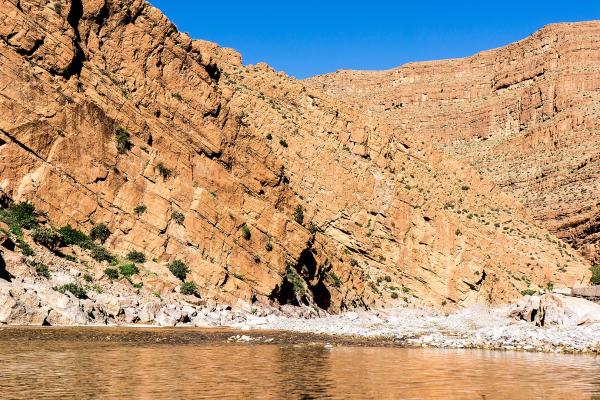
The Dades Gorge, in French the Gorges du Dades, is often called the Grand Canyon of Morocco, a name that overstates its size but captures the drama of its rock. It lies in Tinghir Province, on the southern side of the High Atlas Mountains, and it is carved by the Dades River into a landscape of reddish sedimentary rock that has been tilted, folded and eroded into pillars, cliffs and strange shapes. The scenery is the main reason to go, and the best way to see it is to take time over the road and the short walks that start from it.
The gorge begins above Boumalne Dades, which is reached from Ouarzazate along the N10. A narrow paved road follows the river north, first through a green valley of gardens and palms and then between steepening walls. The most photographed point comes where the road climbs the cliff in a series of hairpin bends, with viewpoints that look back along the canyon. Lookouts and small cafés let you rest and take in the view, especially in the early morning and late afternoon, when the light picks out the colours of the rock from deep red to orange and gold.
Geology is part of the story. The rocks were laid down as sediments in ancient seas and rivers, then lifted as the Atlas rose, and the river has cut through them over a very long time. Weathering has formed pillars, caves and overhangs, and the Monkey Fingers, a cluster of narrow towers, are one example. Walking beside the river, you pass boulders and pools, and in some places the cliffs close in until the gorge seems only a few metres wide. Hikers can follow tracks used by villagers and shepherds, either on short loops of a few hours or on longer routes across the hills, and local guides know the paths and the best viewpoints.
At the lower end of the valley, farmers grow roses, and the area around nearby Kelaat M'Gouna is known for rose water and cosmetics, with a festival in spring. Palm groves, almond trees and terraced plots show how the river's water is used. Visitors will see villagers going about daily work, and respectful behaviour and a request before photographs are appreciated.
Practical points include fuel and weather. Services are limited beyond Boumalne, and rain or snow can make parts of the road difficult. Spring and autumn are the most comfortable seasons, while summer is hot in the lower valley and winter nights are cold. Many travellers stay a night or two in guesthouses by the river, which allows time for sunrise and sunset views.
The gorge suits drivers, hikers and photographers, and it forms part of the classic route between Ouarzazate and the Sahara. Together with the Todra Gorge to the east, it is one of the highlights of Morocco’s mountain landscape.
Categories
More photos coming soon
Opening Hours
- Open
- Open year-round, 24/7
Hours and prices change, especially out of season. Check with the venue before you go.
Nearby Attractions
Other places to visit in Dades Gorge
Questions people ask
Quick Facts
Best Time to Visit
Visit in spring or autumn for mild temperatures ideal for hiking and exploring the gorge landscapes comfortably.