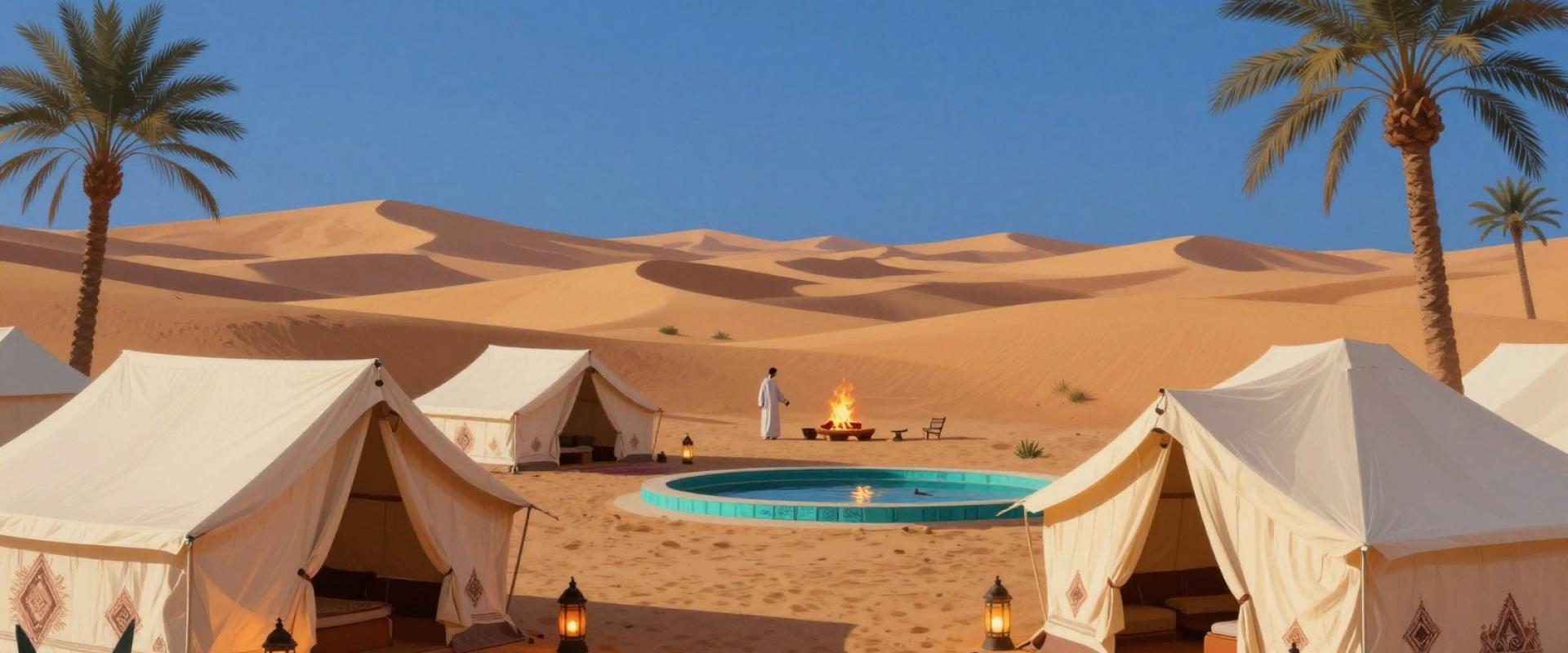
"Desert camp" covers three quite different experiences in Morocco, and the right one depends mostly on how much time you have.
- Agafay, about 40–45 km from Marrakech, is a stony desert of bare hills with views of the Atlas, about an hour's drive from the city. There are no sand dunes. It suits a single night: sunset dinner, a night in a tent, back in Marrakech next morning.
- Erg Chebbi, at Merzouga in the east, has Morocco's tallest and most visited dunes, rising up to about 150 metres. It is about 560 km from Marrakech and 470 km from Fez.
- Erg Chigaga, beyond M'Hamid in the south, is the largest area of dunes in the country and the most remote; the last stretch is a track, not a road.
Erg Chebbi and Merzouga
The sea of dunes at Erg Chebbi is about 28 km long and 5–7 km wide, beside the village of Merzouga. Rissani, the old market town of the Tafilalet oasis, is 35 km away, and Erfoud 55 km.
From Marrakech the drive takes nine to ten hours without stops, over the High Atlas by the Tizi n'Tichka pass and through the Dades and Todra valleys, so most visitors make it a three-day trip with a night on the way. From Fez it is about seven to eight hours, through Ifrane, Midelt and Errachidia. Merzouga is on a paved road, so you do not need a 4x4 to get there: Supratours runs a coach from Marrakech, often overnight, and CTM buses from Fez go as far as Rissani, with a grand taxi for the last stretch. Check times on the companies' own websites.
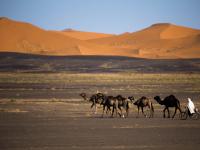
Camps sit among the dunes away from the road. You usually reach them on a camel trek of one to two hours from the edge of the dunes in the late afternoon, timed for sunset, and ride back after sunrise. Some camps send a 4x4 for luggage or for guests who prefer not to ride.
Erg Chigaga
Erg Chigaga is a day further. From Marrakech to Zagora is about 360 km, around seven hours by road, and M'Hamid, where the asphalt ends, is about 95 km beyond Zagora. From there the camps are about 56 km away across sand and stony desert, roughly two hours by 4x4, or several days by camel. It is quieter than Merzouga and feels more remote, but mobile signal is patchy and you will need a driver or a camp transfer. Zagora itself has only small dunes, at Tinfou, and budget camps.
What camps cost
Prices vary widely and change with the season. As a guide, in 2026:
- Basic camps at Merzouga, sharing bathrooms, with a camel ride, dinner and breakfast: from about US$60–80 per person.
- "Luxury" tents with their own bathroom and proper beds: about €130–180 per tent per night.
- Top-end camps in the dunes or at Agafay: €350 or more per night.
- Shared three-day tours from Marrakech to Merzouga and back: from about US$100–150 per person; private and luxury versions start at about US$300 per person.
Cheaper tours keep costs down with large groups, long driving days and basic camps; ask exactly what is included, which camp you will sleep in, and whether bathrooms are shared.
When to go
The best months are October to April. In July the average high in Errachidia, the nearest city to Merzouga, is about 37–38 °C, and the dunes are hotter still. In winter the days are pleasant, but on clear nights temperatures in the dunes can fall to freezing, so bring a warm layer and ask whether the tents are heated. Spring can bring strong winds and sandstorms.
Before you book
- Licensed camps. In 2019 authorities closed camps at Merzouga. No official reason was given, and waste and water were only the likely explanation, so ask a camp about its current licence. Choose a camp that explains how it handles water and rubbish, and take your litter back with you.
- Drones need permission from the civil aviation authority and are often seized at customs; leave them at home.
- Quads and buggies are on offer at Merzouga and Agafay. Accidents are common; wear a helmet and check that your travel insurance covers them.
- Music at most camps is local Amazigh (Berber) drumming around the fire. For Gnawa music, the village of Khamlia near Merzouga is known for its Gnawa community.