







Chefchaouen
Blue-washed mountain town in the Rif, founded in 1471
Moulay Ali ibn Rashid, a local religious leader, founded Chefchaouen in 1471 as a base for raids against the Portuguese, who held the coast at Ceuta and Tangier. The town grew with refugees from Spain: Andalusian Muslims and Moriscos, and Sephardic Jews, who once made up about a third of the population. Few Europeans visited it before 1920, when Spanish troops occupied it; it was briefly part of the Rif Republic in 1924–26 and stayed under Spanish control until Moroccan independence in 1956.
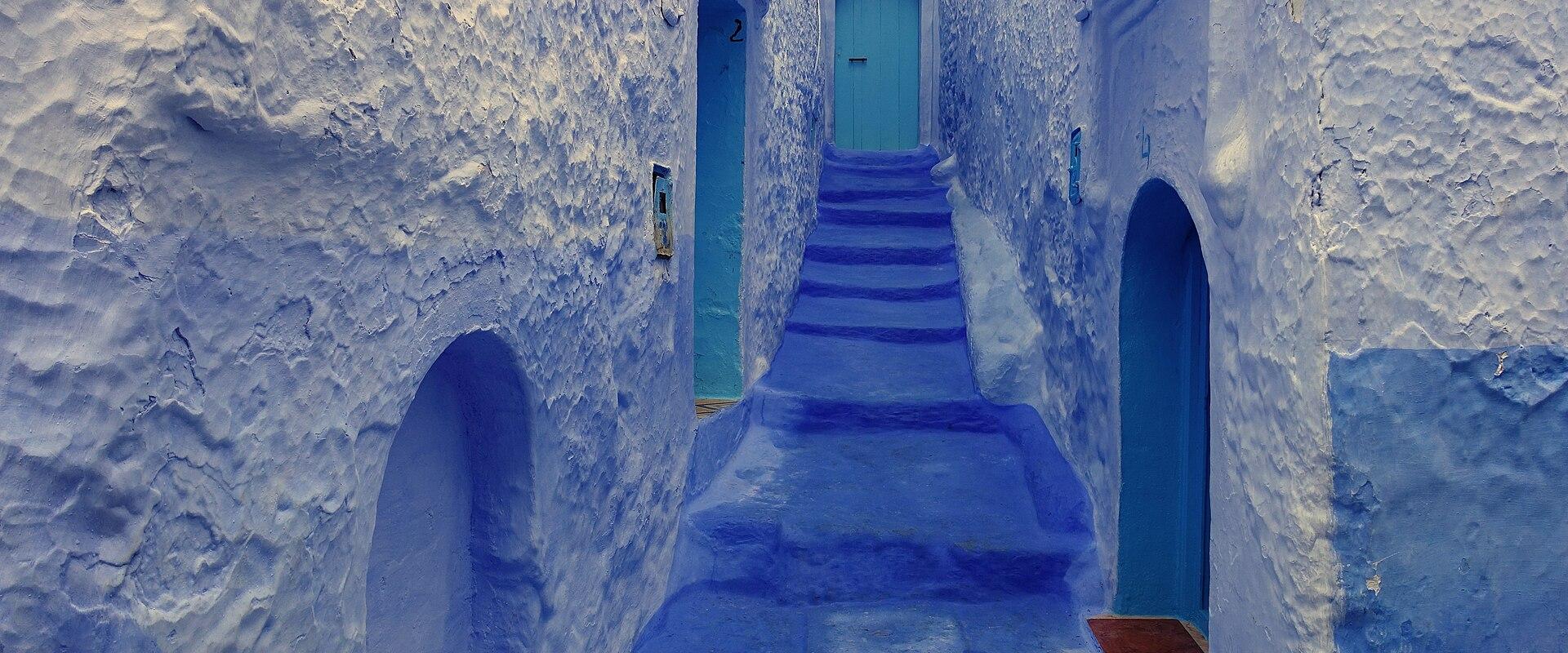
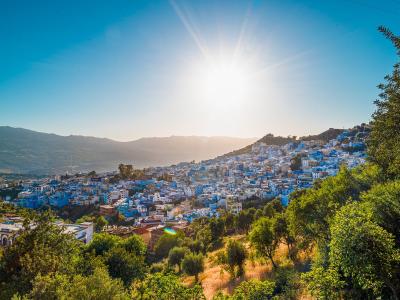
Nobody agrees on why the town is blue. Explanations include a Jewish tradition linking blue with the sky and heaven, a way to keep mosquitoes off and a deliberate choice to attract visitors; much of the painting visible today is recent, and residents renew it regularly.
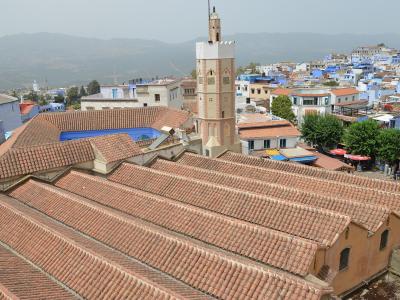
The centre is Place Outa el-Hammam, a square of cafés shaded by trees. On one side is the kasbah, a fortress with red rammed-earth walls and ten towers, built in the town's first years. Inside are a garden, an ethnographic museum of local crafts, weapons and old photographs, and cells once used as a prison; climb the tower for a view over the roofs. Next to it is the Great Mosque, the oldest in town, with an octagonal minaret; it is closed to non-Muslims.
At the eastern edge of the medina, just outside the walls, is Ras El Ma, the spring that supplies the town, where women still wash clothes in the stream. From there a path climbs for about half an hour to the Spanish Mosque, built by the Spanish in the 1920s and never used for prayer; it is the classic place to watch the sun set over the town.
Talassemtane National Park covers the limestone mountains east and north of the town, with cedar and fir forest. The most popular day trip is to Akchour, about 45 minutes by grand taxi: a trail of about 5.5 km follows the river to a series of waterfalls, and a separate path leads to God's Bridge, a natural rock arch over the gorge. Allow three to four hours of walking; the river paths can be impassable after heavy rain, so go between May and October.
Getting there: Chefchaouen has no railway. CTM and other buses run several times a day from Tangier (about 2 hours 30 minutes to 2 hours 45 minutes) and Fez (about 4 hours 10 minutes to 4 hours 50 minutes), and from Tetouan. The bus station is below the medina, a short taxi ride or a steep walk from Place Outa el-Hammam.
The Rif is Morocco's main cannabis-growing region, and touts offer kif to visitors. Since 2021 the law allows cannabis only for medical and industrial use; buying it for recreational use is still illegal. Many residents now object to being photographed, so ask before taking pictures of people and their homes.
Best time to visit
April to June and September to October. Winters are cold and wet (most of the town's 480 mm of annual rain falls between November and March); July and August are warm and busy.
What to see in Chefchaouen
Our picks first.
Medina of Chefchaouen
15th-century refuge with blue-washed buildings
Architecture · Historic Towns
Grand Mosque (Great Mosque)
15th-century mosque at Place Outa Hammam
Architecture · Historic Towns
Chefchaouen Medina Souk
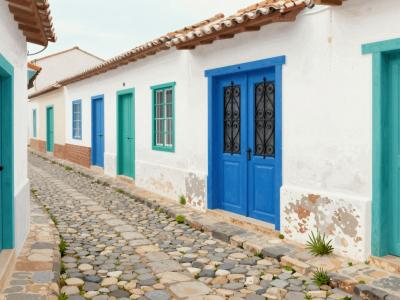
Traditional souk in Chefchaouen's blue-walled medina
Markets · Shopping
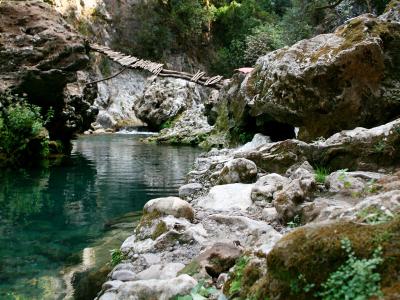
Talassemtane National Park
Rif Mountains park protecting fir forests and limestone g...
Activities & Adventure · Natural Wonders
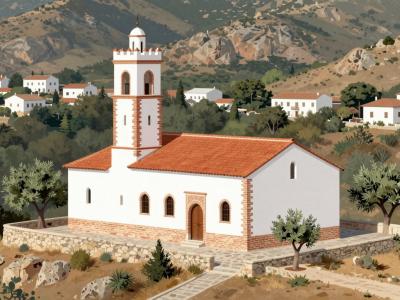
Spanish Mosque (Mosque of the Spaniards)
1920s Spanish-built mosque atop Chefchaouen's hill
Cultural Experiences · History & Heritage
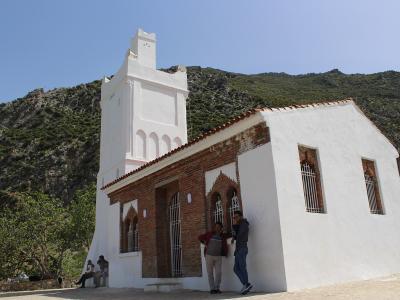
Spanish Mosque Gardens
Sunset-view mosque atop a hill in Chefchaouen
Gardens · Hiking
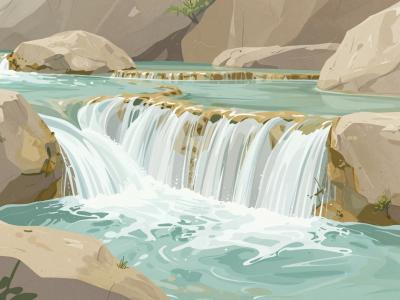
Ras El Ma Spring
Natural Rif Mountain spring cascading over stone terraces
Cultural Experiences · Natural Wonders
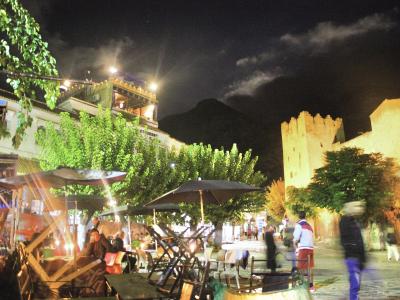
Place Outa el-Hammam
Cultural hub in blue medina named for historic hammams
Architecture · Town Squares
Chefchaouen by interest
The same sights, grouped by what you came for.
Did you know?
Checked facts about Chefchaouen, each with its source.
-
Notable Person
Actress Samia Akariou Was Born in Chefchaouen
Moroccan actress Samia Akariou was born in Chefchaouen on 28 May 1972. Her best-known work, Bnat Lalla Mennana, began as a stage play and became a TV series (first season 2012) that was filmed in Chefchaouen.
Source: elCinema – Samia Akariou
Planning a visit to Chefchaouen
Itineraries that include Chefchaouen
Good to know
- Currency
- MAD
- Language
- Arabic
Quick Facts
Book your stay
Questions people ask
More places in Tangier-Tetouan
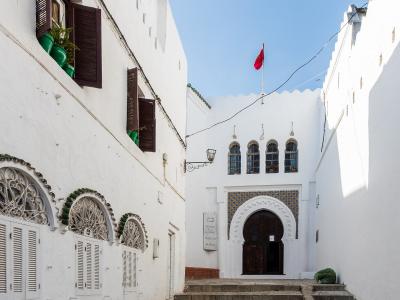
Tangier-Tetouan
Tangier
Port city on the Strait of Gibraltar, an hour by ferry from Spain
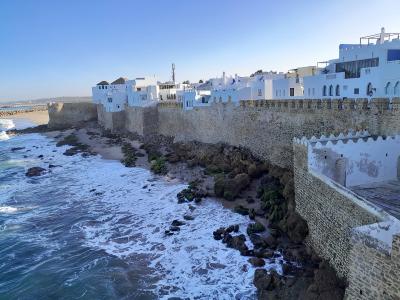
Tangier-Tetouan
Asilah
Artistic coastal town with white medina and Atlantic sunset views
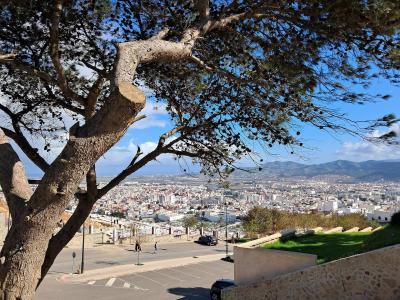
Tangier-Tetouan
Tetouan
UNESCO-listed Andalusian medina in the Rif Mountains near Mediterranean
Tangier-Tetouan
Al Hoceima
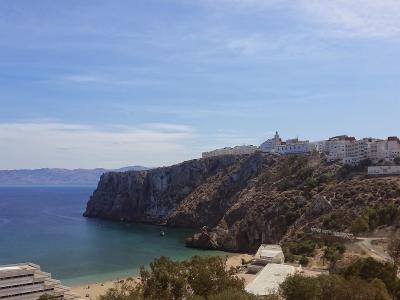
Rif mountain port with Mediterranean coves and a coastal national park