- Where
- Atlas Mountains, Marrakech-Safi
- Directions
- Directions
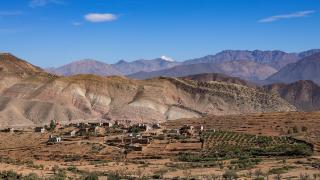
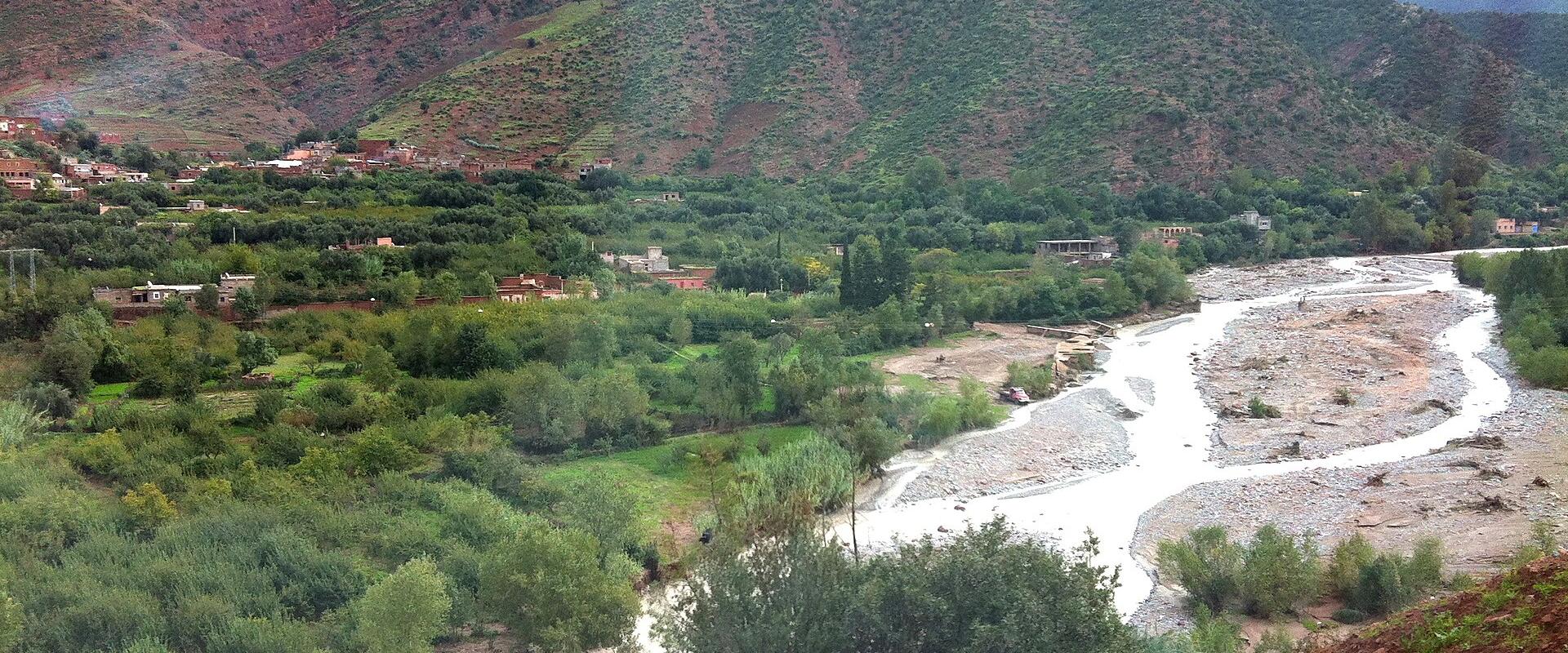
The Ourika Valley is the closest of the High Atlas valleys to Marrakech, and it is one of the easiest ways to see the mountains from the city. The Oued Ourika, the river that gives the valley its name, rises high in the Atlas and runs north to the plain, and the road that follows it climbs for about sixty kilometres to the village of Setti Fatma at its head. The drive from Marrakech takes roughly an hour to reach the lower part of the valley and a little longer to go all the way, passing through the flat farmland of the Haouz plain before the hills close in and the scenery turns to terraced slopes, red earth and stone villages.
The valley is home to Berber communities who have lived here for centuries, farming terraces of barley, vegetables and fruit, and tending walnut, almond and olive trees along the river. Houses of stone and earth cluster on hillsides, and roofs are used for drying herbs and crops. Villages along the road have small markets, and the best known is held in Tnine Ourika, whose name refers to Monday, the market day. Stalls sell vegetables, spices, honey, argan oil, pottery and crafts, and shoppers from the surrounding hamlets come to buy and sell. Roadside cafés and terraces beside the river offer lunch, and many visitors stop for grilled meat and mint tea.
Several places can fill a day. Gardens along the road show local plants, herbs and traditional irrigation, and small museums and cooperatives explain Berber crafts, weaving and honey production. Walking trails lead up side valleys to hamlets and viewpoints, and at Setti Fatma, the waterfalls above the village are the main objective. The valley's scenery changes with the seasons: green in spring, golden in autumn and snow-capped on the high peaks in winter, when the ski station of Oukaïmeden above the valley attracts visitors.
A note on geography is worth making. Some descriptions link the Ourika Valley with the Kasbah of Ait Ben Haddou, but that famous earthen village lies far to the south, beyond the High Atlas, on the road to Ouarzazate. The architecture of the Ourika villages is similar in spirit but on a smaller scale, and visitors who want the great kasbah need to plan a separate journey.
Safety deserves attention. The Ourika has a history of flash floods, and heavy rain in the mountains can send a wall of water down the valley with little warning, so avoid the riverbed after rain and heed local advice. Visitors should wear comfortable shoes, carry water and dress modestly in villages, asking before photographing people. Go early to avoid traffic and crowds, especially on summer weekends.
The valley suits families, walkers and photographers, and it makes an easy day trip from Marrakech, though staying overnight in a guesthouse brings quiet mornings and evenings. It offers a first, gentle taste of the High Atlas Mountains and its Berber villages, and shows the mountains close to the city.
More photos coming soon
Nearby Attractions
Other places to visit in Atlas Mountains
Questions people ask
Quick Facts
Best Time to Visit
Visit in spring or autumn for mild temperatures ideal for trekking and exploring mountain villages comfortably.