







- Where
- Tiznit, Souss-Massa
- Directions
- Directions
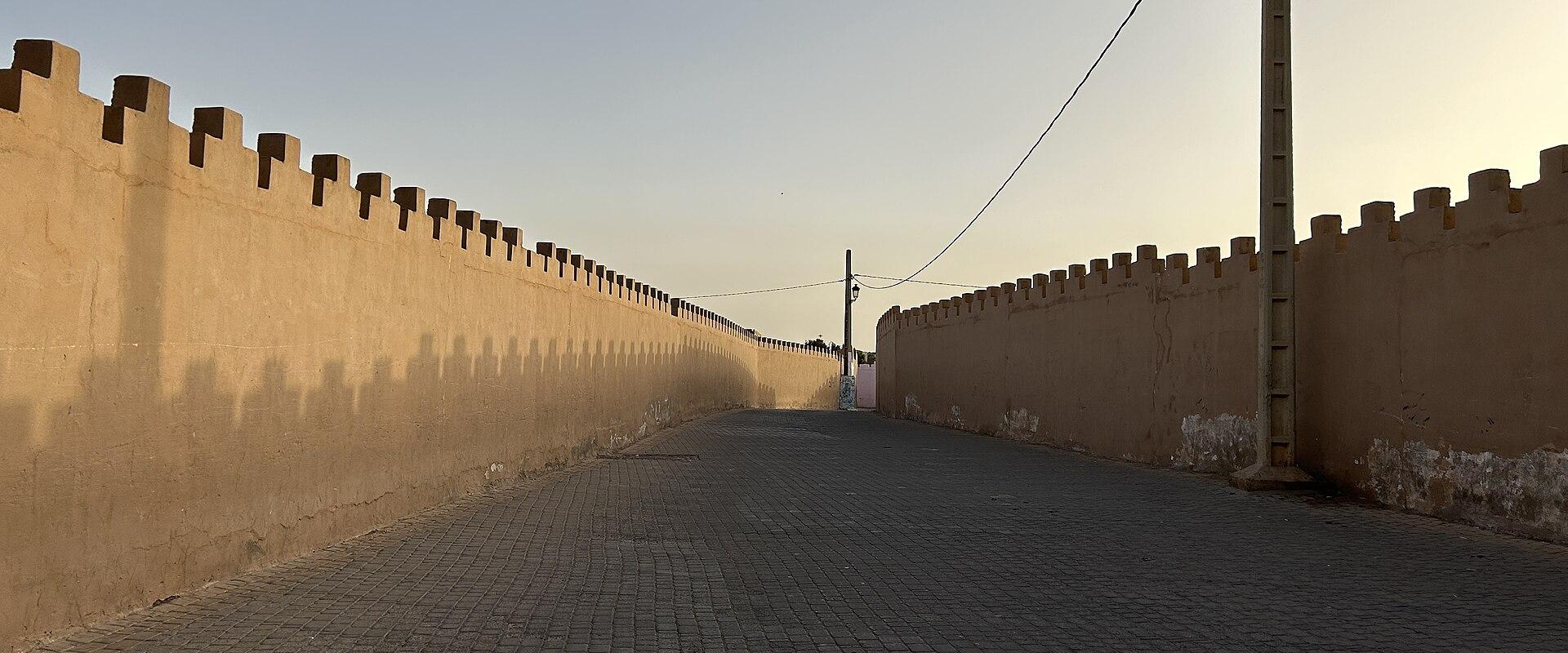
The Tiznit Medina Walls are the rammed-earth ramparts that enclose the old town of Tiznit, in southern Morocco, and they are unusual because they belong to a city founded relatively recently. Tiznit lies at the western end of the Anti-Atlas Mountains, at the edge of the Souss Valley, roughly ninety kilometres south of Agadir, and it was created in the 1880s by Sultan Hassan I as a military and administrative base from which to control a region that was often restless. The sultan chose the site beside a sacred spring, brought in builders and ordered the construction of a defensive wall around the new town, and the result is a walled city that dates from the late nineteenth century rather than the medieval period, a rarity in Morocco.
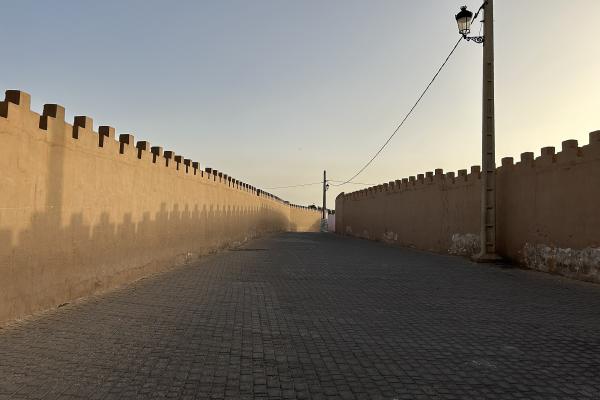
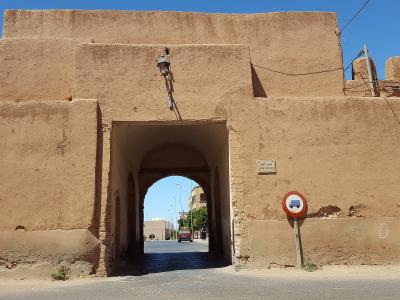
The walls are made of pisé, a mix of clay, gravel and lime compacted in wooden forms, and they take on a warm ochre colour that matches the surrounding landscape. They run for several kilometres around the old town, with regularly spaced square towers and a series of gates that give access to the lanes within. Among the gates, Bab Oulad Jarrar is one of the best known, and others carry names that point to the tribes and roads that they served. As in other earthen cities, the walls need constant repair, and some stretches have been restored while others show the erosion of rain and time, giving a good lesson in how earth architecture ages.
The medina inside is a quiet, residential quarter. Lanes are narrow and straight compared with those of older cities, lined with low houses and small shops, and the atmosphere is calm and slightly provincial. Tiznit has long been known for its silversmiths, who make jewellery in the traditional Amazigh style, with large pieces, filigree and enamel, and a special quarter of the town is devoted to the craft, so the walk can include a visit to a workshop. The town's Great Mosque has a minaret with protruding wooden poles, an unusual feature, and the Source Bleue, a spring associated with a legendary woman named Lalla Zninia, lies near the centre of the old town.
Visitors can walk along the outside of the walls and, in places where steps exist, climb to look over the rooftops toward the mountains. Check conditions carefully, as some parts are unstable, and avoid climbing on unrestored sections. The best times are early morning and late afternoon, when the light warms the walls and the heat is less intense. Wear comfortable shoes and take water. Dress modestly, ask before photographing residents and respect the privacy of the neighbourhood.
The walls suit travellers interested in military architecture and southern Moroccan towns, and they combine naturally with a visit to the jewellers, the spring and the mosque. Tiznit makes a pleasant stop on the road between Agadir and the desert towns of the south, and its walls give a clear picture of how a sultan's town was planned.
Categories
More photos coming soon
Nearby Attractions
Other places to visit in Tiznit
Questions people ask
Quick Facts
Best Time to Visit
Visit in spring or autumn for mild temperatures ideal for exploring the medina and coastal areas comfortably.