
- Where
- Agadir, Souss-Massa
- Directions
- Directions
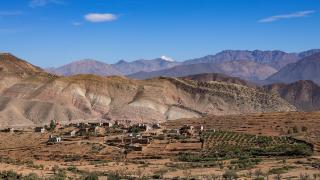
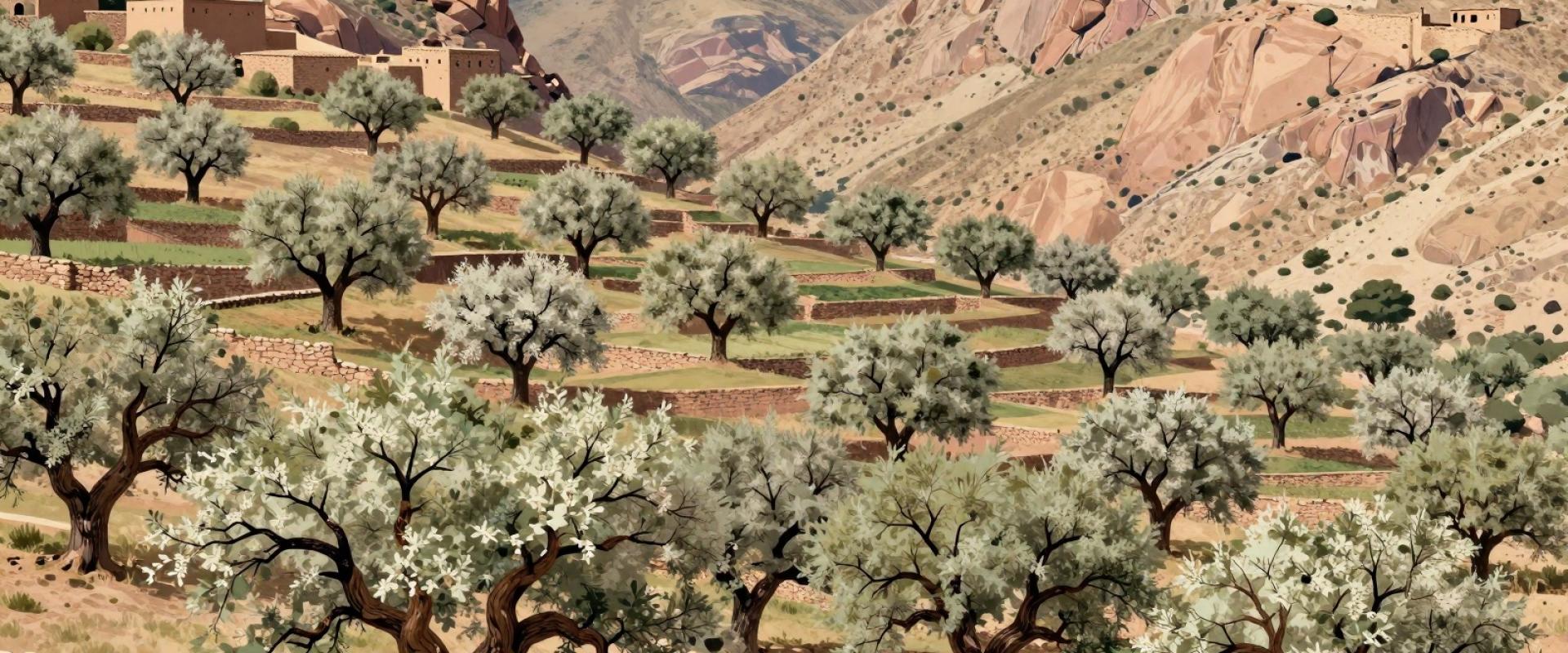
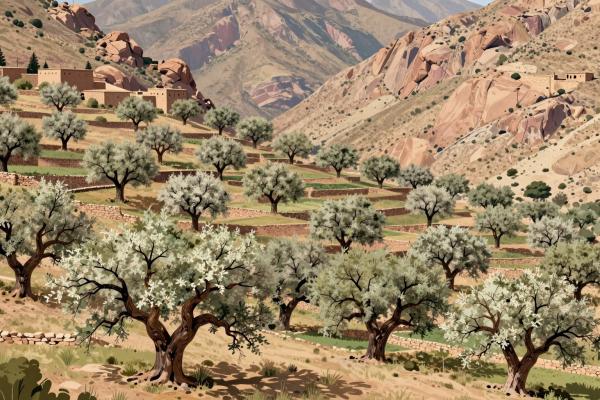
The Ancient Almond Groves of Ida-Ou-Tanane cover terraced hillsides in the Western High Atlas Mountains, northeast of Agadir, and they are at their most beautiful in late winter, when the trees come into blossom. The almond is one of the first fruit trees to flower in the Mediterranean world, and in this part of Morocco it usually blooms in February and into March, well before the leaves appear. The branches are covered in clouds of white and pale pink flowers, and entire slopes seem to turn pale against the dark rock, a scene that draws photographers, walkers and families who make the drive from the coast.
Almonds have been grown in southern Morocco for a very long time, and many trees in the old terraces are decades or even centuries old, with gnarled trunks and wide crowns. They are well suited to the climate, tolerating dry summers and poor stony soil, and their deep roots help hold the terrace walls together. Farmers do not usually irrigate them heavily, relying on winter rain, and the nuts ripen in late summer, when families harvest them by beating the branches and spreading cloths on the ground. After drying, the nuts are cracked by hand, and the kernels are eaten fresh, sold in markets or used in sweets and sauces. A speciality of the area is amlou, a spread made of ground roasted almonds, honey and argan oil, which is served at breakfast with bread.
The groves are part of the landscape that is sometimes marketed as the Honey Road, a scenic route through the mountains where beekeepers keep hives among almond, thyme and other wild plants, and honey is sold at roadside stalls. The blossom period is also important for bees, since the first flowers provide early nectar. Visitors can taste honey and buy it directly, which supports the families who keep the hives. The Amazigh villages scattered through the district, built of stone and earth, are an integral part of the scene.
While the blossom is the highlight, the groves are pleasant in other seasons too, with fresh green leaves in spring, shade in summer and ripening nuts in autumn. For those who want to see a larger festival of almond blossom, the Anti-Atlas around Tafraoute is famous for its celebrations in February, and the two areas can be combined by those with time.
Practical advice: roads in the mountains are winding, narrow and sometimes rough, so drive carefully or hire a driver, and check the weather, since February can be cold and wet. Dress warmly, wear sturdy shoes for walks between terraces and be careful not to damage trees or walls. Ask before entering private land and before photographing people. A local guide can lead walks and explain how the groves are managed.
The groves suit walkers, photographers and anyone who enjoys seeing nature and farming together. A day in the mountains in blossom time is one of the pleasures of the Agadir region, and a good reason to leave the beach for a few hours.
More photos coming soon
Nearby Attractions
Other places to visit in Agadir
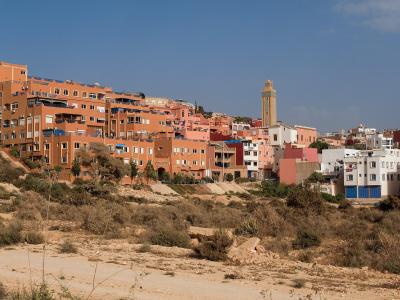
Tamraght Village
Relaxed Atlantic village with authentic culture and surf
Activities & Adventure · Coastal & Maritime
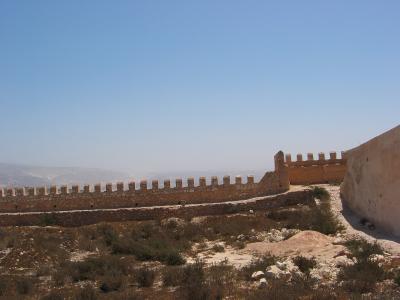
Kasbah of Agadir
16th-century fortress with panoramic city views
History & Heritage · Traditional Culture
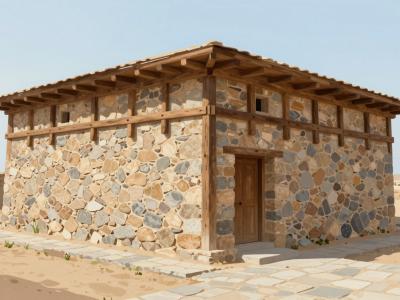
Agadir Museum
Museum dedicated to the 1960 Agadir earthquake
Cultural Experiences · History & Heritage
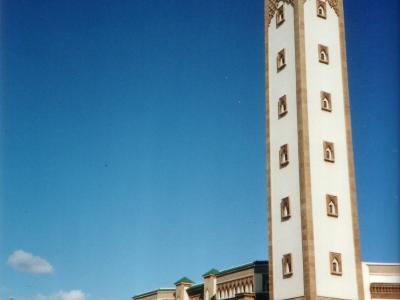
Mosque of Agadir
Largest mosque in Agadir, built in 1960
Architecture · Religious Sites
Questions people ask
Quick Facts
Best Time to Visit
All year for sun: January highs average about 21 °C and August about 27 °C. Most of the little rain falls from November to March; the sea is warmest (about 23 °C) in September and October.