







- Where
- Fez, Fes-Meknes
- Directions
- Directions
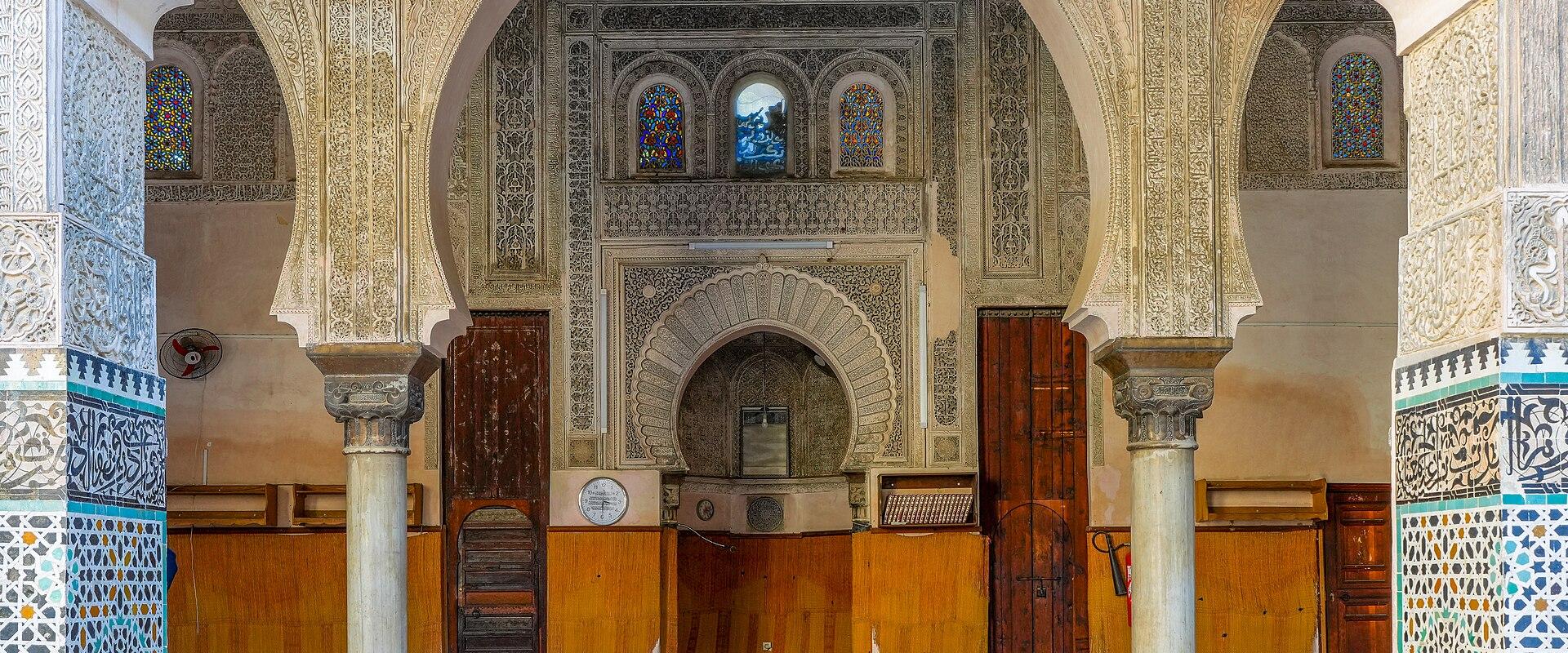
The Bou Inania Madrasa is the grandest of the Marinid colleges of Fez, and as part of Fez’s Marinid-era legacy it is the one that most visitors choose if they have time for only one. It stands on Tala'a Kebira, the main street of the old medina, near Bab Boujloud, and it was built between 1350 and 1355 by the Marinid Sultan Abu Inan Faris, whose name it carries. Abu Inan was an ambitious ruler who wanted to demonstrate his piety and his power, and the madrasa was one of his chief projects. The building trained students in religious law and the Islamic sciences, and housed them in small cells around the courtyard.
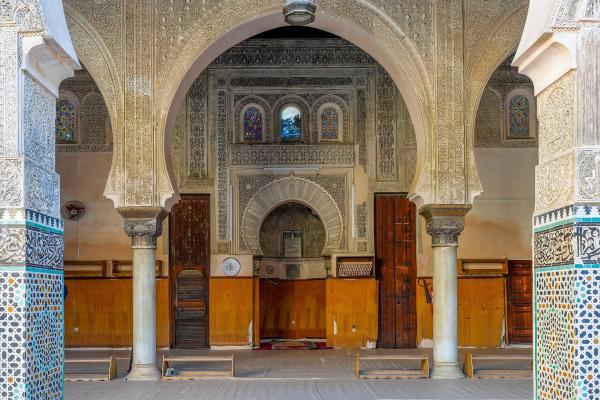
What sets it apart is its dual role. Most madrasas in Morocco were teaching colleges without their own congregational function, but this one also served as a mosque for Friday prayers, a role that Muslim congregations still value, which explains the minaret rising above the street and the presence of a large prayer hall. It is generally described as unusual among Moroccan madrasas for this reason. The status shows how much weight the sultan placed on the institution, and why it was decorated so richly.
Inside, the central courtyard is paved with marble and has a rectangular pool in the middle. The galleries around it are screened with carved cedar, and the walls are covered in layers of decoration, from tile mosaic at the bottom through carved stucco in the middle to carved wood at the top. The stucco is cut so deeply that it looks like lace, with Kufic and cursive inscriptions interwoven with floral designs. Tile patterns in green, blue, yellow and black repeat in geometric forms. Look up at the cedar eaves, which are carved with equal care. Upstairs, rooms that once housed students open onto small balconies overlooking the courtyard.
The prayer hall at the end of the court remains an active place of prayer, and visitors are not normally allowed to enter beyond the threshold, but the courtyard is open to visitors and can be explored at leisure. Opposite the entrance, across the street, stands the old water clock, a series of carved brackets and windows whose mechanism no longer works, a curiosity linked with the madrasa. Visitors should dress modestly, speak softly and check current opening times and any ticket price locally.
The Bou Inania suits architecture lovers, photographers and anyone interested in Islamic art, and a visit takes about half an hour, longer if you sit and observe. It is easy to reach on foot from Bab Boujloud and pairs well with the Attarine Madrasa and the souks in the lanes below. Early morning light and fewer visitors make the experience more peaceful, and it shows why Fez's rulers were remembered as patrons of learning and craft. The best time to visit is before midday.
More photos coming soon
Nearby Attractions
Other places to visit in Fez
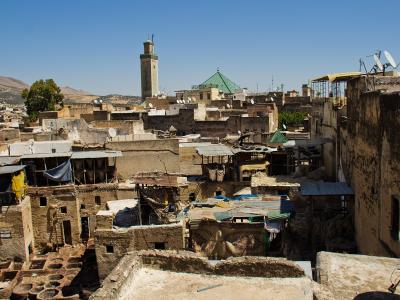
Medina of Fez el-Bali
Best-preserved medieval Arab city with 9,400 alleyways
Cultural Experiences · History & Heritage
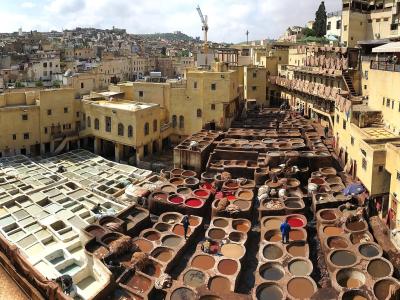
Chouara Tannery
Fes' oldest tannery with historic dye pits
Free Historic Towns · Local Crafts
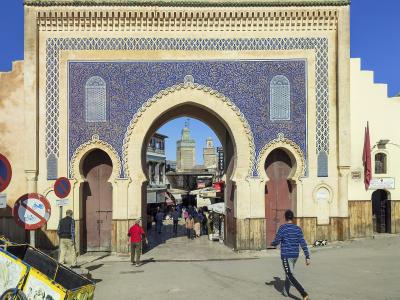
Bab Bou Jeloud
1913 French-built gate with blue mosaics
Cultural Experiences · History & Heritage
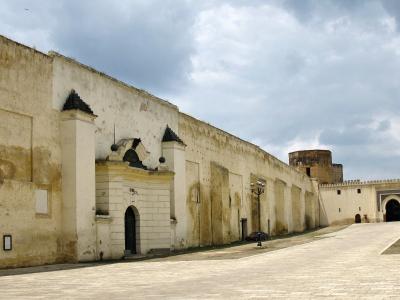
Bab Maqina
Historic military gate site in Fez Medina
Cultural Experiences · History & Heritage
Questions people ask
Quick Facts
Best Time to Visit
March to May and September to November. Summer afternoons average 35 °C in July; in January highs are about 16 °C and nights near 4 °C, and many riads are poorly heated.