







- Admission
- Free admission
- Hours
- Lively by day and by night
- Where
- Casablanca, Casablanca-Settat
- Directions
- Directions
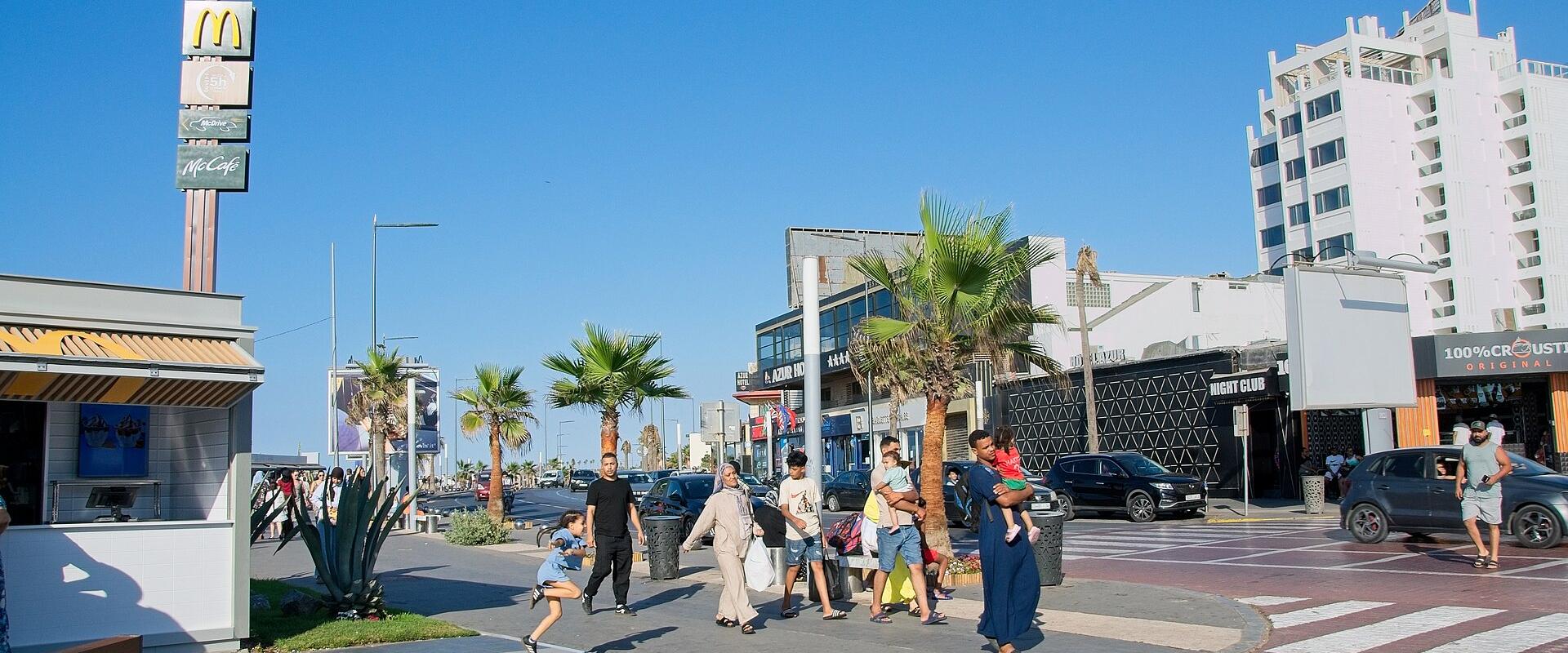
La Corniche is the long seafront road and promenade on the Atlantic coast of Casablanca, running west from the area of the Hassan II Mosque toward the district of Aïn Diab, and it is where the city goes to be beside the water. The word corniche, borrowed from French, means a road cut along a cliff or shore, and this one follows the rocky coastline for several kilometres, with the open Atlantic on one side and hotels, restaurants, beach clubs and residential blocks on the other. It is not a single attraction but a stretch of coast that can be walked, driven or cycled, and its character changes along the way.
The eastern end is dominated by the great mosque, which rises on a platform above the waves and is visible from far along the shore. From there, the road heads west past a sequence of rocky headlands, small beaches and old seaside buildings. Some of the oldest structures on the coast are modernist swimming pools and clubs from the 1930s and 1950s, built when the Corniche first became fashionable, and some still survive with curved facades and Art Deco lettering. Further along, the district of Aïn Diab, with its sandy beach, cafés and nightclubs, is the busiest part, and beyond it lies the Morocco Mall, one of the largest shopping centres in Africa, which has become a landmark of the western end.
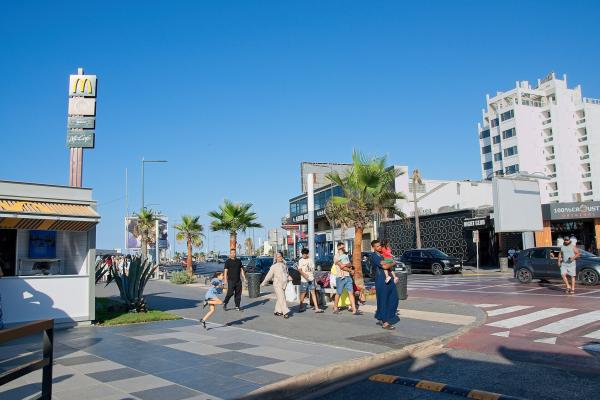
Daily life gives the Corniche its energy. In the morning, joggers, walkers and cyclists use the promenade, and fishermen cast lines from the rocks. In the afternoon, families spread out on the beaches and children play in the sand. At sunset the whole strip turns lively, as people gather at café terraces to watch the sun drop into the ocean, and restaurants serve grilled fish, prawns and calamari, together with international dishes. At night, music from clubs and cars makes the western end a nightlife zone, popular with young Casablancans. In summer, the traffic and crowds can be heavy, so allow extra time.
Beyond the immediate waterfront, the streets behind the Corniche reveal more of the city's history, with Art Deco and modernist villas and apartment blocks from the mid-twentieth century that reflect Casablanca's role as a cosmopolitan port. A short detour into these streets pays off for architecture lovers.
Practical advice is to take a taxi or the tram to start at one end and walk a stretch, taking a break at a café. Swim only at beaches with lifeguards and heed warnings about currents, and look after valuables. Dress modestly away from the sand. The Corniche suits families, walkers and anyone who wants to see Casablanca’s relaxed side. It offers a view of Morocco’s modern coastal life that contrasts with the old medina, and a good place to end a day.
Categories
More photos coming soon
Hours & Fees
- Open
- Lively by day and by night
- Admission
- Free admission
Hours and prices change, especially out of season. Check with the venue before you go.
Nearby Attractions
Other places to visit in Casablanca
Hassan II Mosque
210m minaret mosque on Atlantic promontory
Architecture · Religious Sites
Old Medina
Historic quarter with maze-like alleys and traditional souks
Free Historic Towns · Markets
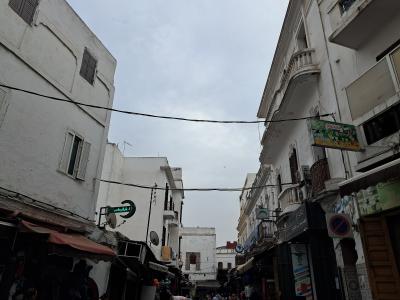
Casablanca Medina
Historic walled quarter in Morocco's largest city
Free Cultural Experiences · History & Heritage
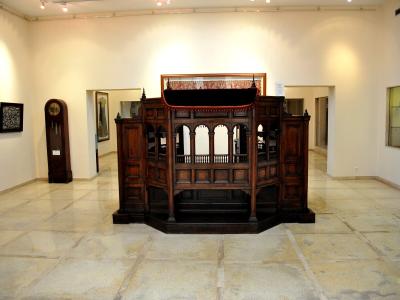
Museum Of Moroccan Judaism
Arab world's only museum dedicated to Moroccan Jewish her...
Museums · Traditional Culture
Questions people ask
Quick Facts
Best Time to Visit
Any time of year: Casablanca is mild, with January highs around 18 °C and August highs around 27 °C. Most rain falls from November to March.