







- Admission
- 100 MAD at the gate
- Hours
- Daily 9:00 AM to 5:00 PM; Ramadan: 10:00 AM to 4:00 PM
- Where
- Marrakech, Marrakech-Safi
- Directions
- Directions
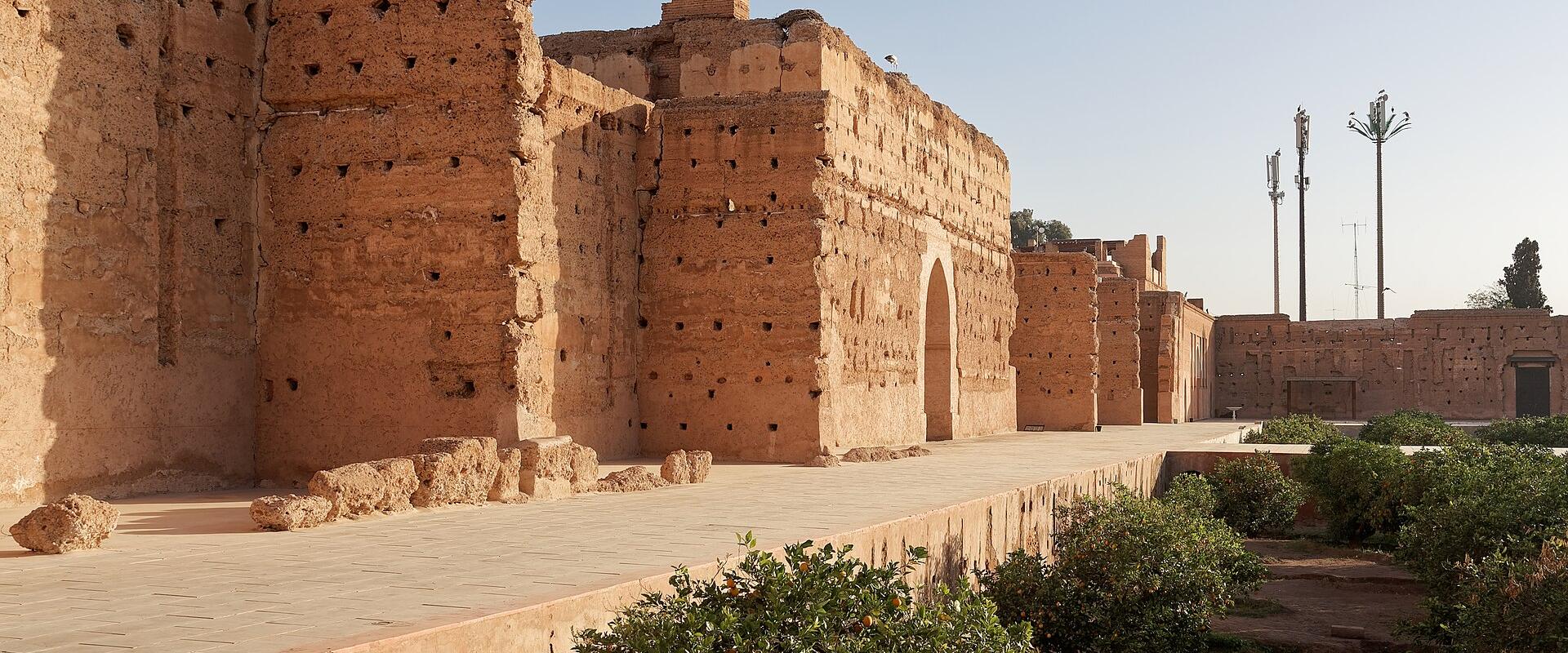
El Badi Palace is a vast ruin in the southern part of Marrakech’s Medina, and it was once one of the most extravagant palaces in the Islamic world. Its name means the incomparable. It was built from 1578 by the Saadian sultan Ahmad al-Mansur after his victory over the Portuguese at the Battle of the Three Kings, using money from that war and from the trade in sugar and gold. Accounts say that marble was brought from Italy and gold from Timbuktu, and that the palace had hundreds of rooms, pavilions and gardens. It was meant to impress foreign ambassadors, and the sultan used it for audiences and receptions.
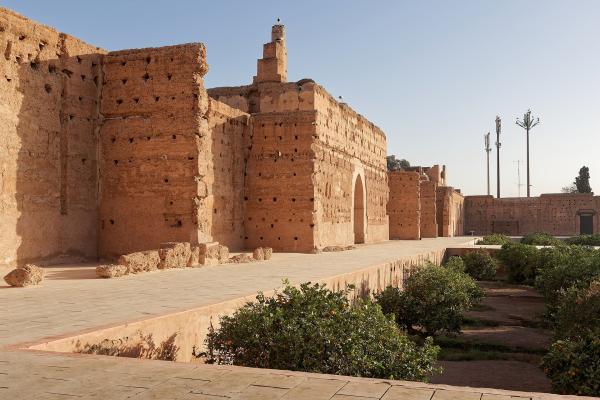
The palace did not last long. After the Saadians fell, the Alaouite sultan Moulay Ismail stripped it of its marble, wood and decoration in the late seventeenth century to use in the building of his own capital at Meknes, and the structure was left to decay. What survives today are thick earth walls, the outlines of halls and pavilions and a very large courtyard in the centre. It is easier to see the scale than to visualise the decoration, but the space is still impressive, especially at the end of the day when the walls turn orange.
The central court has a long water basin and four sunken gardens planted with orange trees, laid out in the traditional geometric pattern of Islamic gardens. The sunken beds allowed the trees to be at the level of the terraces and gave the court a feeling of coolness. Climb the ramparts and ruined towers for views over the medina, the Atlas Mountains and the nearby Koutoubia Mosque, and look for white storks, which nest on the walls and fill the sky with the clatter of their bills in spring. Beneath the ruins, passages and cells, sometimes described as dungeons, can be explored, and some rooms hold exhibits.
One room contains the minbar of the Koutoubia Mosque, a carved wooden pulpit made in the twelfth century in Córdoba, with inlaid ivory and exotic woods, and widely regarded as a masterpiece of Islamic woodwork. It has been restored and displayed in a climate-controlled gallery, and it is worth a few minutes. The palace also hosts occasional festivals and exhibitions, and these can change the atmosphere on the day.
Practical advice is to bring water, a hat and sturdy shoes, since the ground is uneven and shade is scarce. Check current opening times and ticket prices locally. A visit takes about an hour, and it combines well with the Saadian Tombs and the Bahia Palace in the same area. This is among Morocco’s most atmospheric ruins. The ruins suit history readers, photographers and anyone curious about the rise and fall of dynastic power, and they give a different feel from the more intact palaces of the city.
More photos coming soon
Hours & Fees
- Open
- Daily 9:00 AM to 5:00 PM; Ramadan: 10:00 AM to 4:00 PM
- Admission
- 100 MAD at the gate
Hours and prices change, especially out of season. Check with the venue before you go.
Nearby Attractions
Other places to visit in Marrakech
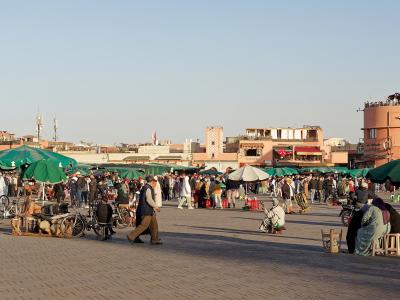
Jemaa el-Fnaa
Historic square and UNESCO intangible heritage site
City Centers · Town Squares
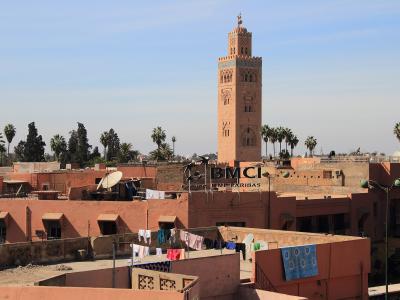
Koutoubia Mosque
12th-century Almohad minaret in Marrakech
Free Architecture · Historic Towns
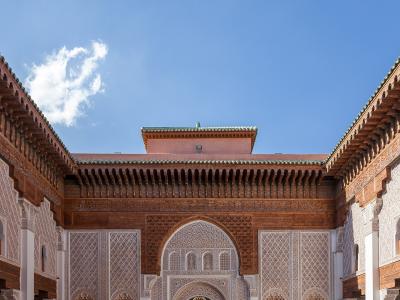
Ben Youssef Madrasa
16th-century Islamic school in Marrakech
Cultural Experiences · History & Heritage
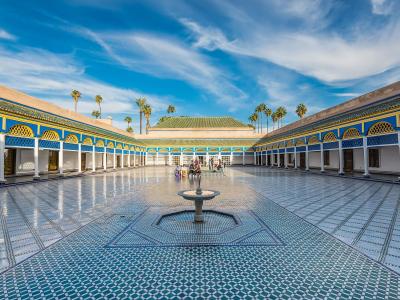
Bahia Palace
19th-century palace with stunning mosaics and gardens
Cultural Experiences · History & Heritage
Questions people ask
Quick Facts
Best Time to Visit
Visit in spring or autumn for mild temperatures ideal for exploring the medina and gardens.