







- Where
- Marrakech, Marrakech-Safi
- Directions
- Directions
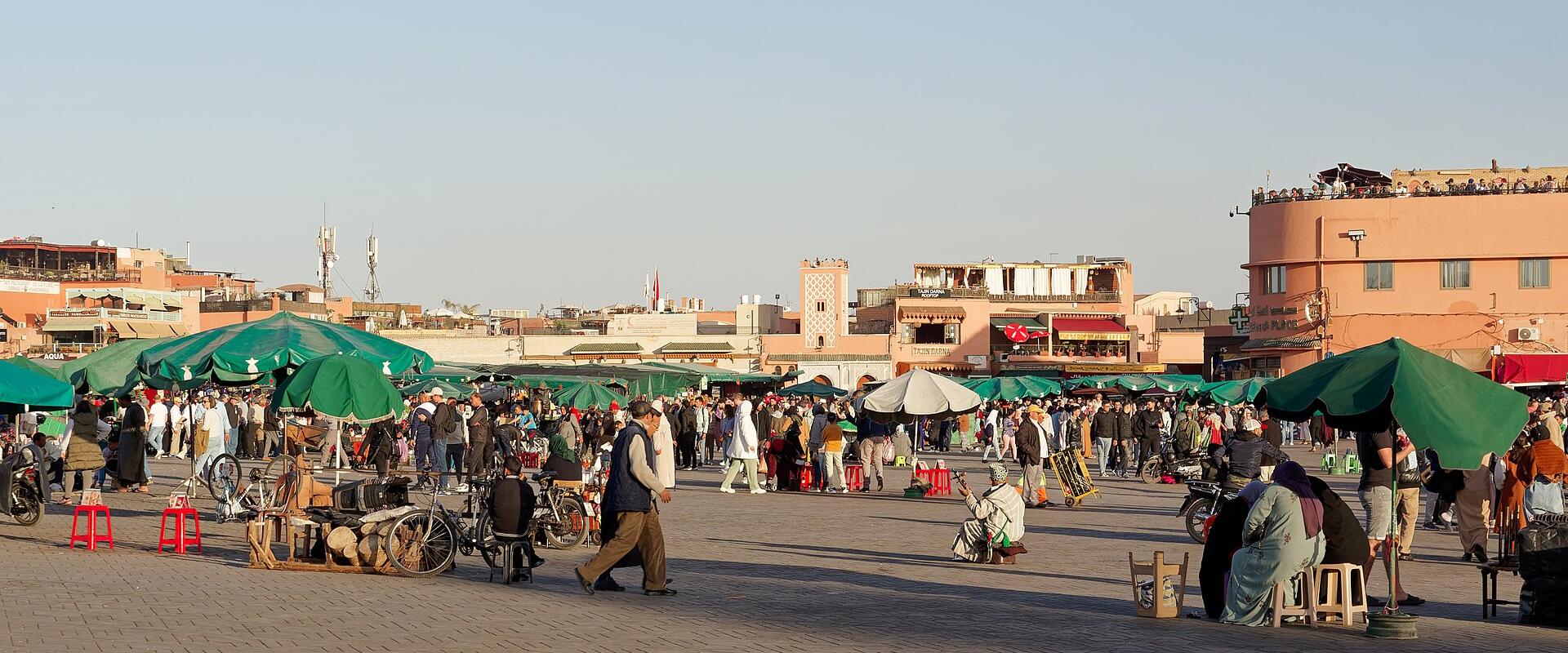
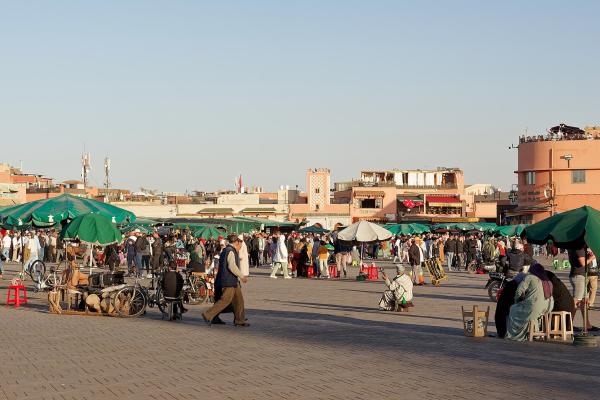
Jemaa el-Fnaa is the great open square at the edge of the Marrakech medina, and it is the place where Marrakech’s public life is most visible, and one of the best-known squares in North Africa. Historically the square was a place of trade and public gatherings, and the origins of the name are disputed, and translations vary, but it has long been the main gathering ground beside the old souks, a kind of open stage where people trade, eat, listen and watch. The square and its traditions were recognised by UNESCO as an outstanding example of intangible heritage, and few squares in Africa carry that distinction, because what matters is not a building but the way storytellers, musicians and other performers keep their art alive in public.
Daytime brings a slower mix. Orange-juice sellers line up with carts, water sellers in bright costume pose for photographs, and snake charmers, henna artists and monkey handlers compete for attention. Some of these activities are controversial, and visitors should be aware that photography often comes with a request for payment. A good rule is to agree a price before any picture or service, or simply to decline politely and keep walking. Haggling in the souk lanes that open off the square, such as Souk Semmarine, is part of the experience.
Late in the afternoon the square changes. Rows of food stalls are set up on the open ground, grills begin to smoke and the area fills with the smells of lamb, sausages, fried fish, snails and harira soup. Sitting down at a communal bench is an easy way to try Moroccan street food in one sitting. Around the edges, circles of people form around musicians, including Gnawa groups, and around halqa storytellers, whose traditional audience once gathered nightly to hear tales in Arabic or Amazigh languages. The tradition has thinned, but traces of it remain.
For a calmer view, many visitors climb to one of the rooftop cafés around the square and watch the smoke, lights and crowds from above, with the minaret of the Koutoubia mosque in the distance. It is crowded, noisy and occasionally overwhelming, so it helps to keep bags closed, avoid flashing valuables and set a meeting point if you are in a group.
The square is a natural starting point for exploring other sights nearby. The Saadian Tombs, Bahia Palace, El Badi Palace, Ben Youssef Madrasa and Mouassine Museum are all within a reasonable walk, and the trip is easiest on foot. It suits first-time visitors, food lovers and people-watchers, and it is best seen both once in daylight and once after dark to understand how completely it changes.
Categories
More photos coming soon
Nearby Attractions
Other places to visit in Marrakech
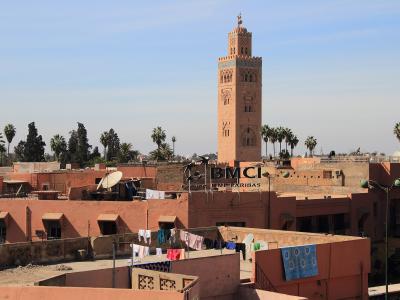
Koutoubia Mosque
12th-century Almohad minaret in Marrakech
Free Architecture · Historic Towns
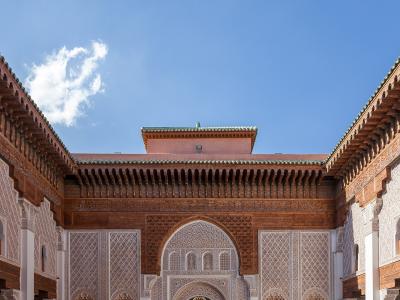
Ben Youssef Madrasa
16th-century Islamic school in Marrakech
Cultural Experiences · History & Heritage
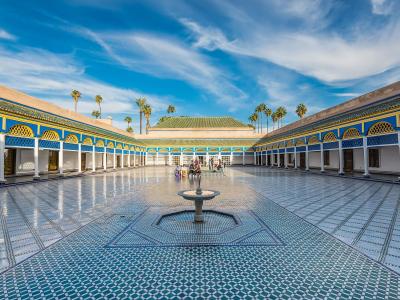
Bahia Palace
19th-century palace with stunning mosaics and gardens
Cultural Experiences · History & Heritage
Mouassine Museum
Saadian-era music museum in restored 16th-century home
From €2 Historic Houses · Museums
Questions people ask
Quick Facts
Best Time to Visit
Visit in spring or autumn for mild temperatures ideal for exploring the medina and gardens.