







- Where
- Meknes, Fes-Meknes
- Directions
- Directions
The Kasbah of Meknes is the core of the imperial city created by Sultan Moulay Isma'il ibn Sharif, and it is among the most ambitious building projects in Moroccan history. Moulay Ismail, who ruled Morocco from 1672 to 1727, chose Meknes as his capital and spent decades building a walled complex of palaces, gates, stables, storehouses, gardens and a mosque, intended to impress rivals across the Islamic world and ambassadors and to house a large army. Work continued through his long reign, and parts were finished by his successors. It is often compared with Versailles, a comparison that reflects both its scale and his awareness of the French court. The Historic City of Meknes was inscribed as a UNESCO World Heritage Site in 1996.
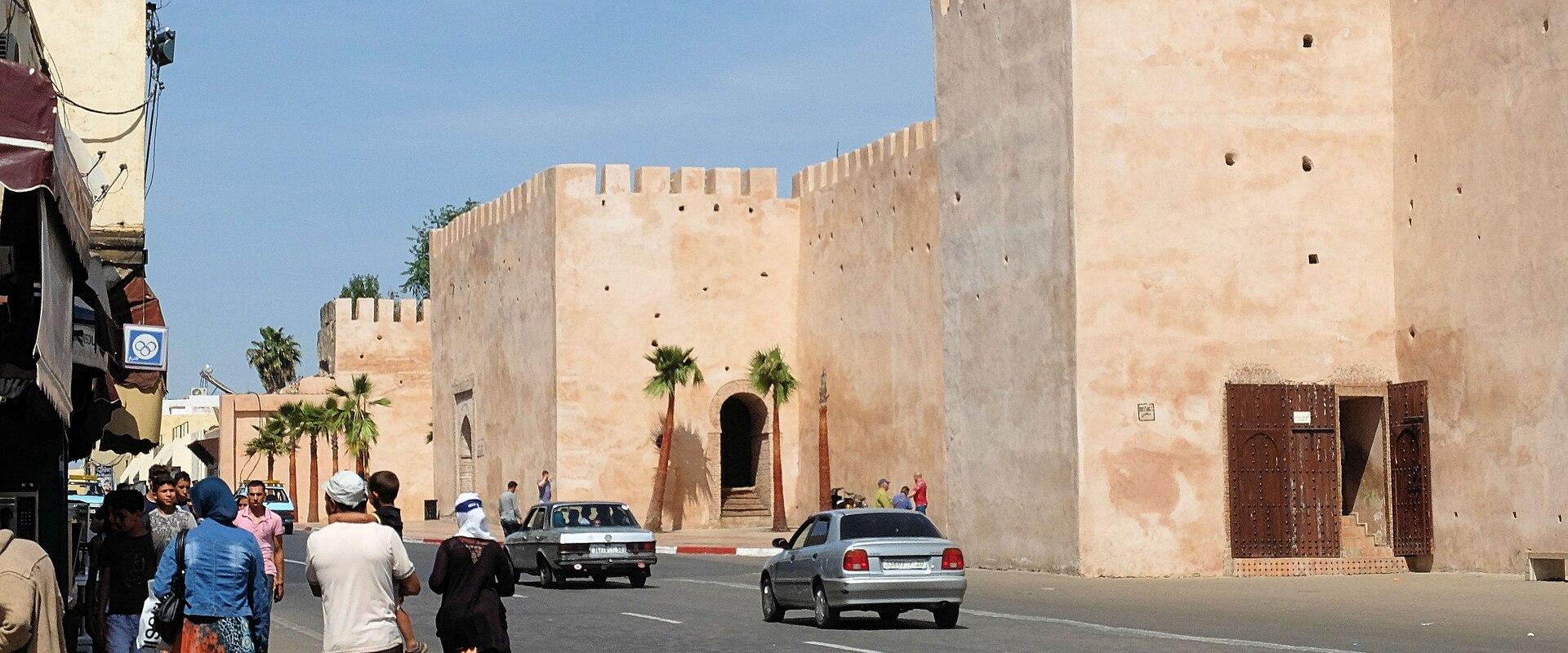
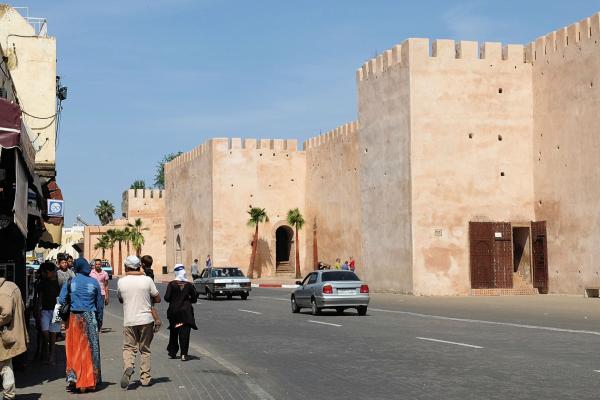
The Kasbah is not a single building but a district. Massive pisé walls, many kilometres long and punctuated by towers and gates, enclose areas that once held the royal residences and the sultan's guard, and the proportions are intended to awe. Among the best-known gates are Bab Mansur, facing Place el-Hedim, and Bab Jama' an Nouar, a smaller but richly decorated gateway. The Dar al Makhzen, the royal palace, is still used by the king on occasion and is closed to visitors, while ruins of other palaces, such as the Dar Kebira, give a sense of former grandeur.
Within the area you can also see structures linked with the Sultan’s court. The Koubba el-Khayatine, a pavilion where ambassadors were received, is a fine example of the style, and beneath the ground lies the Habs Qara, a vast underground vaulted space traditionally said to have been used as a prison for captives, though its original purpose is debated. A little further on, the great granaries and stables at Heri es-Souani and the Agdal basin show the infrastructure that supported the court.
Walking is the best way to appreciate the scale. Paths between walls are long, open and often empty, with views of the city on one side and fields on the other. Wear comfortable shoes, as surfaces are uneven, and bring a hat and water. A guide can explain which gates and ruins are which, since signs are limited, and help with access to places that have restricted opening.
Visitors should dress modestly and be aware that some areas are guarded and not open to photography. The Kasbah can be seen together with the Mausoleum of Moulay Ismail, the Royal Stables and the Medina in a day or two. It suits readers of Moroccan history, architecture enthusiasts and photographers, and it gives a rewarding look at Morocco’s ambitions in the seventeenth century. The late afternoon light makes the walls glow, and the quiet makes it feel far from the souks.
Categories
More photos coming soon
Nearby Attractions
Other places to visit in Meknes
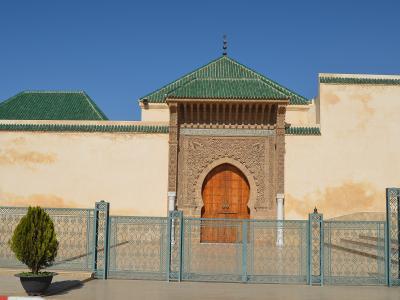
Mausoleum of Moulay Ismail
18th-century mausoleum of Morocco's longest-reigning sultan
History & Heritage · Cemeteries
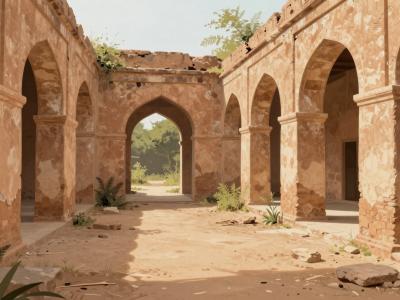
Royal Stables (Haras Royal)
17th-century Alawite ruins housing 12,000 horses
History & Heritage · Urban Exploration
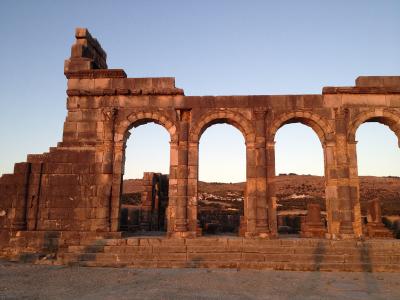
Volubilis Ruins
Roman ruins with intact mosaics near Meknes
From MAD 70 Cultural Experiences · History & Heritage
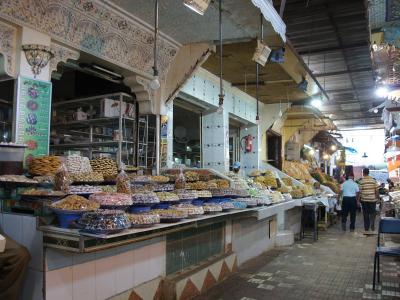
Medina of Meknes
UNESCO site and former capital with monumental gates
Cultural Experiences · History & Heritage
Questions people ask
Quick Facts
Best Time to Visit
Visit in spring or autumn for mild weather ideal for exploring ruins and the medina.