- Where
- Chefchaouen, Tangier-Tetouan
- Directions
- Directions
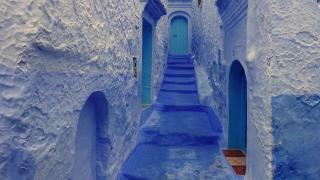
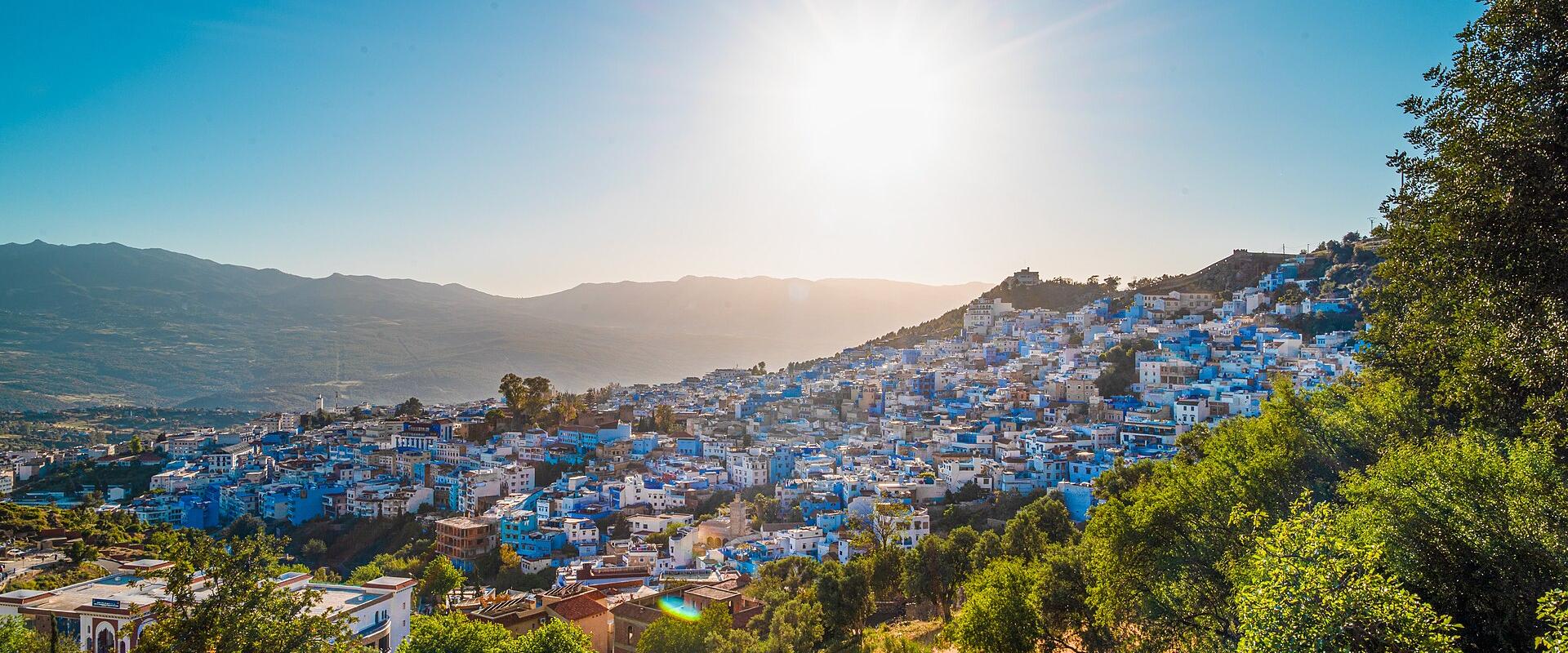
The Medina of Chefchaouen is a small, hillside old town in the Rif Mountains of northern Morocco, known for lanes, stairways and houses washed in shades of blue, white and sky colour. The town was founded in 1471 by Moulay Ali ibn Rashid, who built a fortress, the Kasbah, here to defend the area against Portuguese raids on the northern coast. In the following decades it received refugees from Spain, among them Andalusian Muslim families and Jewish families forced to leave after the fall of Granada, and their influence shaped the architecture, crafts and cooking that make it a distinctive Moroccan town. The name is usually explained as a reference to the two peaks above the town, which resemble horns.
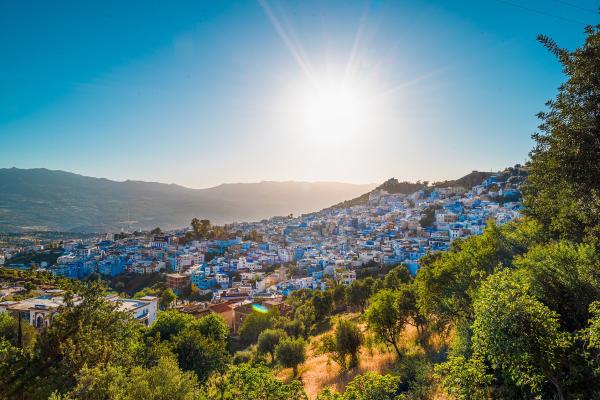
The famous blue is a more recent story than many visitors assume, and the reasons given for it vary. Some say Jewish refugees introduced the habit in the twentieth century, others point to practical benefits such as keeping houses cool and deterring insects, and local people also mention that the colour is simply popular and kept up out of pride. Whatever the cause, the blue washes are renewed regularly, and the result is a town where every alley feels like a composition. Early morning, before the day trippers arrive, is the best time to walk.
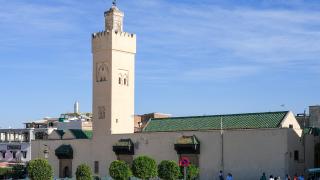
At the centre of the medina is Plaza Outa el-Hammam, surrounded by cafés and overlooked by the kasbah and the Great Mosque with its distinctive octagonal minaret. Key places to visit include the kasbah itself, whose courtyard garden and museum display regional objects, and the small lanes behind the square where artisans make woollen garments, blankets, woodwork and leather goods. Goat cheese, olives and local honey are common purchases. Beyond the medina walls, the Ras el-Maa spring and the Spanish Mosque on the hill give good views back across the town.
The atmosphere is relaxed compared with big imperial cities such as Marrakech, and sellers are generally less insistent. The town can become busy at weekends and in high season, and walking uphill on stepped lanes requires effort, so comfortable shoes are useful. Residents live and work in the medina, so ask before photographing people and avoid blocking doorways.
Northern Morocco has a Spanish-influenced history, and you may hear Spanish spoken here as often as French. The nearby Talassemtane National Park offers hiking for those who want to go beyond the town.
The medina suits photographers, slow travellers, craft shoppers and families, and it rewards a night or two rather than a hurried visit.
Categories
More photos coming soon
Nearby Attractions
Other places to visit in Chefchaouen
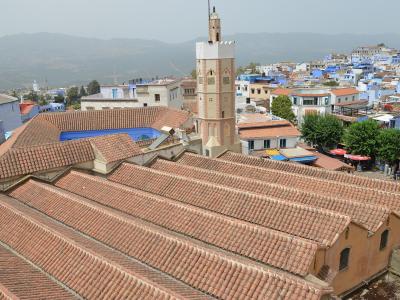
Grand Mosque (Great Mosque)
15th-century mosque at Place Outa Hammam
Architecture · Historic Towns
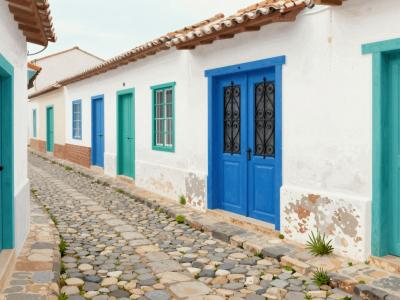
Chefchaouen Medina Souk
Traditional souk in Chefchaouen's blue-walled medina
Markets · Shopping
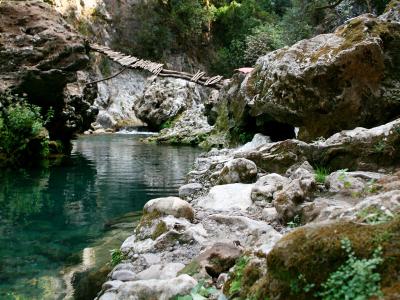
Talassemtane National Park
Rif Mountains park protecting fir forests and limestone g...
Activities & Adventure · Natural Wonders
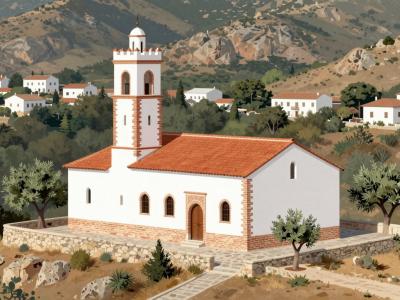
Spanish Mosque (Mosque of the Spaniards)
1920s Spanish-built mosque atop Chefchaouen's hill
Cultural Experiences · History & Heritage
Questions people ask
Quick Facts
Best Time to Visit
April to June and September to October. Winters are cold and wet (most of the town's 480 mm of annual rain falls between November and March); July and August are warm and busy.