
- Where
- Fez, Fes-Meknes
- Directions
- Directions
The Nejjarine Fondouk is a restored merchants' inn, or fondouk, in the old medina of Fes el Bali, and its rooftop is one of the best places to understand the city's layout from above. The building was put up in the early eighteenth century, in the period when Fes was still a major hub for caravans and craft trade, and it followed the usual Moroccan pattern: a ground-floor courtyard where animals and goods were kept and two or three storeys of galleries with rooms for traders to sleep and do business. The name refers to the carpenters, the Nejjarine, whose workshops clustered in this part of the medina.
Today the building holds the Nejjarine Museum of Wooden Arts and Crafts, which opened after a restoration at the end of the twentieth century. The museum is dedicated to woodworking from across Morocco, not music as some descriptions suggest, and its displays include carved doors, window shutters, chests, furniture, tools and examples of the cedar craftsmanship for which Fes’s workshops have long been known. While the objects are the draw, the building is itself an exhibit, with painted and carved cedar balconies, a central courtyard and galleries around it, so walking through gives a sense of how such inns worked.
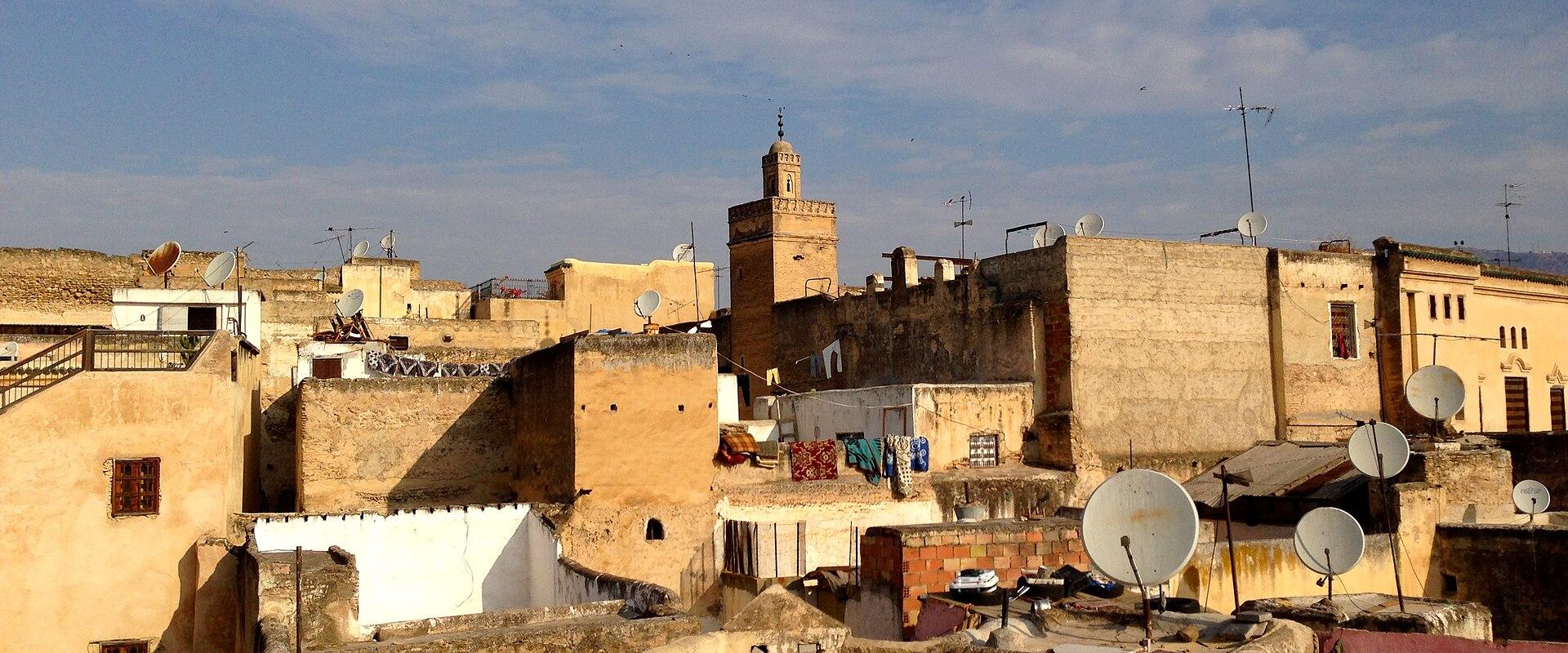
The rooftop terrace gives a different view. From above, the medina appears as a continuous carpet of flat roofs, satellite dishes, domes and green-tiled minarets, with the hills and old city walls beyond. The green roof of the Qarawiyyin mosque, a centre of Islamic learning, and the surrounding rooftops are visible, and in the late afternoon the call to prayer rises from different directions. The terrace, often with a café, is a place to pause after the crush of the lanes, and it is especially good for those who struggle to picture the layout at street level.
Outside the entrance lies Nejjarine Square, a small plaza with one of the most beautiful fountains in the medina, covered in mosaic tile and carved wood. Women, children and porters have long met here to collect water, and the fountain is still a pleasant place to stop. Around the square are carpenters' workshops and shops selling woodwork.
Visitors should check opening times and any ticket arrangement locally, as they have changed over time. The site suits craft lovers, photographers and anyone who wants a quiet break in the middle of a long medina walk. It fits naturally with Place Seffarine, the Qarawiyyin quarter and the Medersa Bou Inania, and it is easy to find using the nearby fountain as a landmark.
Categories
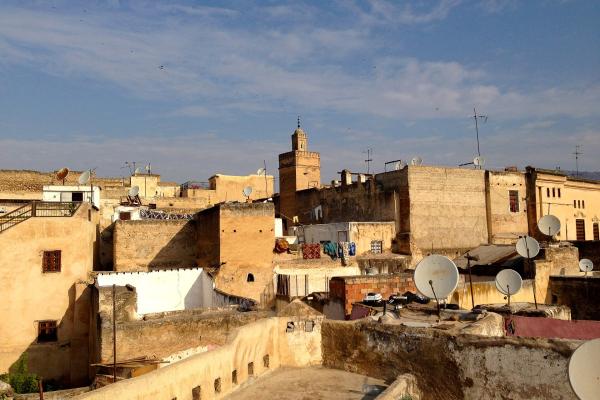
More photos coming soon
Nearby Attractions
Other places to visit in Fez
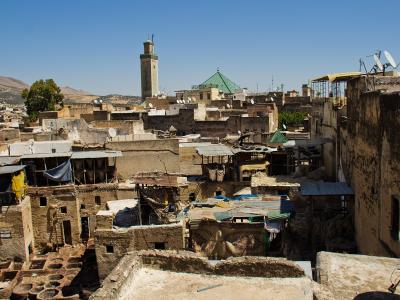
Medina of Fez el-Bali
Best-preserved medieval Arab city with 9,400 alleyways
Cultural Experiences · History & Heritage
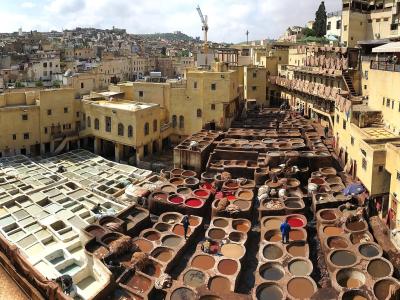
Chouara Tannery
Fes' oldest tannery with historic dye pits
Free Historic Towns · Local Crafts
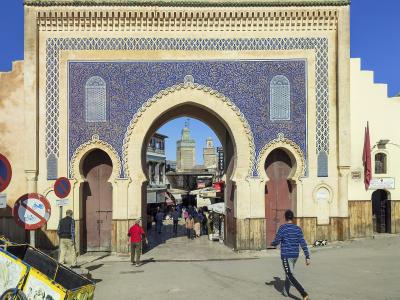
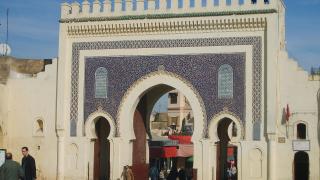
Bab Bou Jeloud
1913 French-built gate with blue mosaics
Cultural Experiences · History & Heritage
Bab Maqina
Historic military gate site in Fez Medina
Cultural Experiences · History & Heritage
Questions people ask
Quick Facts
Best Time to Visit
March to May and September to November. Summer afternoons average 35 °C in July; in January highs are about 16 °C and nights near 4 °C, and many riads are poorly heated.