







- Hours
- Currently closed (temporarily closed); opening hours are TBD.
- Where
- El Jadida, Casablanca-Settat
- Directions
- Directions
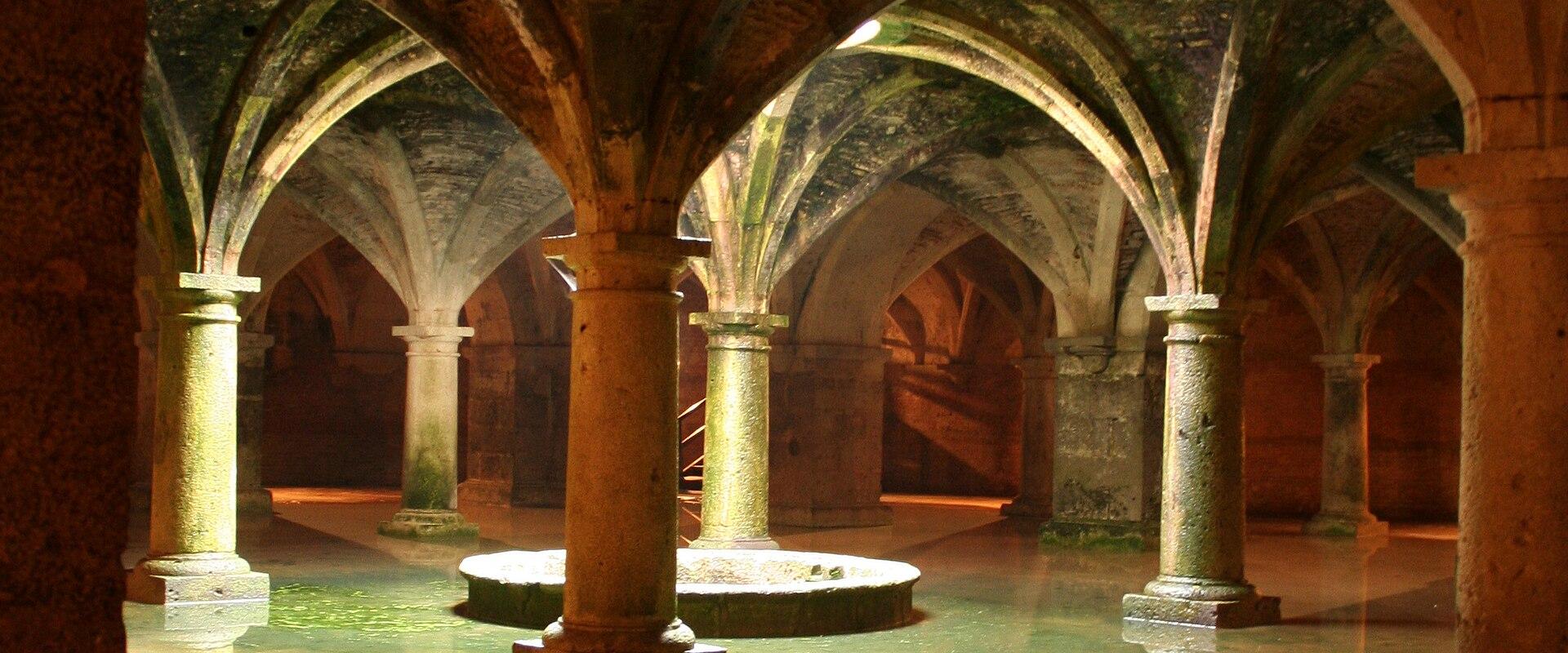
The Portuguese Cistern is a vaulted underground water reservoir inside the old fortress of El Jadida, the Atlantic port town that the Portuguese called Mazagan, and it is one of the most memorable interiors in the country. It was built in the early sixteenth century, soon after the Portuguese established the fort in 1514, to store rainwater and ensure that the garrison could survive a long siege. In a place that depended on supplies from the sea and was surrounded by hostile territory, a reliable water supply was as important as walls and cannons. Some accounts suggest that the building may have been designed first as an armoury or storeroom and converted later, though the cistern function is the one that has stuck.
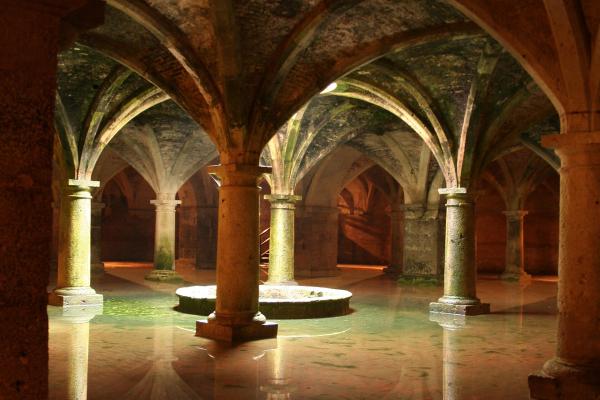
The space is striking. A rectangular hall is divided into aisles by rows of stout stone columns that support a ceiling of rounded arches, and the floor is covered with a thin layer of water that mirrors the arches. Light enters through a single opening in the roof, a circular hole that casts a shaft of daylight down onto the water, and the rest of the hall remains in cool shadow. The atmosphere is quiet and slightly eerie, and the echo of footsteps adds to the effect. Photographers love the reflections, and the interplay of light and darkness gives it a theatrical quality.
This quality made it attractive to filmmakers. The great American director Orson Welles used the cistern as a location in his version of Othello, filmed in the early 1950s, and since then it has appeared in other productions, and been used for exhibitions and concerts. The memory of these uses forms part of its identity today, and visitors often describe the place as looking like a film set. Its role in cultural events has helped to keep it in the public eye.
Access has not always been consistent. The cistern has been closed for restoration or maintenance at times, and opening hours and ticket arrangements have changed, so check locally before making a special trip. When it is open, entry is usually by a small stairway from the courtyard, and visits take around twenty minutes. Wear shoes with grip, since floors can be wet, and be careful with cameras and tripods. Visitors should speak softly, as the acoustics carry sound.
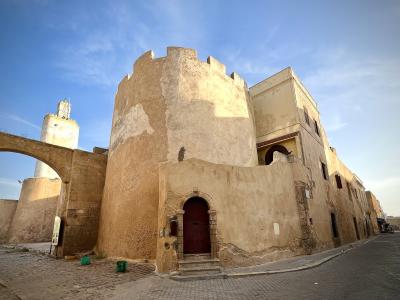
The cistern forms part of the walled Portuguese city, which is a UNESCO World Heritage Site, and it can be seen together with the ramparts, the bastions and the church within the walls. It suits history readers, photographers and film lovers, and it makes a quiet, cool stop in the heat. As a piece of military engineering and as a work of beauty, it is one of the highlights of a visit to the town and a reminder of the European presence on the Moroccan coast.
Categories
More photos coming soon
Opening Hours
- Open
- Currently closed (temporarily closed); opening hours are TBD.
Hours and prices change, especially out of season. Check with the venue before you go.
Nearby Attractions
Other places to visit in El Jadida
Questions people ask
Quick Facts
Best Time to Visit
Visit in spring or autumn for mild temperatures ideal for exploring the citadel and coastal areas comfortably.