







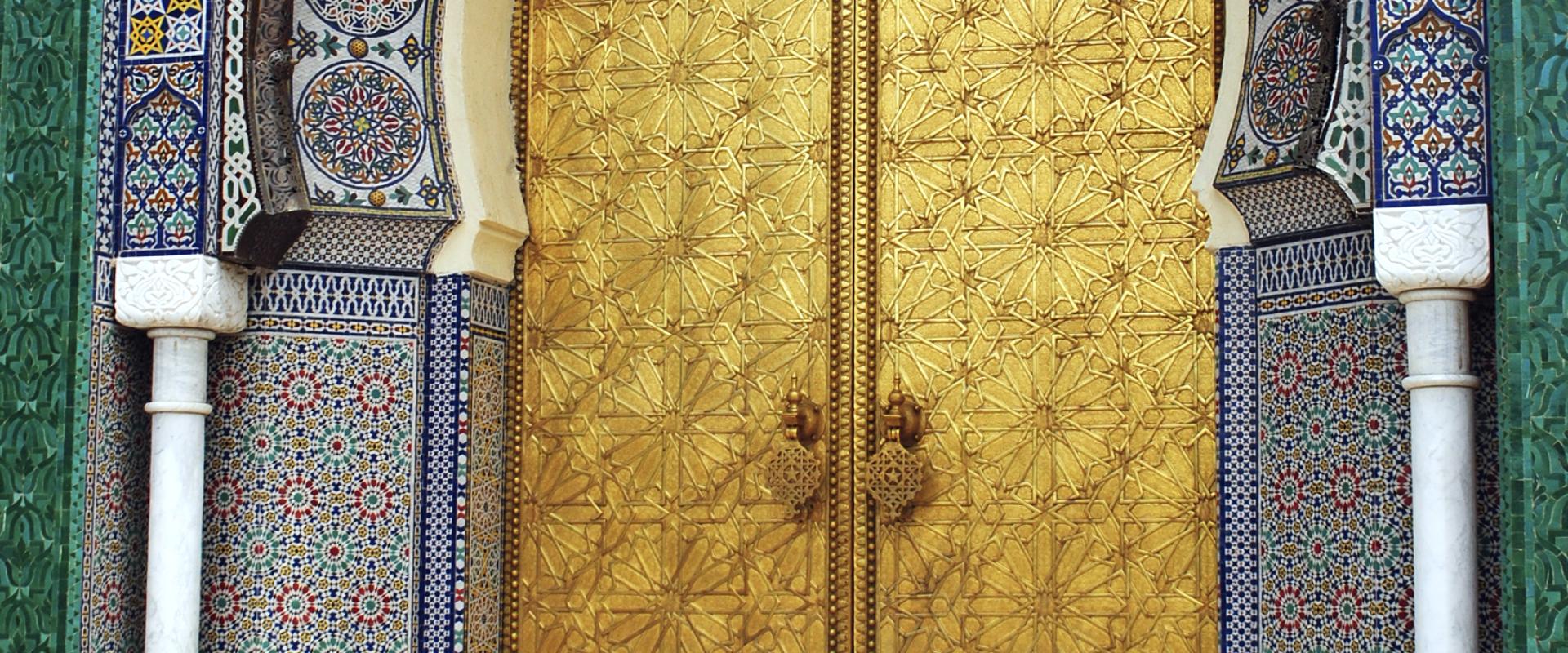
Royal Palace (Dar el-Makhzen)
13th-century royal citadel with ornate 20th-century gates
- Admission
- Not open to the public
- Hours
- Not open to the public
- Where
- Fez, Fes-Meknes
- Directions
- Directions
The Royal Palace of Fes, Dar el-Makhzen, occupies a huge walled area in Fes el-Jdid, the royal quarter of Fez, and it is one of several residences of the King of Morocco. The palace is not open to the public. For most visitors the experience is about its exterior and its setting, but the gates are among the finest examples of modern Moroccan and Islamic craftsmanship and well worth a visit in their own right. The complex dates back to the founding of Fes el-Jdid, the new city, in 1276 by the Marinid Sultan Abu Yusuf Ya'qub, who built a fortified royal town beside the older medina to house his court, army and administration.
Most of what stands today belongs to later periods. The Alawi dynasty, which has ruled since the seventeenth century, expanded and rebuilt parts of the palace over the centuries, and further changes were made in the twentieth century. Inside the walls are courtyards, pavilions, gardens, a mosque and administrative buildings, and the grounds are large enough to be a small town. The name Dar el-Makhzen, which is used for royal palaces across Morocco, refers to the central government, and in earlier times the palace was where state business was conducted and justice delivered.
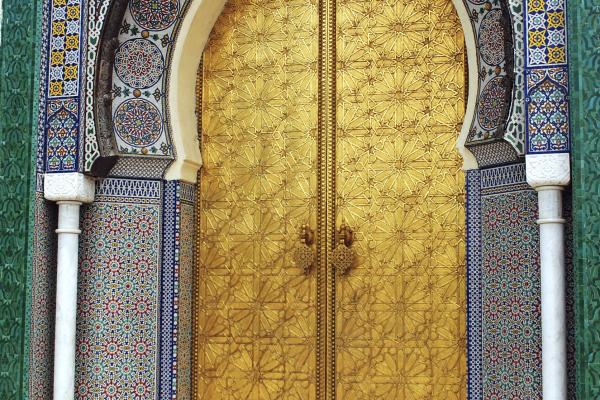
The main reason to come is the gate. Facing the Place des Alaouites, a row of great gilt-bronze doors is set within a frame of tile mosaic and carved cedar, with decorated arches above. The bronze is polished by hand and glows in the sun, and the geometric tilework in green, blue and yellow shows the work of master craftsmen. The doors look ancient but were made in 1969–1971, when King Hassan II laid out the Place des Alaouites, and they are among the most photographed sights in Fez. Beyond the doors, the long Mechouar, an open parade ground, leads to other entrances, and the Old Mechouar, which lies nearby, was the traditional place for royal ceremonies and gatherings.
Around the palace are other places of interest. The Mellah, the historic Jewish quarter, lies beside it, with its balconied houses and old cemetery, and the Jnan Sbil Gardens are a short walk away, offering a green pause. Fes el-Jdid also contains its own mosques and markets, and the old walls are worth following.
Visitors should respect the security around the palace, avoid photographing guards at close range and dress modestly. Early morning and late afternoon give the best light and fewer tour groups. The site suits photographers, craft lovers and travellers interested in Moroccan royal history, and a visit takes about half an hour. It makes a natural start to a day exploring Fes el-Jdid.
More photos coming soon
Hours & Fees
- Open
- Not open to the public
- Admission
- Not open to the public
Hours and prices change, especially out of season. Check with the venue before you go.
Nearby Attractions
Other places to visit in Fez
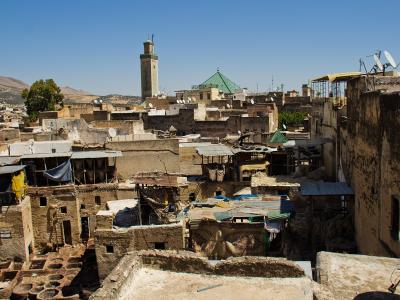
Medina of Fez el-Bali
Best-preserved medieval Arab city with 9,400 alleyways
Cultural Experiences · History & Heritage
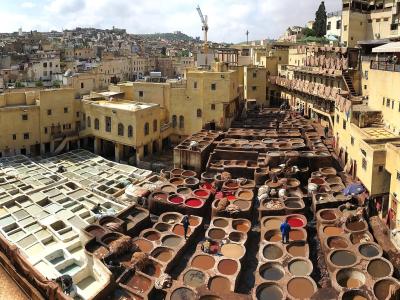
Chouara Tannery
Fes' oldest tannery with historic dye pits
Free Historic Towns · Local Crafts
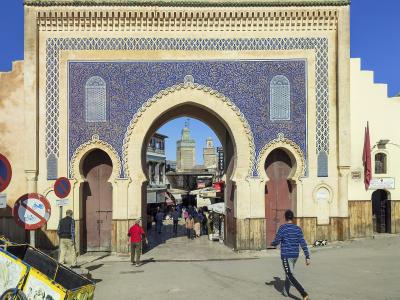
Bab Bou Jeloud
1913 French-built gate with blue mosaics
Cultural Experiences · History & Heritage
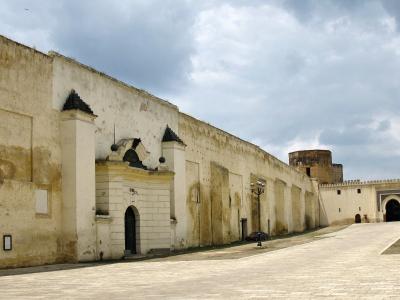
Bab Maqina
Historic military gate site in Fez Medina
Cultural Experiences · History & Heritage
Questions people ask
Quick Facts
Best Time to Visit
March to May and September to November. Summer afternoons average 35 °C in July; in January highs are about 16 °C and nights near 4 °C, and many riads are poorly heated.