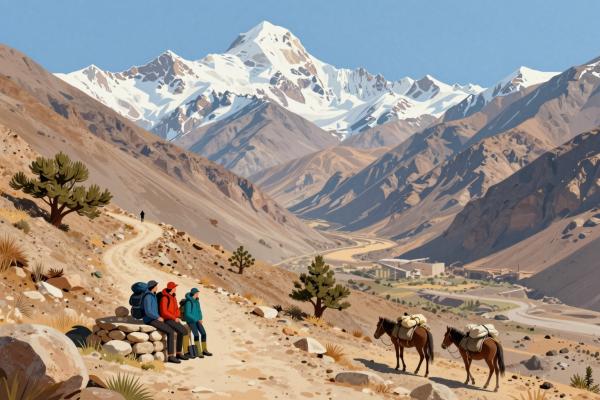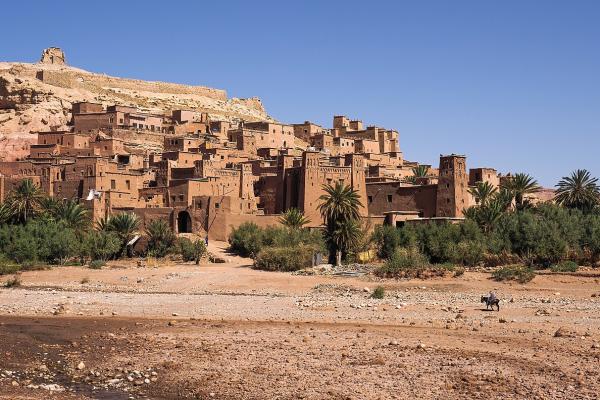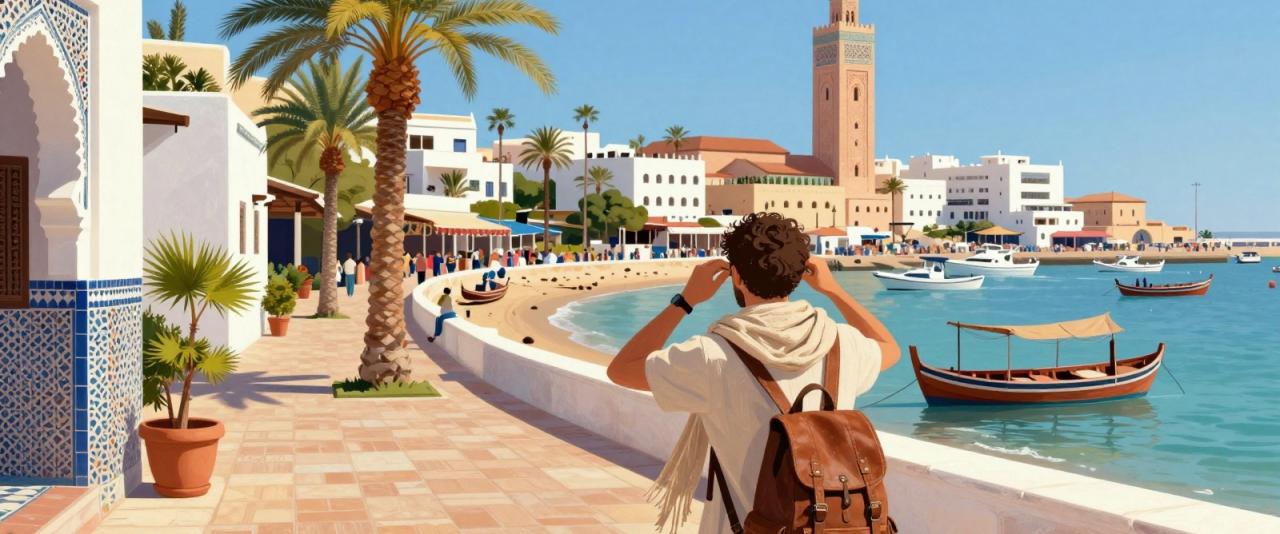
Morocco covers Atlantic beaches, snow-capped mountains above 4,000 metres and the edge of the Sahara, so a single trip can span very different temperatures. It is also a Muslim country where dress is generally conservative outside beach resorts. The list below focuses on what is actually useful, organised by clothing, season, region and practical items.
Clothing That Works Everywhere
Moroccan dress norms are relaxed in tourist areas, but modest clothing draws less attention and is required in religious buildings that admit visitors, such as the Hassan II Mosque.
- Light, loose trousers or long skirts, and tops that cover the shoulders.
- A light scarf, useful for sun, dust, mosque visits and cool evenings.
- Comfortable closed shoes for uneven medina streets, plus sandals.
- A light jacket or fleece; evenings can be cool even after hot days.
- Swimwear for beaches and hotel pools, with something to cover up when walking back through town.
Shorts and sleeveless tops are fine on the beach and in many resort areas, but less so in medinas and rural villages, particularly for women.
Packing by Season
- Spring (March to May): Warm days and cool nights. Bring layers, a warm top for the desert and mountains, and a light rain jacket for the north.
- Summer (June to August): Very hot inland, with highs regularly above 40°C in Marrakech, Fez and the desert, but mild on the Atlantic coast. Pack breathable, loose clothing, a wide-brimmed hat, sunglasses and high-factor sunscreen.
- Autumn (September to November): Similar to spring. Rain becomes more likely in the north from November.
- Winter (December to February): Mild days in Marrakech and the south, but cold nights, especially in riads without central heating. Bring a warm jacket, a hat and warm sleepwear. The High Atlas gets snow, and nights in the desert can approach freezing.
Packing by Region
- Medinas: A small daypack or cross-body bag that closes securely, and a phone with offline maps; GPS works, but the lanes confuse most map apps.
- Desert (Merzouga, Zagora): Sunglasses, a scarf to cover your face in wind, a warm layer for night, a head torch, and a small bag for an overnight camp so you can leave large luggage behind.
- High Atlas and gorges: Proper walking shoes, a warm layer, a refillable water bottle and a basic first-aid kit for trekking.
- Coast: A windproof layer; Atlantic breezes can make beach days feel cooler than the forecast.
Practical Items
- Plugs and power: Morocco uses 220 V and type C and E sockets, the same as much of continental Europe. Bring an adapter if your plugs are different, and a power bank for long bus days and desert camps, where charging may be limited.
- Money: The dirham is a closed currency and is hard to obtain outside Morocco. Withdraw from ATMs on arrival or exchange cash at banks and licensed bureaux. Carry small notes and coins for taxis, tips and markets.
- Health: Bring any prescription medication in its original packaging, hand sanitiser, rehydration salts and something for stomach upsets. Tap water quality varies by area; many visitors drink bottled or filtered water.
- Toilet tissue: Public toilets and roadside cafés do not always supply it.
- Sun and insect protection: High-factor sunscreen and insect repellent can be bought in Moroccan pharmacies, but bring your preferred brands.
- Reusable bags and a water bottle: Useful for market shopping and for refilling from filtered water where your accommodation provides it.
- Documents: Your passport (hotels register it on check-in), travel insurance details and printed or offline copies of bookings.
What to Leave at Home
- Drones: Morocco restricts drones, and customs officers regularly confiscate them at the border unless prior authorisation has been obtained. Leave yours behind unless you have a permit.
- Expensive jewellery: Unnecessary and an attention magnet in crowded souks.
- Too many clothes: Laundry services are cheap and widely available through riads and guesthouses, and lightweight clothing is easy to buy locally.
Final Checks
Before you fly, check your airline's baggage limits; Moroccan rugs and ceramics add weight quickly, so leave some room. Save your accommodation addresses offline, since many riads are hard to find in the medina. With layers, modest clothing and sun protection, you will be prepared for most of what the country's climate and customs bring.