







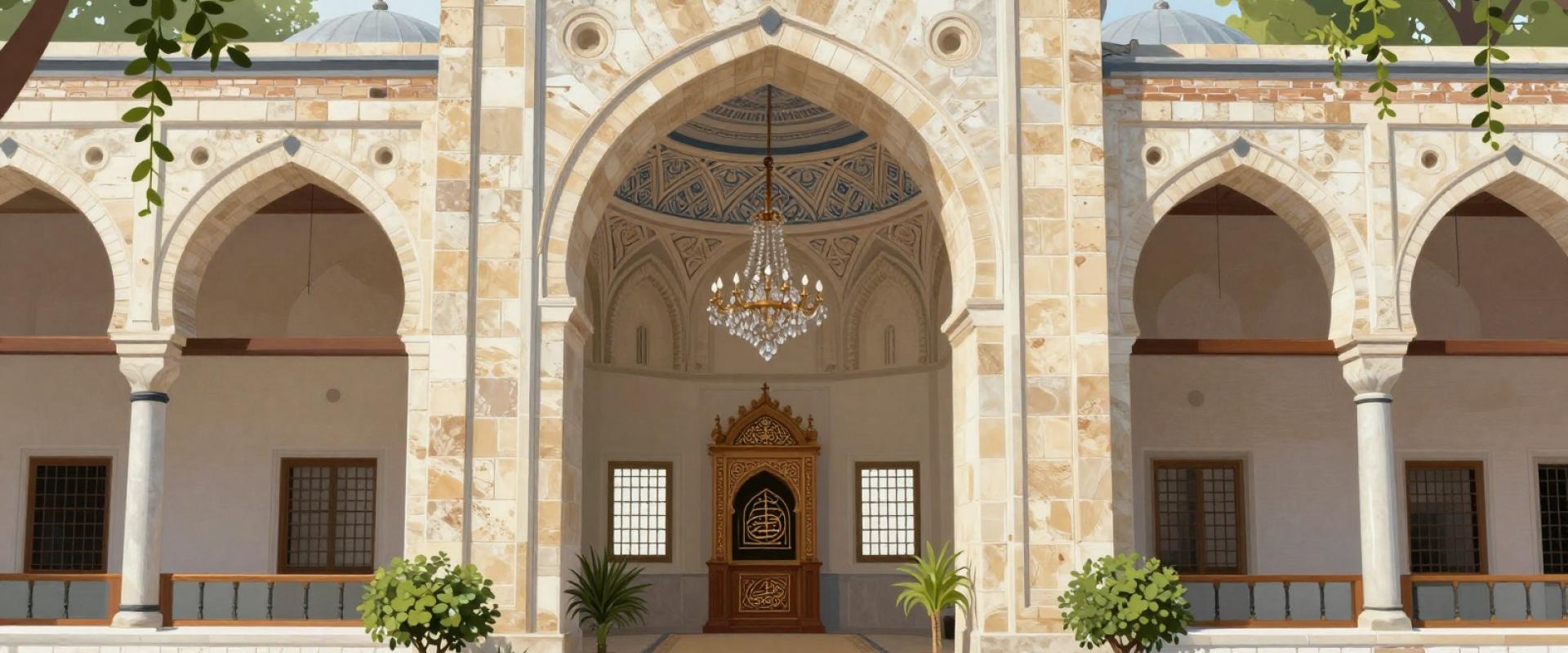
Grand Mosque of Salé (Jamaa Kebira)
12th-century Almohad mosque, Morocco's third-largest
- Where
- Salé, Rabat-Salé-Kénitra
- Directions
- Directions
The Great Mosque of Salé, known locally as Jamaa Kebira, is the principal mosque of the old city and one of the biggest in Morocco, and its walls stand just inside the medina, close to the Marinid madrasa. Its history stretches back to the early eleventh century, when a first mosque is said to have been built on the site under a local ruler, Temim Ibn Ziri, in the 1020s. After a collapse of the roof, the building was largely rebuilt in 1196 by the Almohad sultan Yaqub, known as al-Mansur, during the period when the dynasty was adding major mosques to the cities of the western Maghreb. The work is credited to an architect from Andalusia, and tradition adds that Christian captives were among the labourers, a detail that reflects the era's conflicts, though accounts differ on numbers.
The mosque has changed through the centuries. In the eighteenth century it underwent significant modification, which gave it much of its present-day appearance, and it has been repaired and extended more than once since then. Salé had a lively and sometimes turbulent history as a port and a centre of corsairs, and it was attacked by the French navy in the Bombardment of 1851, which caused damage to the town and its monuments. During the French protectorate, access to the building was restricted in various ways, and it has since returned to its role as a place of daily worship and Friday prayer.
The exterior is massive and plain, with high walls of pale stone and plaster, a sturdy square minaret and monumental doors. As in other Moroccan mosques, the main beauty is inside, in a forest of columns and arches, but that part is reserved for Muslim worshippers, so visitors admire the building from the street and from the surrounding lanes. The area in front of the mosque is a lively part of the medina, with shops, cafés and the traffic of worshippers on Fridays. Standing on the steps of the nearby Marinid madrasa or at a café across the lane gives a good view of the minaret and the proportions of the building.
Visitors should dress modestly, speak softly and keep their distance from worshippers, avoiding photographs of people at prayer. Non-Muslims are not allowed to enter the prayer halls, and during prayer times the lanes around the mosque are crowded. A local guide can explain the history, and the best time to visit is in the morning, when the medina is calm.
The mosque suits readers interested in Islamic history, architecture and the story of the twin cities across the river. It combines naturally with the Marinid madrasa, the museum and the souks of Salé, and a walk from the river up to the mosque gives a sense of how the old town fits together. It remains a living centre of Moroccan religious life.
Categories
More photos coming soon
Nearby Attractions
Other places to visit in Salé
Questions people ask
Quick Facts
Best Time to Visit
Visit in spring or autumn for mild temperatures ideal for exploring the medina and coastal areas comfortably.