







- Where
- Tangier, Tangier-Tetouan
- Directions
- Directions
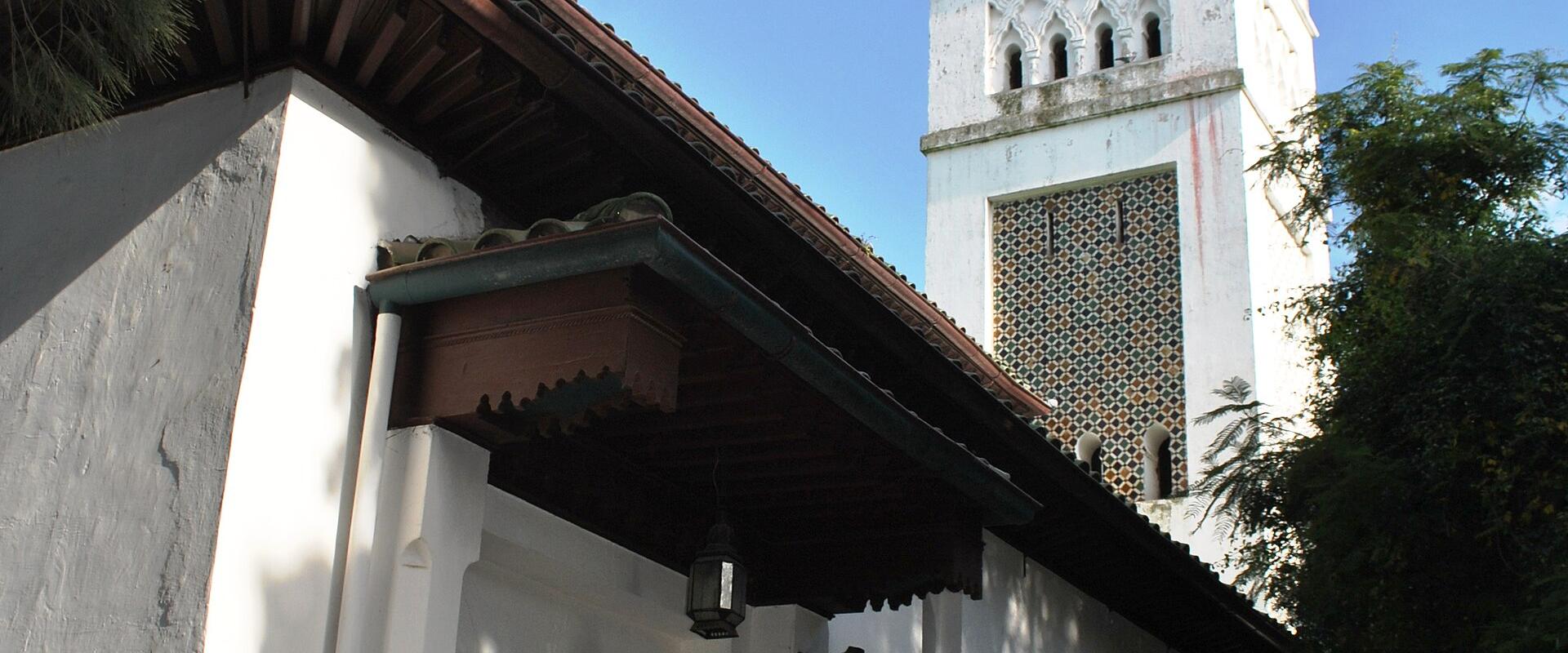
St. Andrew's Church sits a short walk from the Grand Socco, on the edge of Tangier's medina, in a plot of land that the Moroccan sultan of the day granted to the city's English-speaking community. The church was built in the 1890s and consecrated in 1905, and it belongs to the Archdeaconry of Gibraltar in the Anglican Diocese in Europe. Its origins say a lot about Tangier at the turn of the twentieth century, when the city housed a large international colony of diplomats, merchants and long-term residents from Britain and elsewhere.
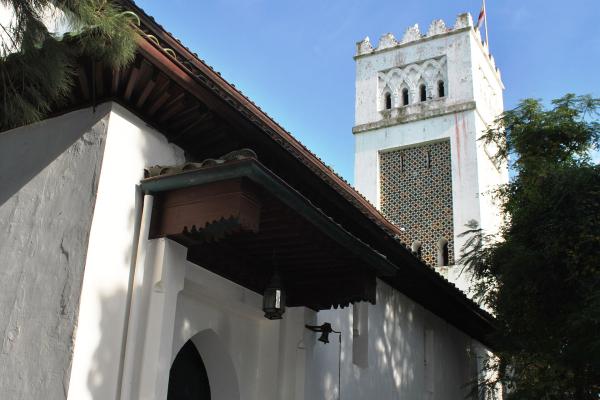
What makes the building memorable is that it was not copied from a European parish church. The architects drew on the local Moorish idiom: horseshoe arches, a courtyard approach, painted and tiled surfaces, and a compact tower-like form that looks at home among the whitewashed buildings nearby. Inside, the decoration continues the theme. Tilework and carved plaster sit beside Christian furnishings, and the chancel carries lettering in Arabic, including the text of the Lord's Prayer. The result is a quiet statement of how two religious and artistic traditions met in a city that was long run as an international zone.
The small churchyard behind the building is a second reason to come. It holds the graves of many foreign residents, among them the British journalist Walter Harris, who wrote vividly about Morocco and spent much of his life in Tangier, and Emily Keene, who married the Sharif of Wazzan. Reading the headstones is a compact way to meet the people who shaped the expatriate city, from soldiers and consuls to writers and eccentrics.
The church remains a working place of worship with a regular congregation, so it is best approached as a living community space rather than a museum. Visitors should dress modestly, speak softly, and be prepared for the doors to be closed outside service times; the caretaker is often willing to open the building for a short visit. Photography inside is usually tolerated with discretion, but ask first.
For many people the setting is part of the appeal. The lane leading to the entrance is calm after the commotion of the medina and the Grand Socco, and the whole visit can be done in half an hour. It combines easily with the nearby Tangier American Legation Institute for Moroccan Studies and the Kasbah Museum, or with a coffee on Place de France. It suits readers of travel literature, architecture enthusiasts and anyone curious about Tangier's cosmopolitan past, since few other buildings in the city present that history so clearly in a single compact space.
Categories
More photos coming soon
Nearby Attractions
Other places to visit in Tangier
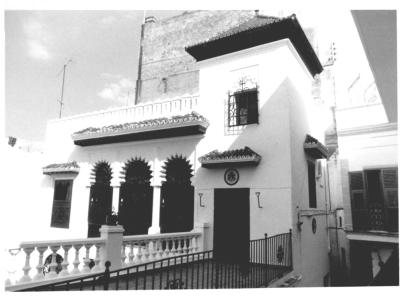
Tangier American Legation Institute for Moroccan Studies
Only U.S. National Historic Landmark overseas
Free Cultural Experiences · History & Heritage
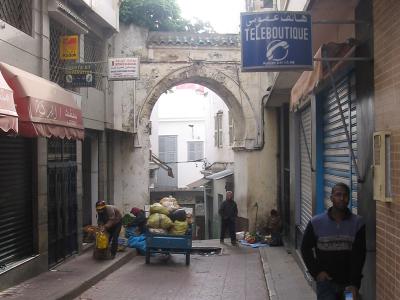
Tangier Medina
Ancient medina blending Hispano-Moorish architecture
Historic Towns · Local Crafts
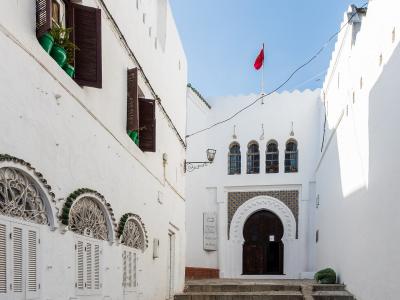
Kasbah Museum
Former sultan's palace with Andalusian gardens
From MAD 60 Museums · Palaces
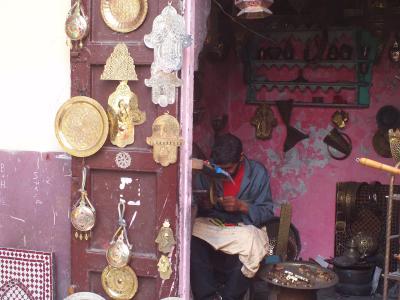
Artisan Shops In Tangier
Traditional crafts in Kasbah and Grand Socco
Local Crafts · Markets
Questions people ask
Quick Facts
Best Time to Visit
April to October. Summers are dry and warm; winters are wet, with about 100 mm of rain in January, and strong winds can cancel ferries to Spain.