- Where
- Tangier, Tangier-Tetouan
- Directions
- Directions
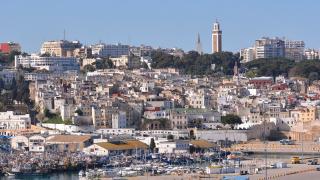
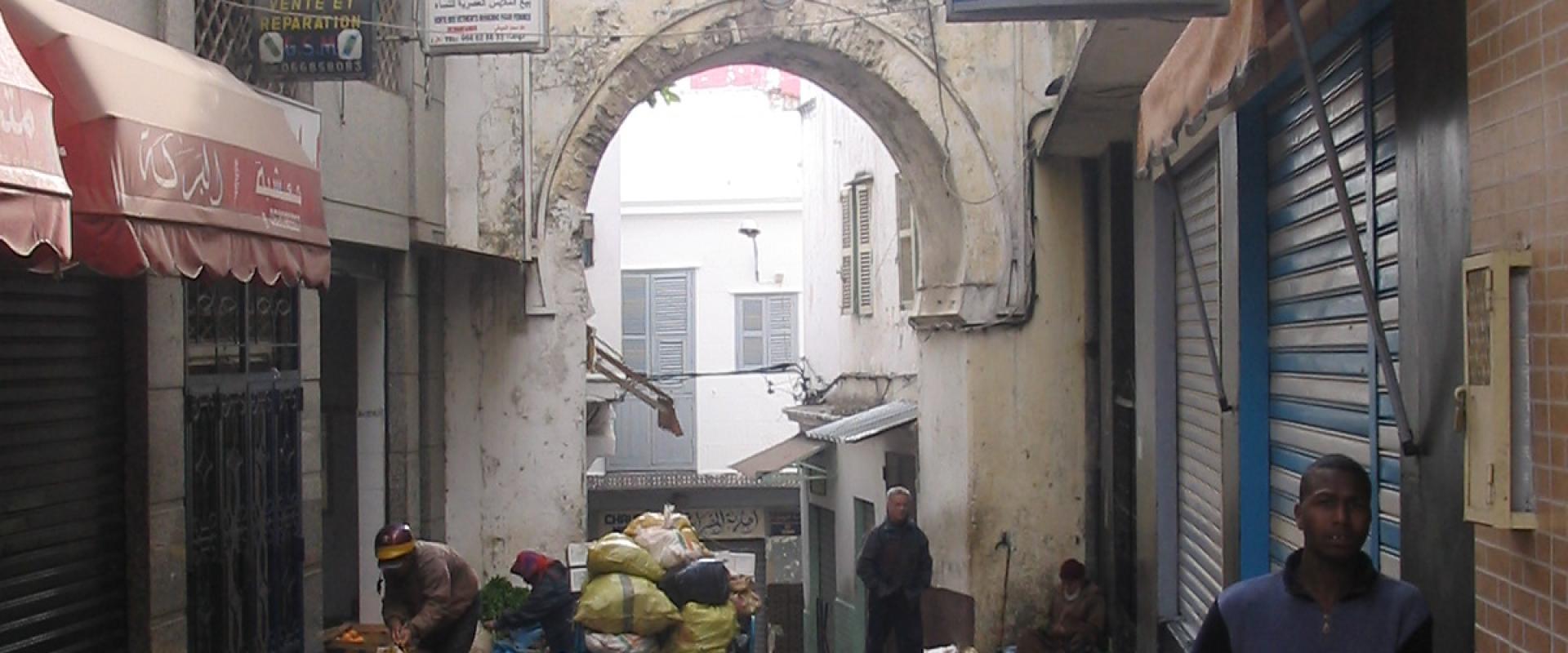
The Medina of Tangier is a compact hillside quarter that tumbles from the Kasbah at the top to the harbour at the bottom, and it holds layers of history that few other Moroccan cities can match. Tangier is among the oldest settlements on the meeting point of Europe and Africa, and Tangier’s position on the strait explains much of its story. A Phoenician trading post stood here, and Romans later made Tingis the capital of the province of Mauretania Tingitana. Portuguese rule in the fifteenth and sixteenth centuries gave way to English control in the seventeenth, and in the twentieth century the city became an international zone governed by several powers, which is one reason its streets feel more cosmopolitan than most.
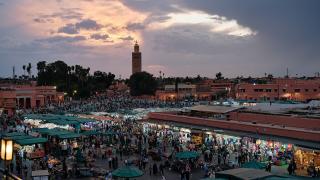
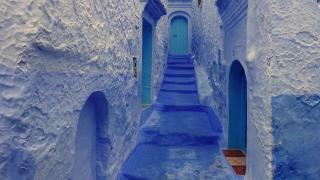
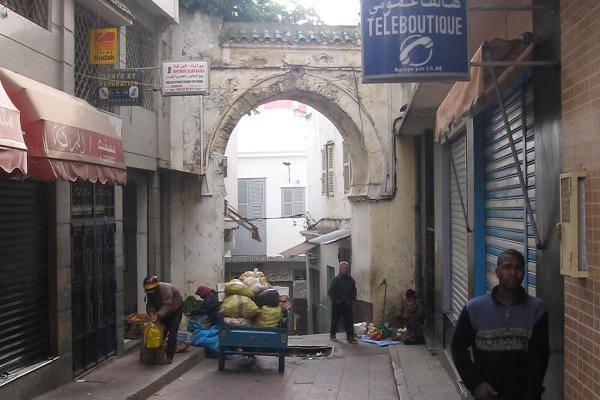
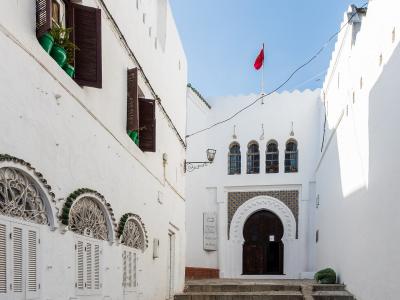
The medina's character comes from the mix. Whitewashed houses with Hispano-Moorish details, tiled doorways, Spanish-style balconies and carved wooden doors line the lanes, and the social centre is the Petit Socco, a small square of cafés that was a famous meeting place for writers and spies. Nearby is the Grand Socco, the open square between the medina and the new town. Walking up, you pass stalls with leather, ceramics, textiles and spices, and the sounds and smells of the market change at each turn.
Artists and writers have long been drawn to this place. Eugène Delacroix visited in 1832 and filled sketchbooks with scenes that shaped European Orientalism, Henri Matisse painted views of the city in 1912 and 1913, and the American author Paul Bowles made Tangier his home from the late 1940s until his death in 1999. Their presence is felt in cafés and guesthouses, and local guides can point out buildings with literary associations.
Several landmarks sit close to the medina. The Kasbah at the top of the hill, with its former palace and museum, offers wide views over the strait. Mendoubia Park, known for its huge old trees, lies near the Grand Socco, and the neglected Cervantes Theatre, built by Spanish residents in the early twentieth century, recalls the city's Spanish community. The old Plaza de Toros, the bullring, is in the newer part of town. While the weather holds, a clear day shows the coast of Spain across the strait.
Visitors can walk the medina safely, and it rewards a slow approach, and a guide helps on the first morning. Be cautious with unofficial guides and agree on prices before buying. Comfortable shoes are essential because lanes are steep and uneven.
It suits readers of travel literature, photographers and travellers who want to see how Tangier's different histories overlap. A full day allows time for the lanes, the Kasbah and a long pause in a café.
Categories
More photos coming soon
Nearby Attractions
Other places to visit in Tangier
St. Andrew's Church
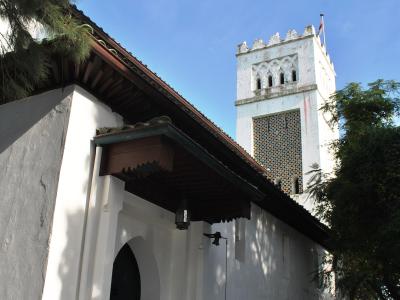
1905 Moorish-style Anglican church in Tangier
History & Heritage · Architecture
Tangier American Legation Institute for Moroccan Studies
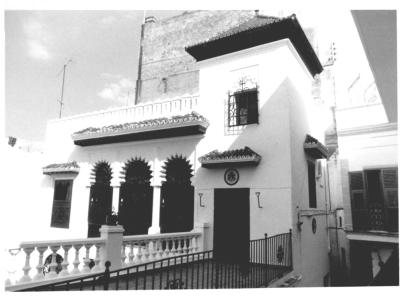
Only U.S. National Historic Landmark overseas
Free Cultural Experiences · History & Heritage
Kasbah Museum
Former sultan's palace with Andalusian gardens
From MAD 60 Museums · Palaces
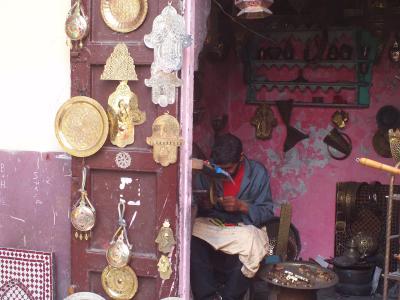
Artisan Shops In Tangier
Traditional crafts in Kasbah and Grand Socco
Local Crafts · Markets
Questions people ask
Quick Facts
Best Time to Visit
April to October. Summers are dry and warm; winters are wet, with about 100 mm of rain in January, and strong winds can cancel ferries to Spain.