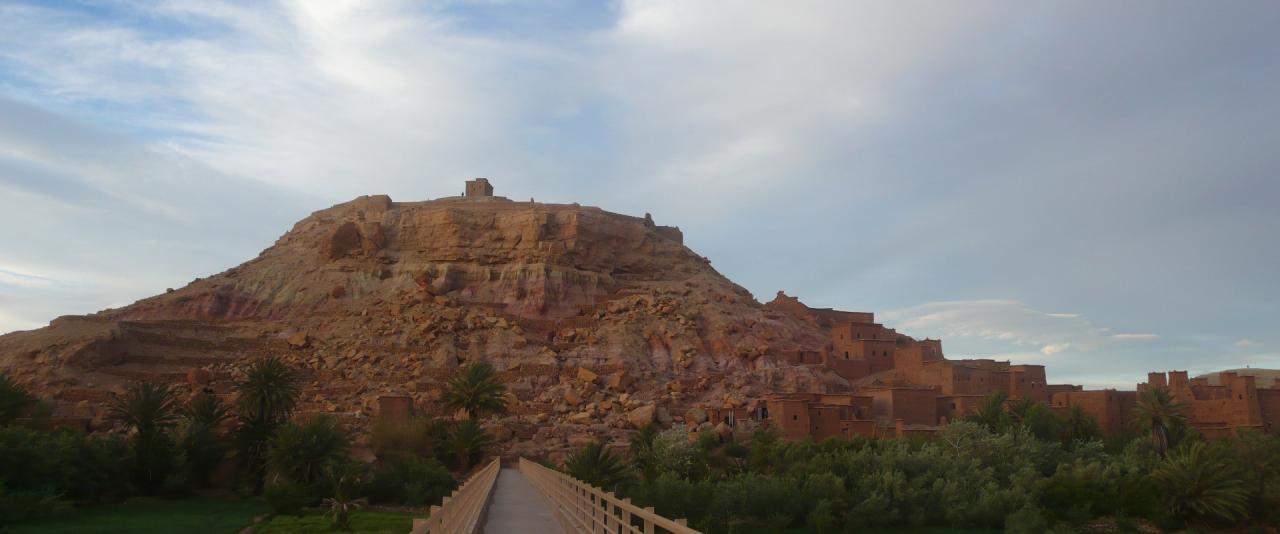
Aït Benhaddou is a fortified earthen village, or ksar, built up the side of a hill above the Ounila River on the old caravan route between the Sahara and Marrakech. It has been a UNESCO World Heritage Site since 1987 and has appeared in films from Lawrence of Arabia to Gladiator and Game of Thrones. By day it fills with tour groups from Marrakech. In the late afternoon most of them leave, the light warms the mud-brick walls, and it becomes one of the most rewarding places in Morocco to photograph. This guide covers how to make the most of that window.
Getting There and Staying Over
Aït Benhaddou lies about 30 km north-west of Ouarzazate, around 9 km off the main road over the Tizi n'Tichka pass. From Marrakech it is roughly three and a half to four hours by road, which is why day trips arrive mid-morning and leave mid-afternoon. From Ouarzazate, shared grand taxis run to the junction or the village, and private taxis can be hired for a round trip.
The single best thing you can do for sunset photographs is to sleep in the village. Several guesthouses and small hotels sit on the modern side of the river, some with roof terraces facing the ksar. Staying lets you shoot both evening and early morning light without rushing back to a car, and you will have the lanes almost to yourself after dark.
Crossing Into the Ksar
Most residents now live in the modern village across the river, and only a few families remain inside the old ksar. A pedestrian bridge completed in 2011 links the two sides. You can also cross on stepping stones when the water is low, and in the dry season the riverbed is often completely dry. Inside, the lanes are steep and uneven, so allow time and wear proper shoes rather than sandals. Some residents charge a small fee to enter their houses or terraces, so carry small change in dirhams.
Where to Photograph at Sunset
The hilltop granary. A path climbs through the ksar to the ruined agadir, the fortified granary on the summit. It is the most popular place to watch the sun go down, with views over the rooftops, the Ounila valley and the surrounding desert hills. Arrive at least 45 minutes before sunset, as the top is small and fills up on busy days.
From across the river. The classic full view of the ksar rising up the hill is taken from the modern-village side of the river and the road coming into town. Here a longer lens helps you compress the towers and walls into a single frame. Riverside palms and the bridge make good foreground.
Inside the lanes. As the sun drops, low light rakes across the walls and doorways, bringing out the texture of the earth plaster. These detail shots often turn out better than the wide views.
Because the orientation of light changes with the season, walk around in the early afternoon and note which walls catch the late sun before you choose your spot.
Camera Settings and Gear
- Tripod or support: Useful for blue-hour shots after sunset; a small travel tripod or a beanbag on a wall is enough.
- Exposure: The sky is much brighter than the walls near sunset. Bracket your exposures or use a graduated approach in editing so the ksar does not turn into a silhouette.
- Lenses: A wide lens for the granary panorama, a short telephoto for the view from across the river.
- Dust: Change lenses away from the wind; fine dust gets everywhere.
- Drones: Morocco restricts drone use, and drones are commonly confiscated at customs if not authorised, so leave yours at home unless you have a permit.
Photographing People Respectfully
Aït Benhaddou is a living place, even if few people still live in the ksar. Always ask before photographing anyone, and accept a refusal without argument. Some people will ask for a small payment for a portrait, which is common in Morocco. Avoid pointing cameras into open doorways or courtyards, and keep voices down in the evening.
When to Go
Spring (March to May) and autumn (late September to November) bring the most comfortable temperatures and clear evening light. Summer afternoons are very hot, though evenings are pleasant, and winter evenings are cold, with snow sometimes visible on the High Atlas to the north. Check the sunset time for your dates before you set off, and remember that light fades quickly once the sun drops behind the hills.