Why Essaouira works for couples
Essaouira is a port town on Morocco's Atlantic coast, known as Mogador until the 1960s. Its fortified medina was laid out in the 1760s for Sultan Mohammed bin Abdallah, with input from the French engineer Théodore Cornut, and it has been a UNESCO World Heritage Site since 2001. Compared with Marrakech, it is smaller, quieter and cooler, with sea air, whitewashed walls and blue shutters. That slower pace is what makes it a good choice for a couple's weekend.
Getting there and when to go
Most visitors come by road from Marrakech, a journey of around three hours by bus or car. Intercity buses run regularly, and Essaouira-Mogador Airport, a few kilometres outside town, has a limited schedule of flights.
The climate is mild year-round. The main thing to plan around is the wind: a strong trade wind blows for much of the year, especially in summer, which is great for kitesurfers but can make beach afternoons chilly. Bring a light jacket in every season. The town is busiest during the Gnaoua World Music Festival, usually held in late June; book well ahead if your dates overlap, or avoid them if you want quiet.
Day one: medina and ramparts
Start with a slow walk through the medina, entering through one of the main gates such as Bab Doukkala or Bab Sbaa. The grid of streets is easier to navigate than older medinas, so you can wander without much risk of getting lost. Look out for:
- Thuya woodwork. Essaouira is known for cabinet making and marquetry in fragrant thuya wood, with workshops clustered under the ramparts.
- The mellah. The former Jewish quarter reflects the town's history as a 19th-century trading port with a large Jewish community; Bayt Dakira, a Jewish heritage house, explains this past.
- Skala de la Ville. The seaward rampart, lined with old cannons, gives long views over the rocks and the ocean.
In the afternoon, walk down to the port to watch the blue fishing boats come in and the fish auction activity. Grills near the port cook fresh fish to order; check prices before you sit down. The Skala du Port, the fortified bastion at the harbour, is a good lookout across to the Iles Purpuraires, the islands sheltering the bay.
Sunset on the Atlantic
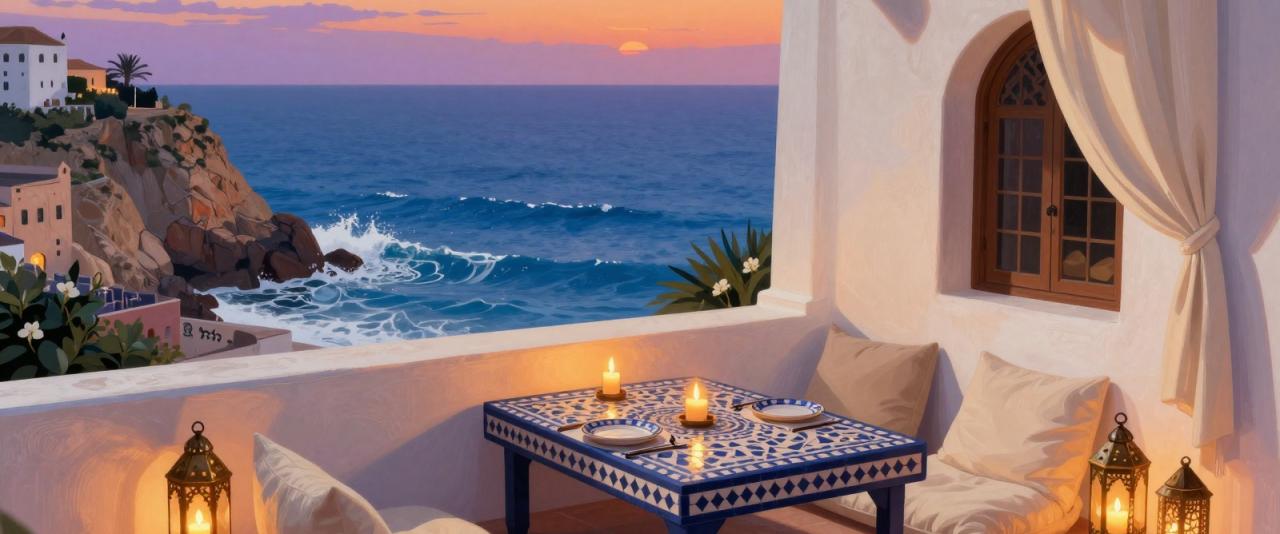
Because the town faces west over the sea, sunsets are the main event of the day. Good places to watch include:
- Skala de la Ville, along the ramparts among the cannons.
- The harbour walls, looking back at the medina in evening light.
- Rooftop terraces in the medina, many attached to cafés and guesthouses.
- The beach south of town, where you can walk towards Diabat and the dunes as the light fades.
The wind often drops a little towards evening, but a warm layer is still wise.
Day two: hammam and slow time
A hammam visit is part of everyday Moroccan life and a relaxing way to spend a morning. There are two broad types:
- Public hammams are neighbourhood bathhouses with separate hours or sections for men and women. They are inexpensive and traditional; bring a towel, a change of underwear, flip-flops and soap, or buy black soap and a scrubbing glove (kessa) locally.
- Spa hammams in hotels and guesthouses offer private rooms, scrubs and massages, and some offer sessions for couples. Prices are higher and the experience is closer to a spa.
A typical session involves warming up in steam rooms, applying black soap, a vigorous scrub with the kessa, rinsing, and often a massage with argan oil, which is produced in the region. Ask clearly what is included and the price before you start.
Spend the afternoon on the long beach, walking or watching kitesurfers, or browse argan oil and craft shops back in the medina.
Dinner and evenings
Essaouira's restaurants lean on fish and seafood: grilled sardines, sea bream and fish tagines are local staples. The town also has a range of small restaurants serving Moroccan and international food in the medina. Evenings are quiet; a walk along the ramparts or on a rooftop after dinner is the usual way to end the day.
Planning checklist
- Book a guesthouse inside or close to the medina so you can walk everywhere.
- Pack a windproof layer.
- Check Gnaoua festival dates if travelling in June.
- Reserve a spa hammam in advance if you want a private couples session.
- Plan to be on the ramparts or a terrace about half an hour before sunset.