
The Silent Ferryman’s Whisper
History does not shout in Rabat; it murmurs from the stones. The Bou Regreg estuary has long served as a natural fault line, separating the capital from Salé since Phoenician traders first charted these waters. If you listen closely, you can almost hear the echoes of the Almohad dynasty rising from the masonry, a legacy now shared with the fearsome Salé Rovers who once patrolled these banks with maritime precision.
Today, that same waterway frames a striking visual paradox. Ancient fortifications stand shoulder-to-shoulder with modern public spaces, creating a vibrant tapestry of old and new. Walking along the riverbanks, you witness two distinct cultural identities coexisting, separated by only a few meters of murky water. It feels less like a boundary wall and more like a bridge for the senses, inviting you to step across.
Crossing the Bou Regreg takes mere minutes and costs only a few dirhams, yet it acts as a portal between two distinct cultural landscapes. This waterway has served as a natural border since the Almohad era, quietly dividing Rabat from its sister city. That short ferry ride offers a unique chance to experience two separate worlds in a single afternoon, shifting your perspective on Morocco’s layered past.
Schedules fluctuate with the seasons, so check locally for current times before you board. This brief transit is not merely a commute; it is an immersion into the dual soul of the region, connecting the polished administrative elegance of Rabat with the traditional vibrancy of Salé.
Medina Whispers: Rabat’s Grace vs. Salé’s Soul
The Bou Regreg’s muddy currents have been a silent witness to history since Phoenician ships first docked here. Today, this natural border quietly separates Rabat’s calm, deliberate sophistication from Salé’s untamed, chaotic heart. You do not need a ticket or a ferry to witness this divide; simply climb the ramparts of the Kasbah of the Udayas. From this elevated vantage point, the view stretches across the water, revealing Salé’s bustling artisan quarters in sharp, unfiltered focus.
Rabat moves with a quiet, ordered grace, while its neighbor pulses with the rhythmic energy of daily life. In Salé, the air hums with the sound of hammers on copper and the lively chatter of souk vendors. This stark contrast is not just geographic; it is cultural. One city offers structure; the other offers soul. Together, they form the complex identity that defines the region.
The Bou Regreg estuary, a historical artery since the Phoenician era, quietly separates Rabat’s administrative elegance from Salé’s traditional vibrancy. Crossing this waterway requires no ferry; the Kasbah of the Udayas offers panoramic views of the Salé medina’s artisan workshops. While Rabat exudes calm sophistication, Salé pulses with the rhythmic energy of its souks. This juxtaposition defines Morocco’s dual soul, where order and chaos dance in the shadow of the same river.
A Day Woven with Threads of Time
The ferry glides across the Bou Regreg, a natural seam stitching Rabat to Salé. This short crossing does more than move passengers; it shifts your perspective on the landscape.
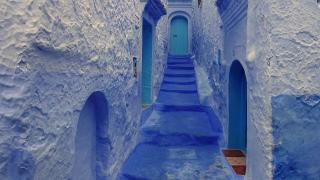
In Rabat, wander the blue-washed streets of the Kasbah of the Udayas. The narrow alleys whisper of Almohad heritage, while the bright walls shield you from the sun. It feels less like a museum and more like a living neighborhood where history breathes. The Kasbah was originally built as a military outpost to protect the city, yet today it feels like a serene refuge, its windmills turning slowly against the sky.
On the Salé side, the souks buzz with authentic crafts. Here, the rhythm is slower, grounded in tradition rather than tourism. You might find artisans weaving rugs or polishing brass, their hands moving with practiced ease. Unlike the more polished markets of Marrakech, Salé’s workshops retain a raw, industrial charm, where the smell of dye and metal hangs heavy in the air.
As dusk settles, return to the water’s edge. The sunset paints the river in shades of gold and violet, blending the ancient city with the modern skyline. This journey captures the essence of both banks: distinct, yet inseparable. The transition from the orderly grids of Rabat to the labyrinthine alleys of Salé is seamless, a reminder that these cities are two halves of a single, breathing entity.
Echoes Across the Water
The ferry cuts through the gray-green waters, leaving the royal calm of Rabat’s Kasbah behind for the bustling, labyrinthine energy of Salé’s medina. This short crossing does more than just span the Bou Regreg; it stitches together two distinct identities that have watched empires rise and fall. Ancient Phoenician traders once navigated these same currents, while Almohad strategists later fortified the banks, turning the waterway into a critical artery of power. Today, the weathered stone of the Kasbah of the Udayas stands as a silent witness to this layered past, its walls reflecting a history that feels both distant and immediate. You aren’t just observing a scenic route; you are participating in a ritual that has connected these twin cities for centuries. Step aboard. The boat waits, and the story unfolds with every ripple.