Erg Chebbi and Merzouga
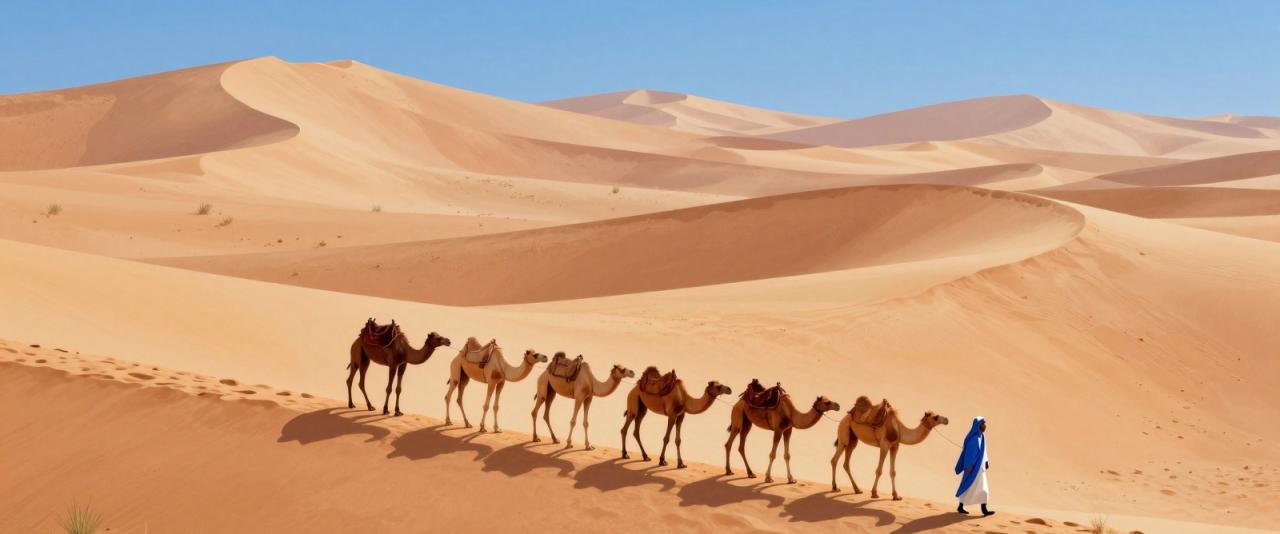
Erg Chebbi is the best-known sand sea in Morocco: a field of dunes about 28 km long from north to south and 5 to 7 km wide, rising in places to around 150 metres above the surrounding stony desert. It lies in the southeast of the country, close to the Algerian border. The small town of Merzouga sits on its western edge, and hotels and auberges line the edge of the dunes. The nearest larger towns are Rissani, about 40 km to the north, once home to the medieval trading city of Sijilmassa, and Erfoud, about 60 km north.
Most visitors come for one experience: riding or walking into the dunes in the late afternoon, spending a night in a desert camp, and watching sunrise from the sand.
Getting to Merzouga
Merzouga is a long way from the main cities, so plan transport carefully.
- Organised tours: the most common option is a two- or three-day tour from Marrakech or Fes, which includes transport, a night in the desert and usually stops along the way. From Marrakech the route crosses the High Atlas, so the drive takes much of two days.
- Coach: CTM and Supratours run long-distance coaches to Merzouga, often overnight, which you can combine with a camp booked directly.
- Self-drive: the roads are paved to Merzouga. Driving into the dunes themselves is a job for experienced 4x4 drivers; leave the car at your hotel or camp.
- Flights: Errachidia airport is the nearest with scheduled flights, but services are limited.
The Algerian border is closed. The UK Foreign Office notes that crossing without authorisation is illegal, so do not wander towards the border on your own.
Choosing a camp
Camps in Erg Chebbi range from simple tents with shared bathrooms to larger camps with private en-suite tents. Points to check before booking:
- How you reach the camp (camel, 4x4 or on foot) and how long it takes.
- Whether dinner and breakfast are included.
- Bathroom arrangements: shared or private, flush toilets, hot water.
- Bedding and blankets, especially from November to February when nights are cold.
- How far the camp is from the edge of the dunes, which affects how quiet and dark it is.
Read recent reviews from several sources rather than relying on photos.
Camel, 4x4 or on foot
The classic arrival is by dromedary, typically a ride of about an hour or two at a walking pace, led by a guide. It is slow and gentle, but the saddle can be uncomfortable for longer rides, and riders should hold on firmly as the animal stands up and kneels. Most camps can also bring guests in by 4x4 or allow you to walk in with a guide. If you are concerned about animal welfare, look at the condition of the animals and the loads they carry, and choose operators that limit riding time.
Sandboarding on the larger dunes is offered by many camps. Quad bikes are also available around Merzouga; they are noisy and can disturb people seeking quiet, so consider where and when they are used.
What to pack
- Warm layers and a hat for the evening and early morning. The desert cools quickly after sunset, and winter nights can be near freezing.
- A scarf or buff to protect against wind-blown sand.
- Sunglasses, high-factor sunscreen and a sun hat.
- A headtorch for moving around camp at night.
- Water, plus a small daypack you can carry on a camel.
- Sealable bags to protect phones and cameras from fine sand.
- Cash for drinks, tips and extra activities.
Leave large suitcases at your hotel in Merzouga; most camps ask guests to bring only an overnight bag.
When to go
October to April is the most comfortable period, with warm days and cooler nights. December and January nights are cold. Summer, especially June to August, is extremely hot in the daytime, so activities are concentrated in the early morning and evening. Strong winds can raise sandstorms in spring. Check the moon phase if stargazing matters to you: around the new moon the sky is at its darkest.
A typical first night
Most camp stays follow the same rhythm. You arrive at the edge of the dunes in the afternoon, ride or walk to camp in time for sunset from a dune crest, eat dinner, and often hear drumming and music around a fire. Wake before dawn for sunrise, then return to Merzouga for breakfast and a shower. Two nights in the area leaves time for the dunes and for a visit to Rissani's market or the surrounding oases.