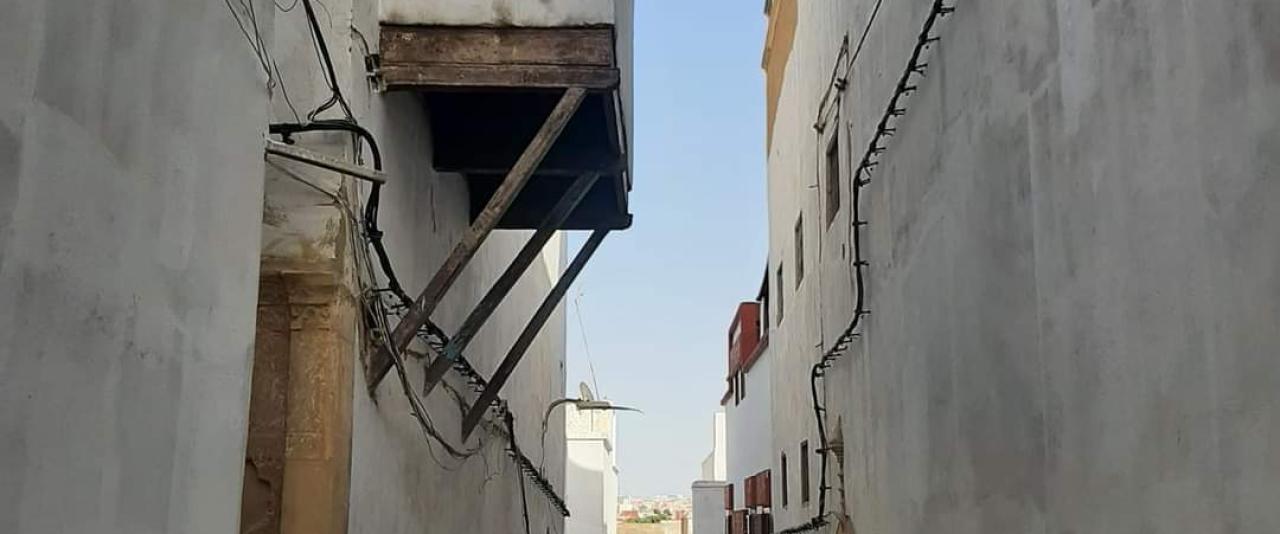
Salé faces Rabat across the mouth of the Bou Regreg river, but it has a very different character. Where Rabat is a capital of ministries and boulevards, Salé's walled medina is a working, largely residential old town with few tourists and a strong religious tradition. It is known as a city of scholars and saints, and its main monuments are clustered close together, which makes it well suited to a half-day walk.
Getting There From Rabat
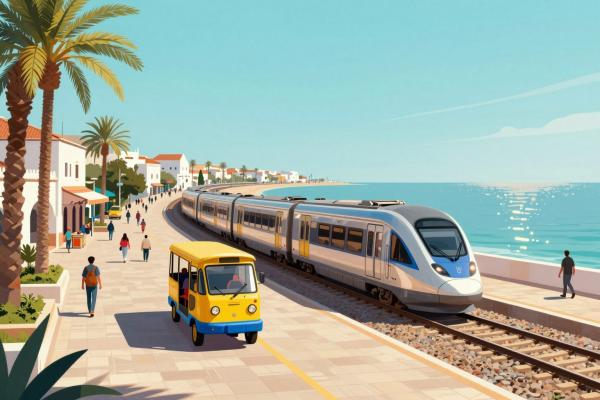
The Rabat-Salé tram, opened in 2011, crosses the river on the Hassan II bridge and stops near the medina walls. Small rowing boats have also long ferried passengers across the river between the two medinas for a few dirhams. Either way, the crossing takes minutes, so Salé is easy to combine with a day in Rabat.
Bab el-Mrisa
Begin at Bab el-Mrisa, the "Gate of the Little Port", on the southeast side of the medina. Built by the Marinids in the 1270s, it was a water gate: a channel once allowed boats to sail through it into an inner harbour. Its large horseshoe arch and decorated stone frame are among the finest surviving Marinid gateways in Morocco. From here, walk northwest into the medina through the market streets.
Through the Souks
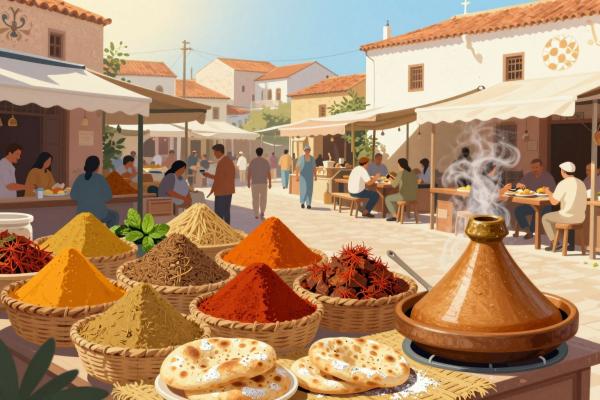
Salé's souks are local markets rather than tourist bazaars. Lanes of fabric sellers, tailors, food stalls and craftsmen lead through the centre of the medina, and you can watch everyday trading without much sales pressure. The town has long been known for mats woven from rushes and for pottery, made in workshops on its outskirts. Keep heading west, towards the minaret of the Great Mosque. On the way, notice the carved wooden doors and the small neighbourhood mosques, fountains and bakeries that serve each quarter.
The Great Mosque and the Madrasa of Abu al-Hasan
The Great Mosque of Salé was rebuilt on a larger scale in 1196 under the Almohad ruler Yaqub al-Mansur, on the site of an earlier mosque. Much of what you see today reflects later restorations, particularly in the 18th century. It is an active mosque and, as with most mosques in Morocco, non-Muslims cannot enter, but its doors and minaret can be seen from the surrounding streets.
Beside it stands the Madrasa of Abu al-Hasan, built in 1342 by the Marinid sultan of that name. It is the architectural highlight of Salé: a small courtyard framed by carved cedar, sculpted plaster and zellige tilework, with students' rooms on the upper floor. It is open to visitors for a small fee; climb to the roof, where it is accessible, for a view across the medina towards Rabat.
The Saints' Shrines
Salé has two patron saints, and their shrines are central to the town's identity.
- Sidi Abdallah ibn Hassun: His mausoleum complex lies just west of the Great Mosque. Each year, on the eve of the Mawlid (the Prophet's birthday), Salé holds a procession of large, ornate candle structures through the medina to this zawiya. The tradition dates back several centuries and gives Salé the nickname "city of candles". The date follows the Islamic calendar, so it moves earlier each year.
- Sidi Ahmed ibn Ashir: A 14th-century Sufi, he is buried in a white mausoleum that rises over the large cemetery in the southwest of the medina, by the sea. The shrine was long associated with healing and pilgrims still visit.
Shrines are places of prayer. Non-Muslims are generally not admitted inside, so view them from outside, keep your voice down and ask before taking photographs near worshippers.
From the area of the Great Mosque, walk down to the sea-facing cemetery and the walls along the shore. This corner of the medina looks over the river mouth to the Kasbah of the Udayas in Rabat. Walk respectfully through the cemetery, keeping to the paths.
Salé's past explains much of what you see on the walk.
Salé was a major port for centuries. After Spain expelled the Moriscos in 1609, refugees from Andalusia settled on both banks of the river, and in the 17th century corsairs based here, known in English as the Salé Rovers, raided shipping across the Atlantic. Rabat and Salé briefly formed an independent corsair state, the Republic of Bou Regreg. The town also had a Jewish quarter, or mellah, and a Jewish cemetery.
Practical Tips
Allow three to four hours for the walk. Dress modestly, carry cash for entry fees and drinks, and go in the morning when the souks are busiest and the light is good. Friday midday prayers bring crowds to the mosque area, so plan around them.