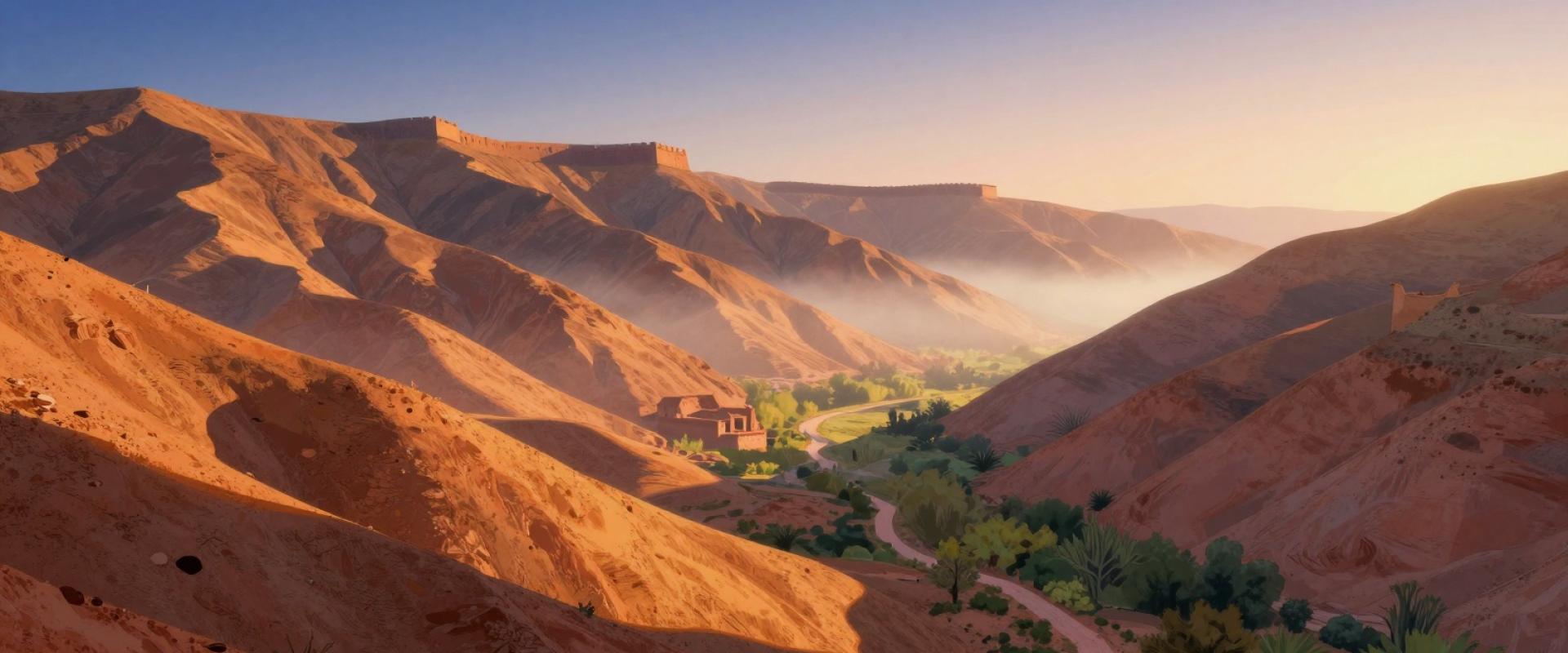
Echoes of the Ksar at Dawn
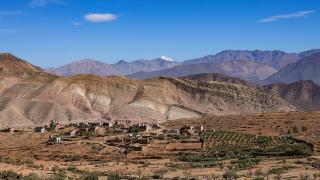
The morning air at 2,000 meters doesn’t just chill; it clarifies. Wild thyme hangs heavy in the crisp breeze, its resinous scent mingling with the damp, mineral smell of wet earth. Below, the ochre ramparts of Aït Benhaddou stir under a pale, early light. High above, snow-capped Atlas peaks loom like silent sentinels over green valleys where spring has finally pushed through the winter dormancy. The tourist crowds, usually a relentless tide, have thinned to a manageable trickle. In this rare solitude, the stillness feels earned.
Boots crunch on loose gravel as the ascent begins. Hands brush against sun-baked mud bricks, tracing the rough, uneven texture of centuries-old construction. Somewhere distant, a goat bell jingles—a rhythmic counterpoint to the quiet. You are no longer an observer behind a glass barrier; you are walking through history. These narrow alleys once echoed with the hoofbeats of camels and the haggling voices of merchants on the caravan trails. Now, only the wind and the weary hiker remain.
Reaching the summit demands a toll. Your lungs burn with the thin air; your legs tremble with the effort. But then, the sun breaks the horizon. Golden light floods the kasbah, turning the earthen walls into glowing amber. This is not a passive view from a hotel bed. It is an active dialogue with the landscape. The mountains do not whisper; they stand firm, silent witnesses to human endurance. As you pause to catch your breath, the clarity of the ascent replaces the noise of the world below. Morocco reveals its true face to those willing to climb for it. You carry the mountain’s stillness down with you long after you leave.
Trails Woven with Wildflowers
Spring in the Ouarzazate region performs a geological miracle. The Ounila Valley, typically defined by stark red earth, transforms into a vibrant canvas. Almond blossoms cling to the valley floors in clouds of white and pink, while carpets of wildflowers spill across the lower slopes in bursts of purple and yellow. This seasonal explosion of color invites hikers onto trails that range from gentle strolls to moderate ascents.
Berber villages perch precariously on the hillsides, their stone and mud-brick walls blending seamlessly into the rugged terrain. As you walk, the air grows thick with the scent of wild thyme and mint, grounding the hike in local agricultural tradition. Many trekkers begin their journey near Aït Benhaddou, using the ancient ksar as a dramatic, fortified backdrop to their trek.
Guided tours in this region typically cost between 300 and 500 MAD per day. These guides provide essential context on safety and local customs, ensuring a respectful experience that honors the community. The path to the summit rewards patience with panoramic views of the Dades Gorge, offering a sense of accomplishment that lingers long after the hike ends.
Temperatures here fluctuate wildly between dawn and midday. Packing layers is not a suggestion; it is a necessity. You must be prepared for the bite of the chill at sunrise and the radiant heat by noon. The interplay of light and shadow on the mountainside changes rapidly, revealing new textures with every step. Cairns of stacked stone mark the route, guiding your way forward through the vastness.
Silence settles over the peaks, allowing for deep reflection. You find peace in the expansive sky, connecting with the ancient rhythms of the Atlas people. This journey is more than physical exercise; it is an immersion into a landscape defined by resilience and an enduring relationship between humans and the land.
Chill and Clarity: Preparing for the Ascent
The Atlas Mountains wake up in a crisp silence that demands respect. Temperature swings are sharp, shifting from freezing night air to bright, intense midday sun. Layering is your best defense against this volatility. A merino wool base layer works well under a fleece jacket, trapping heat without adding bulk. You can find quality local gear for about 300 MAD, supporting local artisans while ensuring your comfort.
Spring snow at high altitudes makes sturdy boots non-negotiable. Your footing must be secure on unpredictable, often slippery terrain. Local guides know the Ouarzazate trails intimately, reading the mountain’s moods better than any digital map. Hiring a guide for roughly 500 MAD per day ensures safety and adds depth to your understanding of the region. Their expertise turns potential hazards into manageable paths, allowing you to focus on the scenery.
A reliable headlamp is essential for pre-dawn starts. Visibility remains low until the sun crests the peaks, and navigating the trail in the dark requires caution. Thermal socks and gloves provide vital comfort during the cold climb, protecting extremities from the biting wind. The landscape rewards preparation with clarity and solitude. Pack light but wisely, because the mountain forgives no negligence. Your journey begins with respect for the environment. Proper planning sets the stage for a smooth ascent.
The Golden Hour’s Embrace
Dawn breaks over the Atlas range, setting the ochre clay of Aït Benhaddou ablaze in amber and rose. Standing on the high trails, you breathe in crisp air scented with wild thyme. Low-angle sunlight sweeps across the fortified walls, turning them into a living canvas. Shadows retreat, exposing the rough texture of rammed earth and the intricate details of the architecture.
Photographers wait hours for this precise moment. Long, dramatic lines stretch across the kasbahs, creating a visual rhythm that draws the eye upward. The midday heat and crowds are absent. You see rugged peaks contrast against the serene village below, a juxtaposition of wild nature and human habitation. This quiet spectacle carries emotional weight. It connects you to Berber communities who have tended these lands for centuries, maintaining a balance between survival and beauty.
A polarizing filter enhances the sky’s depth, cutting through the atmospheric haze to reveal a deeper blue. The experience grounds you in the timeless rhythm of the Moroccan landscape. It is not merely visual but sensory, engaging every sense in the present moment. The golden light does not just illuminate the stones; it illuminates the history embedded within them.
A Thread in the Tapestry
Spring light hits the Atlas peaks near Aït Benhaddou differently than any other season. Snow clings stubbornly to the highest ridges while the valleys below burst into vivid greens. Crowds are thin. The air feels crisp, carrying the faint, dry scent of thyme and warm earth. This specific clarity invites a slower pace, encouraging you to notice the small details often missed in the rush of high season.
Climbing these paths requires more than sturdy boots; it demands attention to the terrain. Each step on the rocky trail mirrors the care needed when walking through the UNESCO-listed ksar. You are not just passing through. You are moving through layers of history etched into mud-brick walls and stone archways. The silence here is heavy but not empty. It holds the echoes of Berber heritage and centuries of endurance.
Consider hiring a local guide for the trek. Your payment goes directly into the pocket of someone who knows every switchback and hidden spring. This support keeps the local economy vibrant. It also transforms the hike from a mere physical challenge into an act of connection. You leave the mountains carrying their quiet strength with you, a subtle shift in perspective that lingers long after you return to daily life.
May your steps be light. Let your respect run deep.