Trading Casablanca’s Chaos for Rissani’s Silence
Casablanca’s humidity doesn’t just hang in the air; it clings to your skin like a wet wool blanket, heavy and suffocating. For many, this is the signal to flee toward the cooler, higher altitudes of the High Atlas. But this summer, I chose the opposite direction. I drove east, leaving the coastal sprawl and the relentless, aggressive honking of traffic behind, heading toward the arid, sun-baked expanse of Rissani.
The transition is abrupt. Within hours, the city’s noise dissolves into the gentle, rhythmic hiss of wind shifting sand dunes near the Ziz Valley. Rissani feels less like a Moroccan town and more like a separate planet entirely. Here, the heat is dry and penetrating rather than sticky. It is a heat that demands respect, offering a stark, grounding contrast to the coastal mugginess.
Accommodation here remains refreshingly uncommercialized. Basic desert camps charge a modest 300–500 MAD per night. In exchange, you receive little more than a woven mat, a thin blanket, and the obligatory pot of sweet mint tea. It is a sparse arrangement, but it purchases something expensive elsewhere: profound stillness.
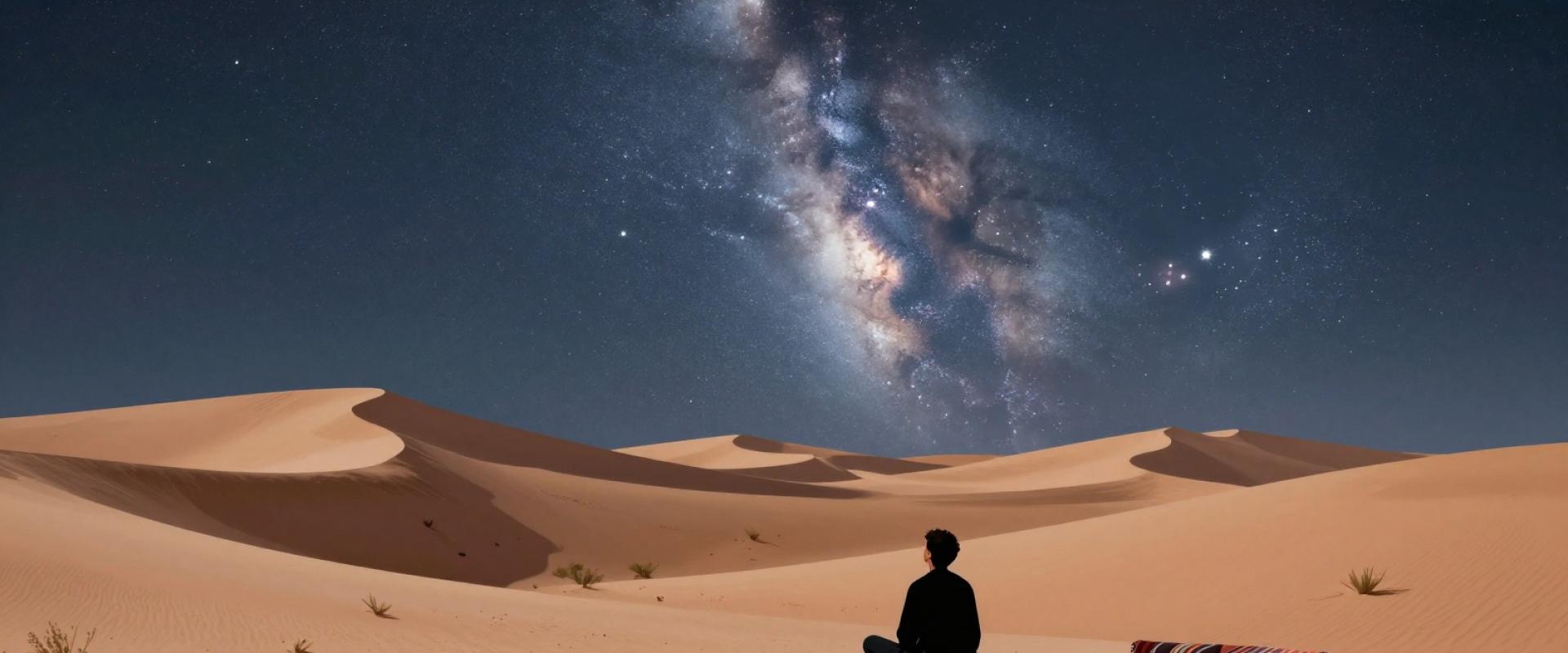
As the sun dips below the horizon, the scorching daytime temperature plummets. The air turns crisp, clearing the sky of haze. Without the interference of urban light pollution, the Milky Way stretches across the darkness with startling, almost violent clarity. Sitting on a rug in the dark, watching stars emerge one by one, the weight of modern life lifts entirely. There is a raw, tactile quality to this vastness that no five-star hotel room can ever replicate.
Battling the Summer Heat to Catch the Milky Way
Rissani in July is an oven. The sun hammers the dunes with such intensity that the air shimmers, making the horizon dance and distort in mirages. You cannot rush this landscape. You must wait for the temperature to plummet as the sun slips below the sand—a sharp, dramatic drop that transforms a baking day into a crisp, cool evening. Only when the heat breaks do you venture out.
The darkness here is absolute. With Bortle Class 1 skies, there is zero light pollution to wash out the view. The Milky Way doesn’t merely appear; it crashes across the zenith, a thick river of diamond dust so bright it casts faint shadows on the ground. This clarity offers more than a photographic opportunity; it provides a direct line to ancient Berber star lore. Local guides often recite Arabic star names, weaving tales of ancestral navigation into the present moment.
For the clearest views, target late June or early July. The nights are stable, and the atmospheric seeing is sharp. However, pack a heavy blanket. The cold that follows the day’s fury is biting, requiring serious insulation if you plan to sit for hours. Sip mint tea slowly. Let the vastness settle in. It is a quiet, humbling pause in the Moroccan desert that stays with you long after the tea is gone.
Camels, Tea, and the Cosmic Dance
Sand crunches beneath the camel’s hooves, replacing the sterile hum of air conditioning as we approach the dunes. The air carries the scent of dry sage and distant woodsmoke, grounding you in the reality of the desert. This slow, rhythmic procession is not just transport; it is a decompression chamber for the soul.
Once settled, the real magic begins. Local guides strum guembri lutes, their ancient Berber rhythms weaving through the night’s chill. Sweet mint tea is poured from glass cups, offering a taste of community warmth. Look up. Saturn hangs low, its rings sharp against the velvet black sky.
This experience transcends typical sightseeing. It is a tangible link to centuries of desert navigation. The blend of traditional Bedouin hospitality and modern astrophotography equipment creates an atmosphere that feels both historic and immediate. You are not merely an observer but a participant in the sky’s enduring story. The profound silence eventually breaks, shattered by laughter shared over dates. This raw, authentic moment in Morocco leaves you feeling deeply connected to the universe.
Why Your Next Trip Needs More Sand
Swap the hum of air conditioning for the vast, silent expanse of the Sahara. Rissani offers Bortle Class 1 skies, far darker than any city you know. Pack warm layers, because desert nights drop sharply after sunset. This shift in perspective changes how you see your place in the universe.
Bring a telescope or just your eyes. The Milky Way is visible to the naked eye here. It is a humbling experience that no city can replicate. Have you ever slept under the stars? Tell me your favorite night sky memory below. Safe travels, habibti.