The Middle Atlas is the green, forested range that rises south of Fes and Meknes, and it is the least visited of Morocco's mountain regions. It has no single famous summit like Toubkal. Instead it offers cedar forests, volcanic plateaus, crater lakes and quiet Amazigh villages, all within a couple of hours of the imperial cities. Midelt, at the southern end of the region, is often used as a base, so this guide covers both the forests of the Middle Atlas proper and the high country around Midelt.
Where the Middle Atlas Is
The range runs roughly south-west to north-east between the plains of Fes and Meknes and the High Atlas. The main road through it, the N13, climbs from Meknes via Azrou, crosses a high limestone and volcanic plateau and drops to Midelt, which sits at about 1,500 metres on the plateau between the Middle Atlas and the High Atlas. Azrou and Midelt are about 125 km apart, a drive of a little over two hours. The highest point of the Middle Atlas, Jbel Bou Naceur at about 3,340 metres, lies further east and is a remote expedition rather than a casual hike.
Cedar Forests and Barbary Macaques
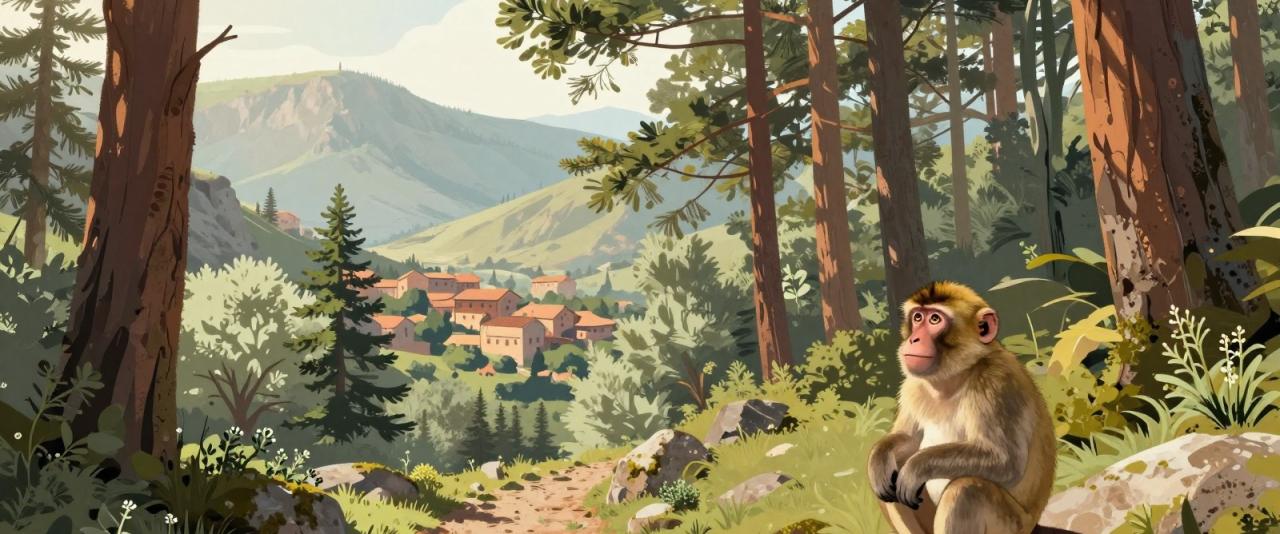
The best-known walking is in the cedar forests around Azrou and Ifrane, much of it within Ifrane National Park. Atlas cedars, some of them very old, cover the hills here, mixed with holm oak. The forests are home to the Barbary macaque, an endangered monkey found only in Morocco, Algeria and, as an introduced population, Gibraltar.
The easiest place to see macaques is the area around the Cèdre Gouraud, a once-famous giant cedar (now dead) in the forest south of Azrou. Macaques here are used to people, which is exactly why you should not feed them: human food makes them ill and aggressive, and it draws them to roads. Further into the forest the troops are shyer, and walking quietly with a local guide gives a better chance of seeing natural behaviour.
Guided day hikes from Azrou typically combine oak and cedar forest, cliff viewpoints and a macaque area over five or six hours. Paths are generally easy to moderate, at altitudes of roughly 1,300 to 2,000 metres.
Lakes and the High Plateau
South of Azrou the N13 crosses a broad plateau dotted with small volcanic cones and seasonal lakes. Aguelmame Sidi Ali, at about 2,000 metres, is the largest and most accessible, next to the main road between Azrou and Midelt. The country here is open grazing land used by herders, with good walking across the plateau in spring and early summer, but there is little shade and the wind can be strong, so carry layers and plenty of water.
Around Midelt: Jbel Ayachi and the Cirque de Jaffar
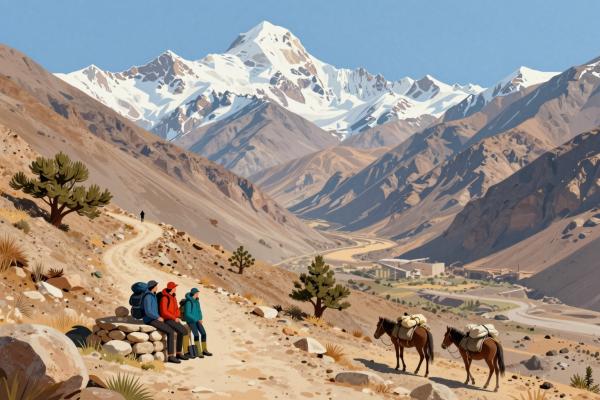
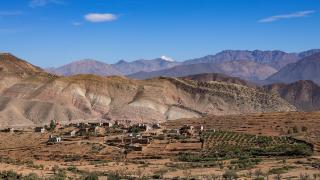
The dominant mountain on the Midelt skyline is Jbel Ayachi, at around 3,740 metres the highest peak of the eastern High Atlas rather than the Middle Atlas. Climbing it is a serious undertaking: the usual approach starts in the village of Tattiouine and climbs through a narrow gorge to a pass at around 3,100 metres before the summit ridge, and most parties take two or three days with mules. The main season is spring and autumn; snow lingers on the upper slopes into May.
For something shorter, the Cirque de Jaffar, a ring of cliffs and a gorge south-west of Midelt, is reached on an unpaved track suitable for a 4x4 and has good walking in the valley below the cliffs. The old Ahouli mining area in the Moulouya gorges north-east of Midelt also makes an interesting half-day outing.
When to Go
Spring (April to June) and autumn (September to October) are the best seasons. Summer is comfortable in the forests but hot and exposed on the plateau. Winter brings real cold and snow: Ifrane is one of Morocco's coldest towns, and the N13 passes can be affected by snow. Cedar forest walks remain possible in winter with warm clothing.
Practical Tips
- Guides: Trails are mostly unmarked and maps are poor, so hiring a local guide in Azrou, Ifrane or Midelt is worthwhile, and essential for Jbel Ayachi.
- Getting around: Buses and grand taxis connect Meknes, Azrou and Midelt, but trailheads are best reached with a hired driver or your own car.
- Where to stay: Azrou, Ifrane and Midelt have hotels and guesthouses; in the countryside, guides can arrange homestays in villages.
- Respect: Dress modestly in villages, ask before photographing people, and carry rubbish out with you.