What to expect with children
Marrakech's medina is busy, loud and full of motorbikes, handcarts and people, and the souks north of Jemaa el-Fnaa form a maze of narrow lanes. Children often love the colour and movement, but they tire quickly in crowds and heat. The way to enjoy it as a family is to keep souk visits short, plan regular breaks somewhere calm, and mix the medina with gardens and open space.
Moroccans are generally very welcoming to children, and families are a normal sight everywhere, which makes many interactions easier than you might expect.
- Go in the morning. Shops open from mid-morning, crowds and heat build through the afternoon, and the lanes are more relaxed early.
- Watch for motorbikes. Scooters use even narrow souk lanes. Keep small children on the inside, hold hands in tight passages, and use a carrier rather than a pushchair for babies and toddlers, as the ground is uneven and crowded.
- Agree a meeting point. Pick a landmark, such as the Koutoubia minaret, which is visible from much of the medina, and make sure older children know your accommodation's name and have it written down.
- Keep visits short. One or two hours in the souks is plenty with young children.
- Use offline maps. Lanes twist and signs are few. Politely decline offers from strangers to guide you; if you want a guide, book a licensed one through your accommodation.
Making shopping fun
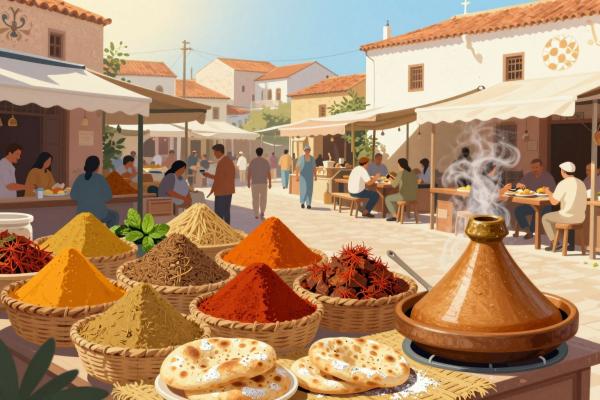
Give children a small budget and a mission, such as choosing a pair of leather babouches, a small brass lantern or a painted ceramic bowl. Bargaining is normal for crafts in the souks. Let them watch, and set a simple rule: decide on your maximum price before you start, stay friendly, and walk away politely if it is not met. Spice stalls, dyed wool hanging in the dyers' souk and metalworkers hammering lanterns tend to hold children's attention.
Jemaa el-Fnaa with children
The main square is part of UNESCO's list of intangible cultural heritage for its storytellers, musicians and performers. It is most lively from late afternoon, when food stalls set up and crowds gather. It is worth seeing, but stay close together in the evening crush and keep valuables out of reach.
You will see snake charmers and people with Barbary macaques on chains. Performers expect payment for photos, and animal welfare organisations advise against paying for animal photos, since it encourages the trade. Explaining this to children beforehand avoids awkward moments. Henna offers are common too; some street henna contains additives that can cause skin reactions, so be cautious with young skin.
Gardens and space to run
Breaks from the medina are essential. Options include:
- Jardin Majorelle, the cactus and bamboo garden with its cobalt-blue villa, once owned by Yves Saint Laurent and Pierre Bergé. It is compact and popular; buy tickets online in advance and go early.
- Le Jardin Secret, a restored riad garden inside the medina, which offers shade and quiet close to the souks.
- Cyber Park (Arsat Moulay Abdeslam), a public park near the medina walls with paths and shade, good for a free break.
- Menara Gardens, an olive grove around a large reservoir with a pavilion and the Atlas mountains behind it on clear days.
The Bahia Palace and the Ben Youssef Madrasa, with their courtyards and tilework, can hold children's interest for a short visit if you treat them as a treasure hunt for patterns.
Food for young travellers
Moroccan food is usually aromatic rather than chilli-hot, which suits many children. Good starting points are grilled skewers (brochettes), chicken tagine with olives or prunes, couscous, msemen (layered flatbread) with honey, harira soup, fresh orange juice and plain bread. Harissa is served on the side.
Practical points: drink bottled water, wash or sanitise hands before eating, choose busy stalls where food is cooked fresh, and be careful with salads and unpeeled fruit for very young children. Families with nut allergies should note that almonds and other nuts are common in pastries and some savoury dishes.
Heat, timing and rest
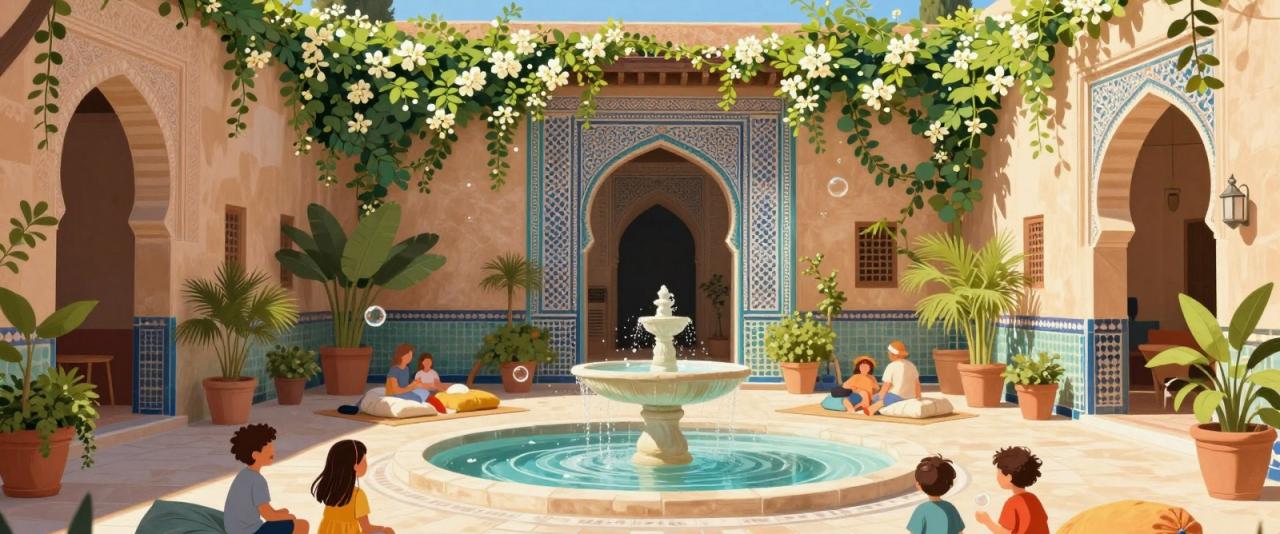
Summer in Marrakech is very hot, often well above 35°C. Spring and autumn are more comfortable for families, and winter days are mild though nights are cold. Whatever the season, plan the medina for mornings, rest in the middle of the day, and head out again in late afternoon. Accommodation with a courtyard or a pool makes midday breaks easier.
A family checklist:
- Choose accommodation close to a medina gate so taxis can get near.
- Carry sunscreen, hats, water and hand sanitiser.
- Write your accommodation's address on a card for each older child.
- Limit souk sessions to a couple of hours.
- Book Jardin Majorelle in advance.
- Plan one green-space break every day.