Casablanca is Morocco's largest city and economic capital, and most visitors pass through it on the way somewhere else. For anyone interested in architecture and design, it repays a day or two. Its downtown has one of the largest concentrations of early 20th-century buildings in Africa, mixing Art Deco, Art Nouveau and the neo-Moorish style the French called Mauresque, and the Hassan II Mosque is one of the most ambitious religious buildings of the late 20th century.
Why Casablanca Looks the Way It Does
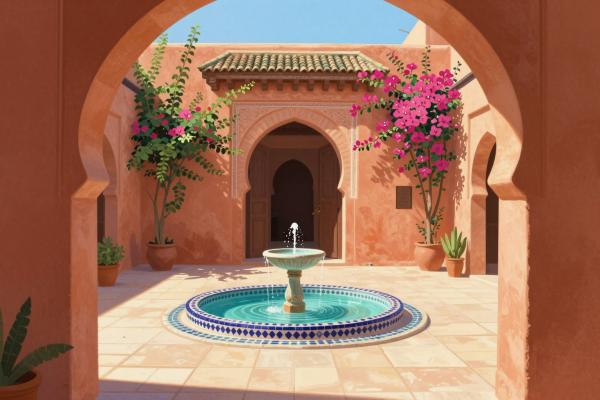
Under the French protectorate, which began in 1912, Casablanca grew from a modest port into a planned modern city. Architects and planners including Henri Prost laid out a new town beside the old medina, and through the 1920s and 1930s builders experimented with the styles of the day. Many combined European modernism with Moroccan decoration: zellige tiles, carved plaster, green-tiled roofs and horseshoe arches applied to apartment blocks and offices.
The local association Casamémoire has worked since 1995 to document and protect this heritage, and Morocco has submitted a nomination for the city's 20th-century architecture to be recognised as a World Heritage Site.
A Downtown Architecture Walk
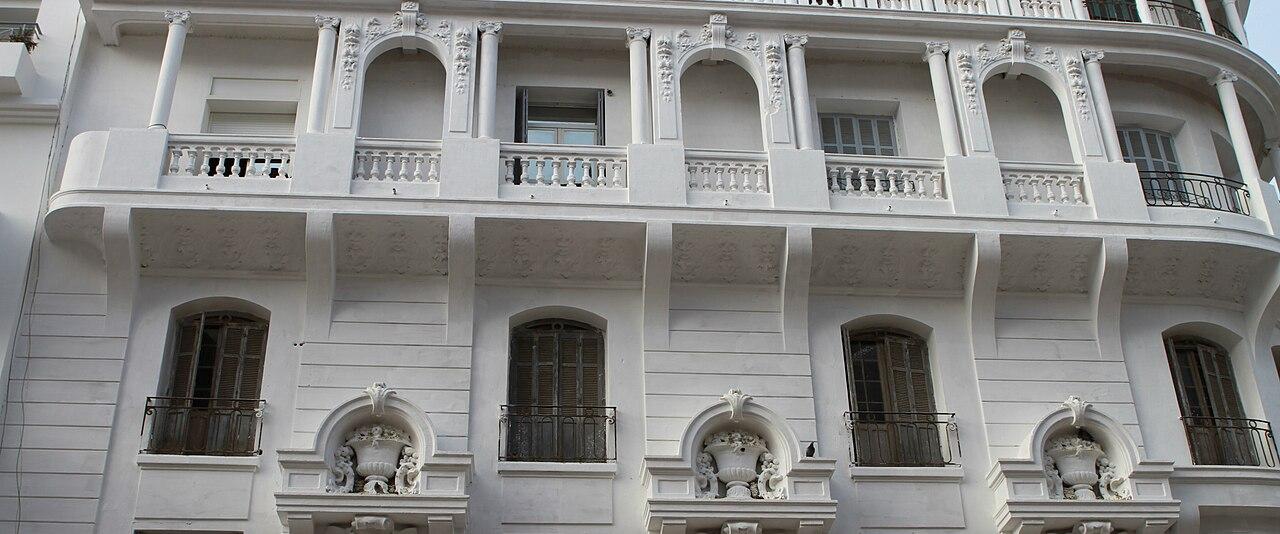
Start at Place Mohammed V, the former administrative square, surrounded by large public buildings that blend neo-Moorish and Art Deco features: arcades, tiled roofs and clock towers. From there, walk along Boulevard Mohammed V and the streets around it, where many apartment buildings from the 1920s and 1930s still carry their original facades, wrought-iron balconies and carved entrances.
Look out for the work of Marius Boyer, one of the most prolific architects of the period, and of Hippolyte Delaporte, whose Hotel Excelsior on Place des Nations Unies was one of the first neo-Moorish buildings in the city. Many buildings are in mixed condition, and some are being restored, so it pays to look up as you walk. Casamémoire has organised heritage days and guided walks; check its announcements if you want a guided route.
Nearby, the Sacré-Cœur church by Paul Tournon, built between 1930 and 1953 at the edge of the Arab League Park, is a large white building in a modern take on Gothic. It no longer functions as a church and is used for cultural events and exhibitions.
The Habous Quarter
The Habous, or Nouvelle Medina, was planned from 1916 by Henri Prost and Albert Laprade as a new Moroccan quarter. It reinterprets the traditional medina, with arcaded streets, small squares and whitewashed buildings, but with modern drainage and wider lanes. Today it is a calm place to walk, with bookshops, olive and spice stalls and traditional pastry shops, and it sits close to the Royal Palace.
The Hassan II Mosque
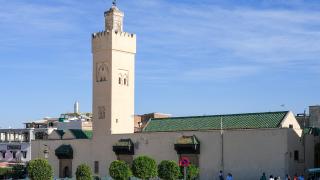
The Hassan II Mosque, designed by the French architect Michel Pinseau and inaugurated in 1993, stands partly on land and partly over the Atlantic on a platform of reclaimed ground. Its minaret is about 210 metres high, and the building can hold up to 105,000 worshippers counting the prayer hall and its outdoor grounds. The roof of the prayer hall can slide open.
It is one of the few mosques in Morocco that non-Muslims can enter, on guided tours offered several times a day outside prayer times; schedules change on Fridays and during Ramadan, so check before you go. The interior shows the work of thousands of Moroccan craftsmen in cedar, marble, carved plaster and zellige. Dress modestly, with shoulders and knees covered.
Museums and Galleries
- Abderrahman Slaoui Foundation Museum: Housed in an Art Deco villa downtown, it displays a private collection of Moroccan jewellery, Orientalist posters and decorative arts, with a temporary exhibition space for contemporary work. Travel listings give opening as Tuesday to Saturday; confirm before visiting.
- Museum of Moroccan Judaism: In the Oasis district, it presents the history and material culture of Morocco's Jewish communities. Opening hours are limited and it has closed at short notice in the past, so call ahead.
- Contemporary galleries: Casablanca is the centre of Morocco's commercial art market, and private galleries in the Gauthier and Maârif districts show work by Moroccan painters and photographers. Exhibitions change frequently, so check current programmes rather than relying on older listings.
Practical Tips
Casablanca's tram network links the city centre with many districts and the coast, and petit taxis are inexpensive. The downtown walk is easiest in the morning, before traffic builds. Combine it with the Corniche at Aïn Diab in the late afternoon for the ocean view and a walk back towards the mosque at sunset.