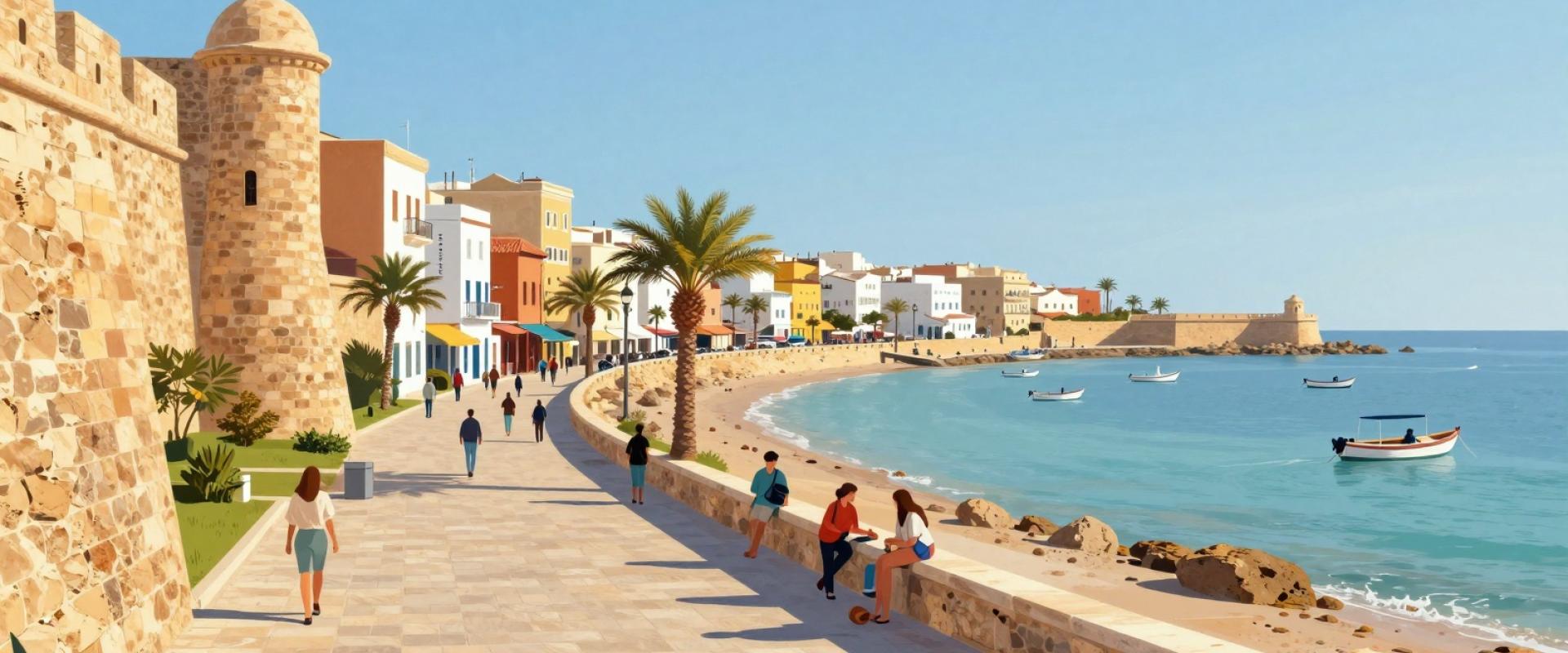
AI-generated illustration
Extended Rabat-salé-kénitra Experience
3-day urban and coastal exploration of Rabat, Salé, and Kénitra
3 days
•
Moderate difficulty
•
Est. MAD 132
Day 1: Imperial History & Medina Heritage
Explore Rabat's core historical landmarks, starting with the iconic Hassan Tower and the grand Mohammed V Mausoleum, followed by a walk through the charming Kasbah des Oudaias.
-
09:00
Hassan Tower
Visit the 44m Almohad minaret, the sole remnant of an unfinished 12th-century mosque. Explore the ruins and learn about the architectural ambition of Sultan Yacoub al-Mansur.
-
10:10
Mohammed V Mausoleum
Tour the stunning 1971 Islamic mausoleum housing the tombs of King Mohammed V and Prince Abdallah. Note the intricate zellige mosaics and carved cedar wood ceilings.
-
11:00
Kasbah des Oudaias
Wander through the 12th-century UNESCO citadel overlooking the Bouregreg River. Visit the Andalusian Gardens and the Oudaias Craft Museum within the white and blue walls.
-
12:30
Lunch at Café Maure
Enjoy traditional Moroccan mint tea and pastries with a view of the river from a terrace within the Kasbah.
-
14:00
Archaeological Museum of Rabat
Explore the 1932 museum housing rare Roman bronzes and artifacts from the region's ancient history.
-
15:20
Chrif Market & Medina
Stroll through the traditional souk in Rabat medina, browsing local crafts, spices, and textiles. Visit Bab Rouah Gate nearby.
Meals:
Lunch at Kasbah des Oudaias , Dinner at Rabat City Center
Where to stay: Stay in the Agdal or Hassan district for easy access to historical sites and restaurants.
Getting around: Most sites are within walking distance or a short taxi ride. Use petit taxis for longer hops.
Day 2: Salé Culture & Coastal Relaxation
Cross the bridge to Salé for its authentic medina and local life, then return to Rabat for beach time and modern art.
-
09:30
Salé Medina & Grand Mosque
Cross the Bouregreg bridge to Salé. Explore the less touristy medina, visit the Grand Mosque, and observe daily life in this historic city.
-
11:30
Lunch in Salé
Try local seafood or tagine at a traditional restaurant in Salé.
-
13:00
Museum of Modern and Contemporary Art
Return to Rabat to visit Morocco’s first modern art museum, founded by King Mohammed VI. View contemporary Moroccan and international works.
-
14:45
Rabat Beach (Plage de Rabat)
Relax at the 2.5km sandy beach at the Bouregreg River mouth. Enjoy the Atlantic breeze and sunset views.
-
17:00
Mohammed V Park
End the day with a leisurely walk in this urban park in Salé (visible from Rabat side) or return to Rabat's Agdal Park for a peaceful evening stroll.
Meals:
Lunch at Salé Medina , Dinner at Bouregreg Marina
Where to stay: Same accommodation as Day 1.
Getting around: Use petit taxis to cross the bridge to Salé and back. Walking is possible but taxis are faster.
Day 3: Nature Excursion: Moulay Bousselham
Day trip to the Atlantic lagoon and wetland haven for migratory birds, offering a contrast to the urban environment.
-
08:00
Travel to Moulay Bousselham
Take a train from Rabat Ville station to Moulay Bousselham station, or hire a private car for a more flexible schedule.
-
09:30
Moulay Bousselham Lagoon
Explore the Atlantic lagoon and wetlands. Ideal for birdwatching, especially during migration seasons. Walk along the boardwalks and enjoy the coastal scenery.
-
12:30
Lunch in Moulay Bousselham
Fresh seafood lunch at a local restaurant near the port.
-
14:00
Beach Walk & Relaxation
Stroll along the beach, visit the small fishing village, and enjoy the calm Atlantic atmosphere.
-
16:30
Return to Rabat
Take the train or car back to Rabat for the evening.
-
18:30
Evening at Bouregreg Marina
Enjoy a final dinner or drink at the marina, reflecting on the trip.
Meals:
Lunch at Moulay Bousselham , Dinner at Bouregreg Marina
Where to stay: Same accommodation as Day 1.
Getting around: Train is the most economical and scenic option. Private car offers more flexibility for the lagoon exploration.
Practical Information
The Rabat-Salé-Kénitra region offers a balanced climate, with spring (March to May) and autumn (September to November) being the optimal times to visit. During these months, daytime temperatures range comfortably between 20°C and 25°C, making walking tours through Rabat’s medina and the Kasbah of the Udayas pleasant. Summer months can be humid and hot, particularly in Kénitra, while winter nights may drop significantly, requiring warm layers. The region is well-connected by rail; the ONCF train network links Rabat, Salé, and Kénitra efficiently, with frequent departures from Rabat’s central station. For inter-city travel, trains are the most reliable option, taking approximately 45 minutes to reach Kénitra. Within Rabat and Salé, taxis are abundant and affordable; insist on using the meter or agree on a price before departure. Walking is highly recommended in Rabat’s historic center, where major attractions like the Hassan Tower and Chellah Necropolis are clustered.
Accommodation varies by city. In Rabat, staying near the Medina or the Ville Nouvelle provides easy access to cultural sites and dining. Salé offers a more local atmosphere with budget-friendly riads and guesthouses, ideal for experiencing daily Moroccan life. Kénitra is primarily a transit hub with limited tourist lodging, so visitors often stay in Rabat and day-trip to Kénitra’s beaches. Budgeting should account for moderate costs; while Rabat is generally cheaper than Marrakech, tourist areas in the Medina can be pricey. Meals at local eateries are inexpensive, but upscale dining in the Ville Nouvelle requires a higher budget. Always carry cash (Moroccan Dirham) for small purchases, markets, and taxis, as card acceptance is not universal in smaller shops.
Pack light, breathable clothing for daytime, but include a jacket or sweater for cooler evenings and windy coastal areas. Comfortable walking shoes are essential for navigating the uneven cobblestones of the medinas and the sandy paths at Kénitra’s beaches. A scarf is useful for both cultural respect when visiting religious sites and protection from the sun. Bring a reusable water bottle to stay hydrated, as tap water is not recommended for drinking. Finally, carry a basic first-aid kit and any personal medications, as pharmacies are common but specialized medical supplies may be limited outside major hospitals. Respect local customs by dressing modestly in religious and traditional areas, and always ask permission before photographing people.
Book your stay
More Itineraries
2 days
Rabat-salé-kénitra Cultural Heritage
2-day cultural heritage tour of Rabat, Salé, and Kénitra
View Itinerary →